
The Eccentric Speech That Forecasted the Great Chicago Fire
By Ken Zurski
On October 7, 1871, George Francis Train a businessman and self-proclaimed inventor, spoke in front of a large audience at a lecture hall in Chicago.

Train had just returned from traveling around the world in 80 days (later claiming to be the inspiration for Jules Verne’s fictional character Phileas Fogg) and was on a speaking tour to support a run for President of the United States or as he called it “Dictator of the USA.”
But in Chicago, he delivered a stunning speech. “This is the last public address that will be delivered within these walls.” He told the crowd. “A terrible calamity is impending over the City of Chicago.”
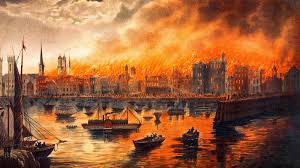
Train’s reputation as an eccentric preceded him. While alarming, his prophesying was quickly forgotten. The next day however, a fire broke out that devastated the city.
The Chicago Times was first to report Train’s speech claiming he was part of a fringe group based in Paris, with off-shoot chapters throughout the world, including Chicago. The article asserted the group, Societe Internationale, could not accomplish what they desired – labor unity- by peaceful means and that the “burning of Chicago” was suggested. The other newspaper in town, the Chicago Evening Journal, debunked such claims and blasted the Times for concocting a communist plot against the city.
Train, however, had some explaining to do. He did by claiming his doomsday prediction was actually in response to shifty government policies that left a crowded, neglected city and its infrastructure prone to a disaster – either by flood or fire. The timing, he said, was purely coincidental.
As for the cause of the blaze, the papers soon found another scapegoat – and a sensationalist story to boot – in a diary cow, a lantern and the unsuspecting wife of a saloon owner named Patrick O’Leary.

 UNREMEMBERED