
travel
The Legacy of Kodak’s Autographic Camera
By Ken Zurski
In 1914, Eastman Kodak Company introduced a new line of cameras that not only took a picture but recorded the date and title as well. Actually, the date and title was up to the picture taker to record, but nonetheless as Kodak advertised, “any negative worth the making is worth the date and title.”
Kodak called it an “autographic camera” and here’s how it worked: A special film was used that contained a small piece of tissue carbon between the film and the paper backing. A little window on the back of the camera would be opened and with a metal stylus the text could be written on the carbon. The window was left open briefly for exposure and when the pictures were developed, the notation would be visible between the prints. “These notations add to the value of every picture you make,” Kodak insisted.

Jacque Gaisman, a French-American who invented the safety razor, is credited with the concept. He sold it to George Eastman for $300,000. Eastman had high hopes for the new technology, but it never caught on.
Still, it has its place in history. In 1924, British mountaineers George Mallory and Andrew Irvine were lost and presumed dead on Mount Everest during Mallory’s fourth attempt to become the first person to reach the elusive summit. Mallory had brought a photographer along, a man named John Noel who used a motion picture camera that weighed 40 pounds.

Mallory, however carried a smaller Kodak vest camera which had the autographic feature. The camera was believed to be on Mallory when he and Irvine vanished.
In 1999, an American climbing team tracing Mallory’s steps discovered the famous climber’s frozen corpse. They were hoping to find the camera too. Perhaps it could tell the tale of Mallory’s last days.
But the camera was missing.
Speculation is Mallory gave it to Irvine to take pictures of him reaching the summit before perishing on the Northeast edge. But no one knows. In 2024, A Chinese documentary team found a boot, with remains, believed to be Irvine’s foot, but no camera was found.

All Hail Coffee Soup! Wait…What?
By Ken Zurski
The Amish culture goes back to Old German Anabaptist roots in the 16th century and is defined today by the simple and private lifestyle of those who follow it. The horse-and-buggy transportation is the most recognizable of the Amish culture followed by the modest and similar clothing that includes a vest and hat for men and a plain three-piece dress, cape, apron and bonnet for women.
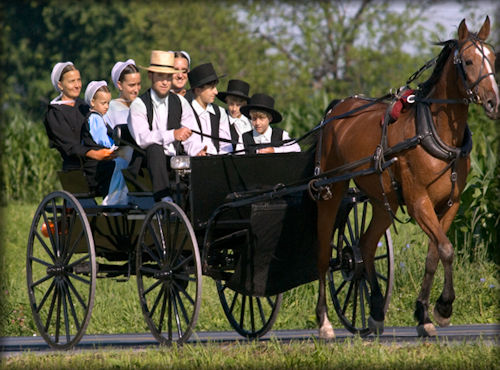
As for cooking, a variation of grains, dairy and meats are usually on the menu and water mostly to drink, with milk, coffee and tea too. Coffee can be served in the evening with – or as – a good dessert.
So what’s up with one dish, now specifically identified as Amish influenced, and named coffee soup?
That’s right…coffee with the word soup.
The Amish had a stable lifestyle but also struggled some during the Great Depression. So less was more and soups were at least a meal. You can make a lot of it and even save it for several meals across several days.
Thus was born coffee soup. Or so it seems.
There are few ingredients in coffee soup that start with a brewed coffee base, preferably a dark roast. Then add sugar and cream. For substance, a piece a grain bread cut in pieces or put in whole is added. Each spoonful then gets a chunk of bread and the taste of sweet coffee. It’s served cold, mostly. In more recent times, saltines can replace the bread and in some instances cheese is added.
Of course spices, like cinnamon or something more savory, might be added too, but it’s origins with just three to four simple ingredients are at it’s core.
Ready to try it.

Coffee soup.
Guten Appetit!
(Photo courtesy of Amish365.com)
 UNREMEMBERED