
The /rel·e·van·cy/ of a Dictionary Maker
By Ken Zurski

In 1858, Herbert Coleridge, a British philologist, took on the daunting task of compiling and completing a new English dictionary.
It was not an easy undertaking. Wordbooks as they were known had dated back to the early 17th century, and by the 19th century, an American lexicographer named Noah Webster made dictionaries that were based mostly on personal assessments of the English language, which in Webster’s opinion was too closely identified with the British.
Coleridge’s dictionary would be different and involve hundred of volunteers who would find unlisted words in books and write them down on note cards along with the word’s source.
The note idea was not Coleridge’s but rather that of Richard Chenevix Trench, a British professor and lexicographer, who proposed using everyday readers to participate in the dictionary’s creation. “It would be necessary to recruit a team moreover, a huge one comprising hundreds of unpaid amateurs,” Trench proposed.

Trench’s vision took hold and Coleridge was called upon to make it happen.
Coleridge went to work designing a system of collecting the reader’s notes and organizing them. He also grossly underestimated that it would take only two years to complete the work. In reality, near the two year mark, the dictionary was far from finished, and Coleridge, unfortunately, was dead.
Officially Coleridge died of consumption, or a bout of tuberculosis, which makes sense. However, biographers paint a more fanciful ending. While walking to a lecture hall in London’s St. James Square, Coleridge got caught in a downpour and sat soaking wet in an unheated upstairs room for several hours listening to the speaker. His chills turned to a debilitating fever and eventual death.

Despite his untimely demise, the dictionary idea did not go with him. Several enthusiastic wordsmith’s picked up the slack. Soon they learned what a formidable task Coleridge faced. In just a few years of work, Coleridge had only gotten halfway through the first letter. Undeterred the vision carried on and in 1878, nearly a quarter century after Coleridge began. A New English Dictionary on Historical Principles was released. Today, the book is cited as the basis for the inaugural Oxford English Dictionary which was released in 1895.
Coleridge is often listed as its first editor.

The Brutal Reality of Caesar’s Death
By Ken Zurski
The Death of Caesar is an 1867 painting by Jean-Léon Gérôme’, a 19th century artist and sculptor known for the French inspired “academism” artistic style. Among the many portraits and works inspired by Greek mythology, Gérôme’’s portfolio also includes historical recreations.
So here, as the title not so subtly suggests, he recreates the assassination of Julius Casear on the Ides of March, 44 B.C.

Gérôme’ paints the tale of Ceasar’s death in stark clarity. He shows the moment immediately following Ceasar’s murder as the unfortunate victim is seen in the foreground crumpled on the floor. The throne chair is overturned signifying a struggle and those not part of the killing are seen fleeing the room in terror. The conspirators celebrate by raising their weapons in victory.
The only man not holding a weapon above his head is Brutus.
His back is turned. He is walking toward the other celebrants and dragging his weapon behind. Perhaps, as history suggests, this signifies Brutus dealt the final blow. He also carries what appears to be a sword, not a dagger. This would seem appropriate for the time, since swords were commonly used by Roman soldiers in battle. But as history books explain, the weapon of choice to kill Casear was a dagger, not a sword.
Brutus all but confirms it in a coin he commissioned after Caesar’s death. On the coin are two daggers with different shaped hilts. Presumably, the first dagger belongs to Brutus. The second likely belongs to another assassin.
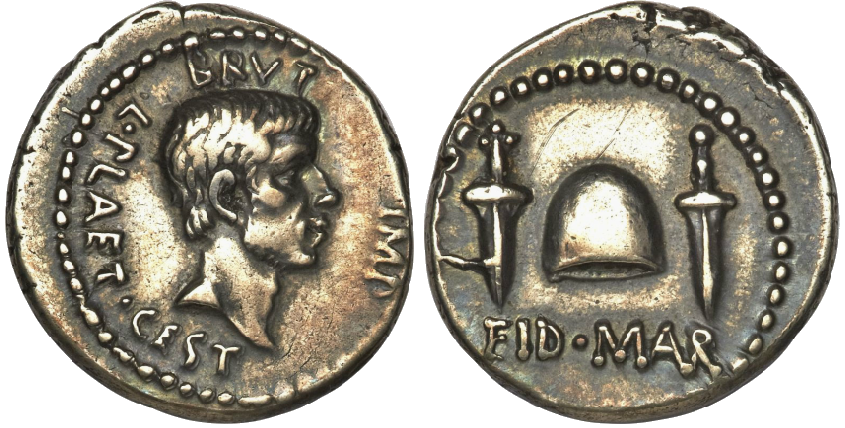
The shorter daggers make more sense in the killing of Caesar.
Daggers were as martial arts experts explain today, “streamlined and remarkably light.” They were also very effective, especially at close range. Plus, a dagger could easily be hidden in a toga and retrieved quickly. The only advantage a sword would have over a dagger is the distance between the striker and the intended target.
But that was in combat. Caesar was ambushed, presumably unarmed, and received blow after excruciating blow. A task, while effective, that took stamina and strength. Instead of celebrating with weapons held high (as Gérôme’s painting suggests) more realistically, the band of conspirators would be hunched over from exhaustion. Their hands and white garments covered in blood.
Author Barry Strauss in his book The Death of Caesar says this about the use of daggers in warfare: “Few felt comfortable talking about it and fewer still doing it.”
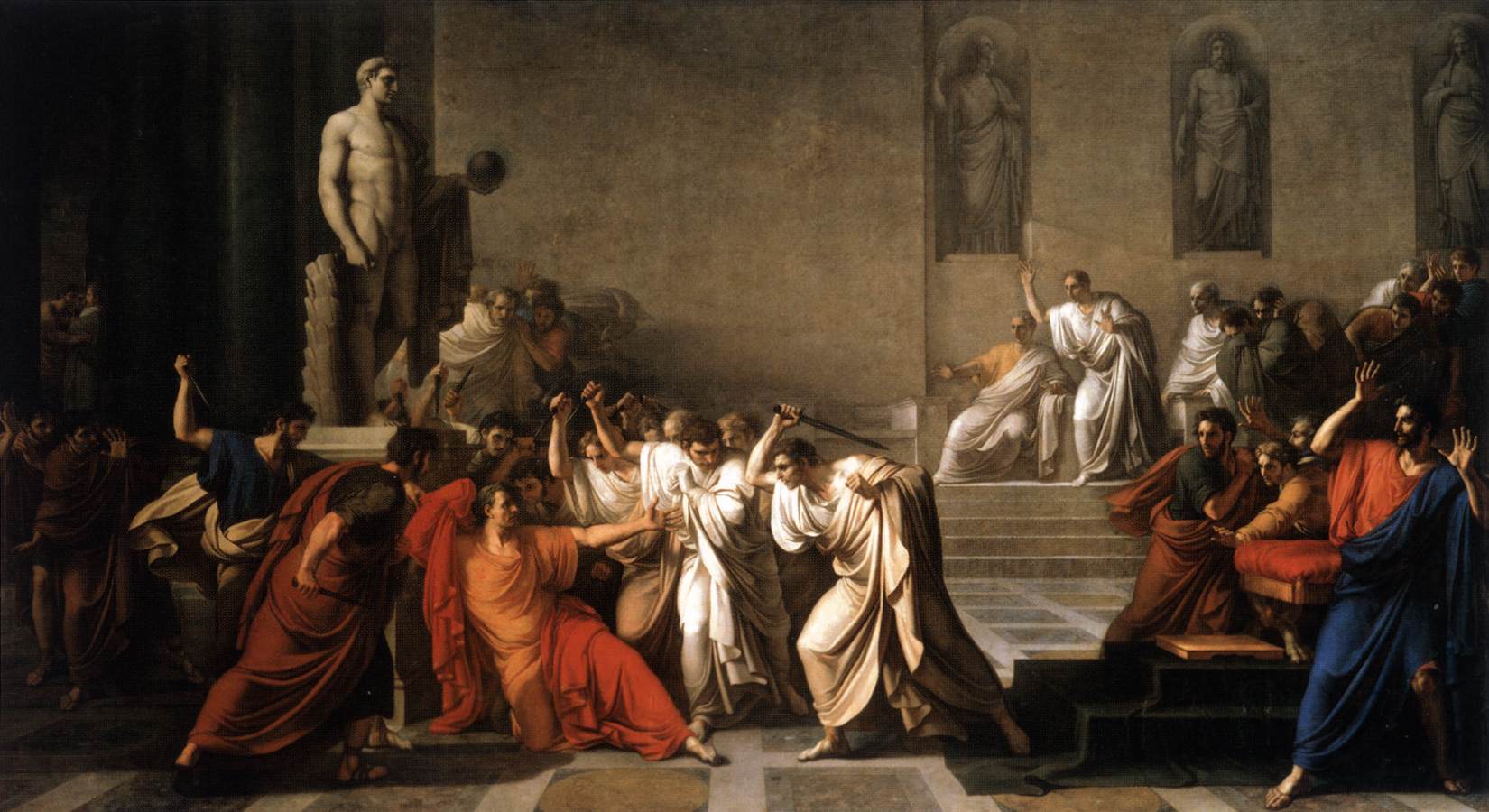
In another painting of Ceaser’s frantic death titled The Death of Caesar (1798), artist Vincenzo Camuccini seems to show a more accurate portrayal of the weapons used in the murder. The depiction portrays most of the mob carrying the shorter daggers, except for a few who still sport a longer blade.
Is one of them Brutus?
One might debate, and likely get few detractors, that Brutus used a sword for the final blow, thus marking Ceasar’s end for all eternity: Et tu, Brute
Yet, despite the graphic detail, there’s still no bloody mess.
That’s because the representation shown in Camuccini’s painting is the moment before Ceasar is struck not after like Gérôme’s and therefore spares the viewer the gory aftermath.
Churchill’s Gift from the U.S. Was a Literary Surprise
By Ken Zurski

On June 25, 1954, British Prime Minister Winston Churchill visited Washington D.C. to talk policy with then U.S. President Dwight D. Eisenhower.
At the time of his visit, the 79-year-old Churchill was showing his age and associates were urging him to retire. “His head was bent and his eyes, with their pale lashes were downcast, lest he stumble,” one biographer wrote of his appearance that day.
Despite Churchill’s weary appearance, Eisenhower greeted the Prime Minister warmly and the two got down to business.
History records a significant meeting which resulted in Churchill’s insistence that Eisenhower attend the tri-lateral talks with the Soviet Union. But history buffs, especially those who love literature, celebrate the trip for another reason.
During the visit, Churchill was presented with a gift from the Library of Congress and the U.S Copyright Office. The “handsomely bound, gold lettered” 35-page bibliography was the result of a massive undertaking to catalog all copyrighted works pertaining to Churchill, including books, periodicals, and his own writing. In the end, they found 565 contributions about or attributed to Churchill between the years of 1898 and 1953.
In a letter, the Library of Congress Reference Division Chief Richard MacCarteney wrote: “The bibliography was not the result of any special request. … It grew out of a realization of the tremendous effect Sir Winston Churchill’s utterances have had upon world history and thus our obligation to develop as nearly complete a copyright record of them as possible. ”
Churchill was obviously pleased, but explained that one book was still missing. “A modest work,” he implied.
Two years later, A History of the English Speaking People’s, an 800,000 word, 1,760 page four volume set, was released. Churchill had finally appeased his wife and close advisers by resigning from office and finishing the book. “It opens like an angel’s wings,” Churchill gushed about its stately design.
Shortly after it was published, a spokesman for the U.S. Copyright Office, who had made a promise to Churchill during his visit, “eagerly anticipated” the book and subsequently added it to the bibliography list.

The First ‘Wizard of Oz’ Movie Had No Songs, Witches, or Toto
By Ken Zurski
In 1925, when Judy Garland was only three-years-old, a movie version of “The Wizard of Oz” was released that was loosely based on a stage play of the same name which in itself was loosely based on L. Frank Baum’s famous book, The Wonderful Wizard of Oz.
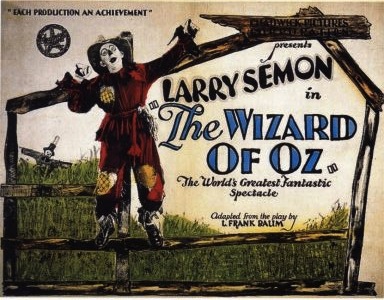
There was no singing of “Somewhere over the Rainbow” in this film version. In fact, there was no singing at all. “Talkies” as they were known in the movie business, hadn’t been perfected yet. This was a silent movie and compared to the musical film that was released fifteen years later in 1939, this version, as were other early adaptations of Baum’s book, remains somewhat of an enigma.
Here’s why: Baum’s book came out in 1900 and became an instant best seller. Two years later, under Baum’s direction a play based on the book was set to music and opened in Chicago. The title was shortened and the story was altered slightly. The main difference between the book and the stage adaptation, however, was an obvious one. Baum wrote the book specifically for children, while the play was geared for adults. Due to the popularity of the stage version, a 13-minute live action short was released that mostly confused viewers familiar with the book. The first full-length movie version then in 1924 was also based on the play and differed quite a bit from Baum’s original story
In the film, Dorothy and three farmhands arrive in Oz after a tornado sweeps them away. The Wizard proclaims Dorothy the long lost Princess of Oz, but the Prime Minister, named Kruel, wants nothing to do with her. The prince, however, named Kynd, welcomes the princess’s return and accuses the farmhands of kidnapping her.

To thwart the Prince’s soldiers, the farmhands, who are madly in love with Dorothy, dress up in disguise: one as a scarecrow and one in sheets of tin. The two men are eventually caught but the third farmhand who dons a lion’s costume, scares the guards, and helps the others escape. The Tin Man eventually sides with Kruel and the whole tangled mess leads to a showdown in a tower between the Scarecrow and the Tin Man, both of whom lose Dorothy’s affections to the handsome prince. The movie ends as the 1939 version does, when Dorothy wakes up from a dream.
“‘The Wizard of Oz’ goes way beyond even our wildest expectations,” proclaimed I.E. Chadwick, president of Chadwick pictures, upon its release. “A thing of great beauty and fantasy. Marvelously entertaining. A knockout!”
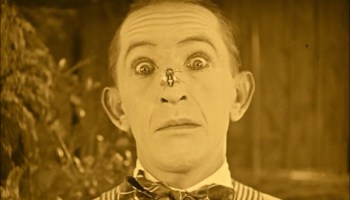
The movie’s top billing went to a popular comedian named Larry Semon, who played the scarecrow and directed the film. Dorothy Dwan, Semon’s real life wife, played Dorothy. The movie was advertised as a comedy and it did well at first. ‘It’s a Whiz!” was one excited description. But it didn’t last. By the time the Garland version appeared, the silent film had long since been forgotten.
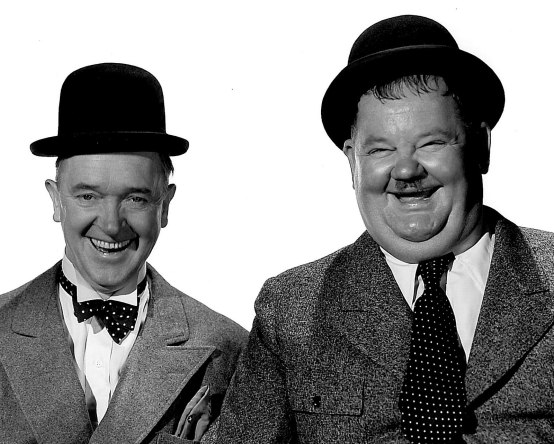
Yet, the movie may best be remembered for the introduction of the larger-than-life figure who played The Tin Man. “Large” in this instance, referring to his outwardly size. The relative newcomer’s portliness would eventually become his trademark, but for this role, it was more a liability. Even a fellow actor questioned why a man of his girth would – or even could – wear a suit made of tin. “What are you going to do about the costume?” he asked. Oliver Hardy as it turned out would go on to have greater success as the bigger half, literally, of the comedic duo, Laurel and Hardy.
But the most glaring difference of the early film may be the absence of many of Baum’s most enduring characters, including two that featured prominently in Garland’s version: the Wicked Witch and Dorothy’s little dog, Toto.
In fact, in the stage version, Toto was replaced by a cow named Imogene.

Agostino Ramelli: The Ingenious Mind Behind The Book Wheel
By Ken Zurski
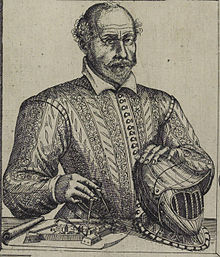
Agostino Ramelli was a military engineer, which meant he wore the armored suit and carried the sword, but used his brain rather than brawn on the battlefield. This came in handy during the 16th century French Wars of Religion. The Italian born Ramelli went to France, took up arms with the Catholic League, and was captured by the Protestants (Huguenots). While incarcerated, Ramelli not only found a way to break out, but in as well.
After he escaped – or was exchanged – Ramelli returned and breached the fortification by mining under a bastion. From that point on, he called himself “Capitano” and dedicated his life to figuring things out.
In 1588, he released a book titled, Various and Ingenious Machines of Capitano Ramelli. The expertly illustrated book was a compilation of 195 machines that made laborious tasks more practical. Many of the machines lifted things in crafty ways, like water, or solid objects, like doors off their hinges. One machine milled flour using rollers rather than stones.
Then there was the Book Wheel.
“This is a beautiful and ingenious machine, very useful and convenient,” Ramelli wrote. By convenient, he meant for those suffering from gout, a painful joint disease which made walking or standing difficult. A noble gesture, for sure, but the wheel itself was six-feet in diameter. So its doubtful Ramelli designed it strictly for the disabled. Nevertheless, its usefulness is left up to the user to decide. The operator remains seated while the books, eight in all, each come to the front by turning the wheel.
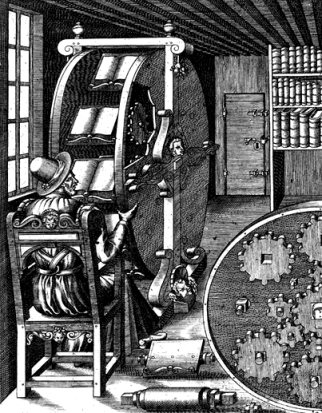
Ramelli was especially proud of the gearing system that kept the books constantly level to the ground. He built an intricate gear for each slot and prominently featured a diagram in his book. The impressive technology was similar to that used in an astronomical clock.
It was also wholly unnecessary.
A simple swivel pivot and gravity could do the trick just as engineer George Ferris would prove many centuries later in a similar design of a wheel carried people rather than books.
Speculation is Ramelli knew this, but as a mathematician, and a bit of a swank, couldn’t help himself.
Pauline Chase and the Overtly Sensual Life of ‘The Boy Who Wouldn’t Grow Up’
By Ken Zurski
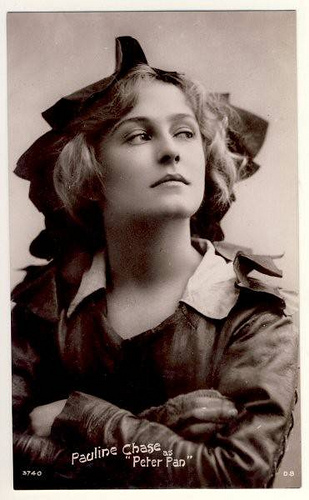
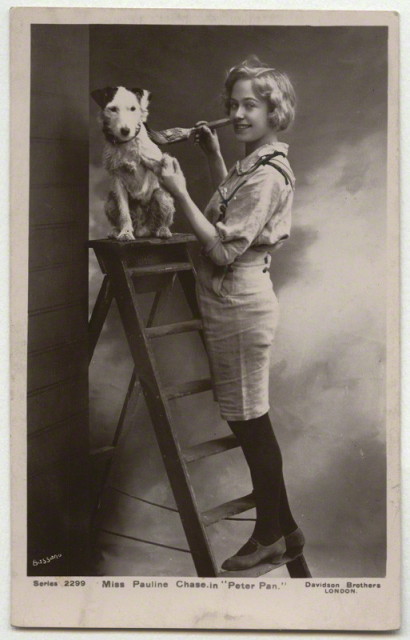
In 1906, at the age of 21, Pauline Chase was asked to portray Peter Pan on stage, a play about “the boy who wouldn’t grow up,” and a title role that had been played by only two people before her – and both female. Chase continued that trend and in the process became the face of the role too. Even today based on the number of performances – nearly an estimated 1400 – Chase is arguably the most popular actress ever to play the boy Peter. And you probably have never heard of her.
But in the early 20th century thanks to her continuing success in the play, Chase became an instant celebrity. Not for the innocence of the character she portrayed, in fact, quite the opposite. Chase was a bit of a jezebel in real life. “She certainly knew what she wanted from a man, and it wasn’t a good heart or worthy talent,” wrote author Gavin Mortimer in his book Chasing Icarus about the early aviators (more on that in moment). And men, well, they couldn’t resist her either. Their pursuance, however, came with stipulations.
“I’ve no time to waste on duffers with no position or money,” Chase once told a reporter, firmly setting down the ground rules. Even her performances were sarcastically criticized by one glaring – more like obvious – diversion. Her strikingly good looks.
“Distractingly pretty.” is how the Chicago Tribune put it.
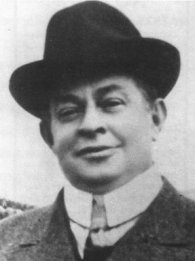
Enter Charles Frohman. The world renowned theater producer recognized Chase’s talents early on when she was just a teenager. He promoted his new find and kept a close watch on her like a daughter. It was Frohman who suggested to James M. Barrie, the author of Peter Pan, or The Boy who wouldn’t Grow Up, that Chase take over the title role after another actress Cecelia Loftus got sick. Barrie already knew Chase, who was one of the Lost Boys in the London production. But playing the high-flying main character was a different matter.
“Barrie and I are coming down to see you act,” Frohman wrote Chase before the show,”and if we like you well enough, I will send you back a sheet with a cross mark on it.” After the performance, Chase received a piece of paper. It had a cross mark on it.
Frohman was devoted to Chase, his star in the making, and although rumored, their relationship was never sexual. Soon after his untimely death in 1915 along with more than a thousand other unfortunate souls aboard the ill-fated RMS Lusitania, it was discovered that Frohman had a longtime live-in companion, Charles Dillingham, another theater producer.

Robert Falcon Scott, the debonair British naval officer and explorer was another who reportedly had a close friendship with the magnetic Chase. The connection was influenced by Scott’s association with Barrie. “I never could show you how much your friendship meant to me,” Scott wrote to his author friend, “for you had much to give and I nothing.”
Perhaps that gift was Chase.
Scott reportedly went to see a production of Peter Pan in 1906 the year Chase took over the role. Was it just flirtation or something more? No one knows for sure. Scott’s affections toward Chase apparently ended in 1909 when he married the cosmopolitan and socialite Kathleen Bruce. Barrie reportedly penned a letter to Chase breaking the news. “Capt. Scott wrote to me that he is to be married to Miss Bruce soon. So there!” (In 1912, Scott perished along with his crew in Antarctica.)
Claude Grahame-White was another interest of Chase’s.
Perhaps the most desired bachelor in all of England at the time, Grahame-White made the ladies swoon over his athletic six-foot frame and naturally good looks. As one of the early aviation pilots, Grahame-White became instantly famous. Handsome, dashing and adventurous, Grahame-White mixed all of these traits to great advantage.
How Chase and Grahame-White met is unknown, but they were reportedly friendly for many years before becoming lovers. Grahame-White attended multiple performances of Peter Pan and would invite the pretty actress aboard his Farman biplane for joy rides.
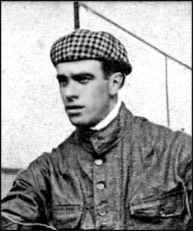
Chase was charmed by her latest admirer. Grahame-White had all the attributes she was looking for: money and status. Their courtship and engagement in 1910 was the stuff tabloid’s are made of. But it didn’t last. The next year Chase and Grahame-White drifted apart.
The industrious flyer had spent all his assets on expensive business ventures and earnings from his flying career was waning. Sparked by a sudden fear of dying in a plane crash – something that was happening quite frequently on the show circuit – Grahame-White decided to quit flying altogether and forgo the riches that came with it. Chase was typically frank when she told a reporter, “Mr. Grahame-White could not compensate me from my retirement from the stage.” They separated and divorced.
Chase ended her seven year reign as Peter Pan in 1913 and never appeared on stage again. Her sexual exploits, true or not, continued to make headlines, especially the extensive string of male suitors. In addition to Capt. Scott and Grahame-White, the list also included a nameless American millionaire, an English auto manufacturer, and even James M. Barrie, the author who created the character that changed her life. Chase eventually married into a wealthy British family, had three children, and died at the age of 76.
“The boy who wouldn’t grow up” was her most famous and final role.
The Nationwide Contest for an American Creed
By Ken Zurski
In April 1917, shortly after President Woodrow Wilson announced his intentions to enter the protracted war in Europe, the New York Commissioner of Education at the time, Henry Sterling Chapin, advertised a nationwide contest to come up with an American Creed, or short paragraph that represented a U.S. citizen’s beliefs and principles.
Capin’s idea, inspired by his own patriotic pride, was supported by Baltimore mayor John Preston who gave the contest instant credibility by offering a $1000 grand prize.
More than three-thousand entries were received.
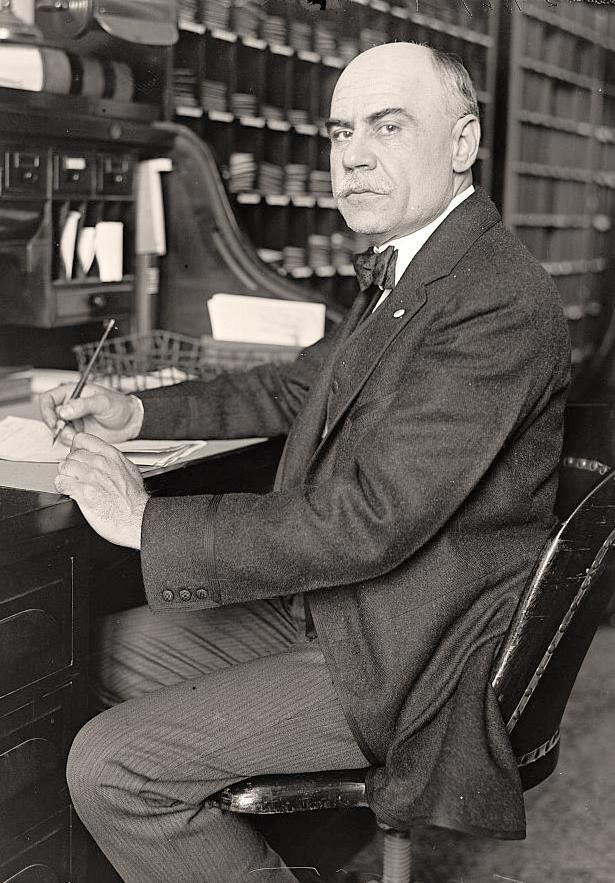
A year later, a government worker named William Tyler Page was declared the winner. Page’s three sentence submission borrowed words and phrases from the Gettysburg Address, Declaration of independence, Preamble of the Constitution, and ended with a pledge: “I therefore believe it is my duty to my country to love it, to support its constitution, to obey its laws, to respect the flag, and to defend it against all enemies.”
Many liked it. “As creeds go this embodies what the leaders of America has said and attempted to put into practice,” one newspaper writer expressed. While others thought it was inessential. “No one American can write creeds for all Americans,” the Indianapolis Star reported. “The real American creed is in the heart.”
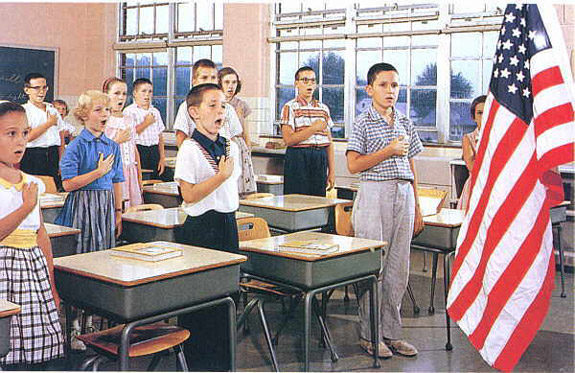
Page defended his work, accepted the prize money, and eventually became a clerk for the U.S. House of Representatives. His creed, while still recognized, was never officially adopted by the federal government. Instead many years later, in 1942, Congress chose a one-sentence composition written in 1892 for a children’s magazine to honor America’s symbol of freedom.
It begins with these words: I pledge allegiance to the Flag…
The Government-Funded, Award-Winning Movie about the Mississippi River
By Ken Zurski
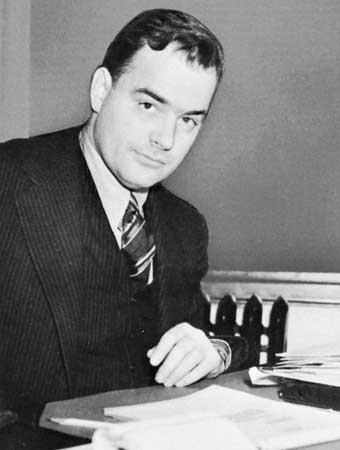
In the summer of 1936, documentary filmmaker Pare Lorentz got the go ahead from the U.S. Government to make a short film about a rather long subject: the Mississippi River.
The film’s job was to throw more support towards the newly appointed Tennessee Valley Authority (TVA), a government agency created in 1933. The $50,000 budget approved by President Franklin Roosevelt would be used to highlight the environmental and economic concerns along the river, specifically the catastrophic flooding caused by industries like farming and the timber trade that inadvertently sent large amounts of topsoil down the river into the Gulf of Mexico.
Two years earlier, Roosevelt had funded a mildly successful film project titled The Plow That Broke the Plains, also directed by Lorentz, which showed how uncontrolled farming led to the devastating and deadly effects of the Dust Bowl.
It’s fair to say that both Roosevelt and Lorentz had no intentions of making another documentary together. “The Plow” had gone over budget and the government balked, refusing to provide more money and forcing Lorentz to personally foot the bill just to complete the film. At some point however, attitude’s changed. Lorentz saw a map of the Mississippi River and thought it would make a good subject. Roosevelt agreed and gave him a significantly higher budget than “The Plow.” Lorentz was also extended a $30-dollar a day salary.
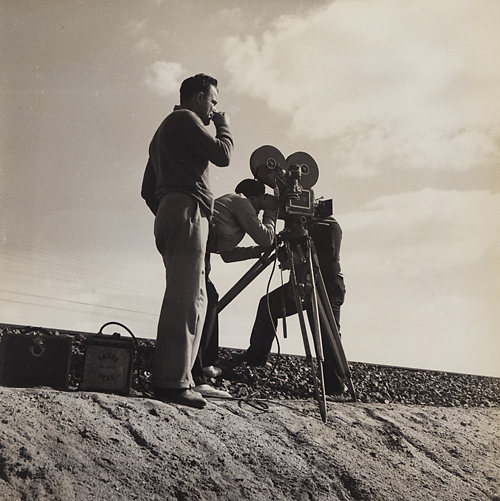
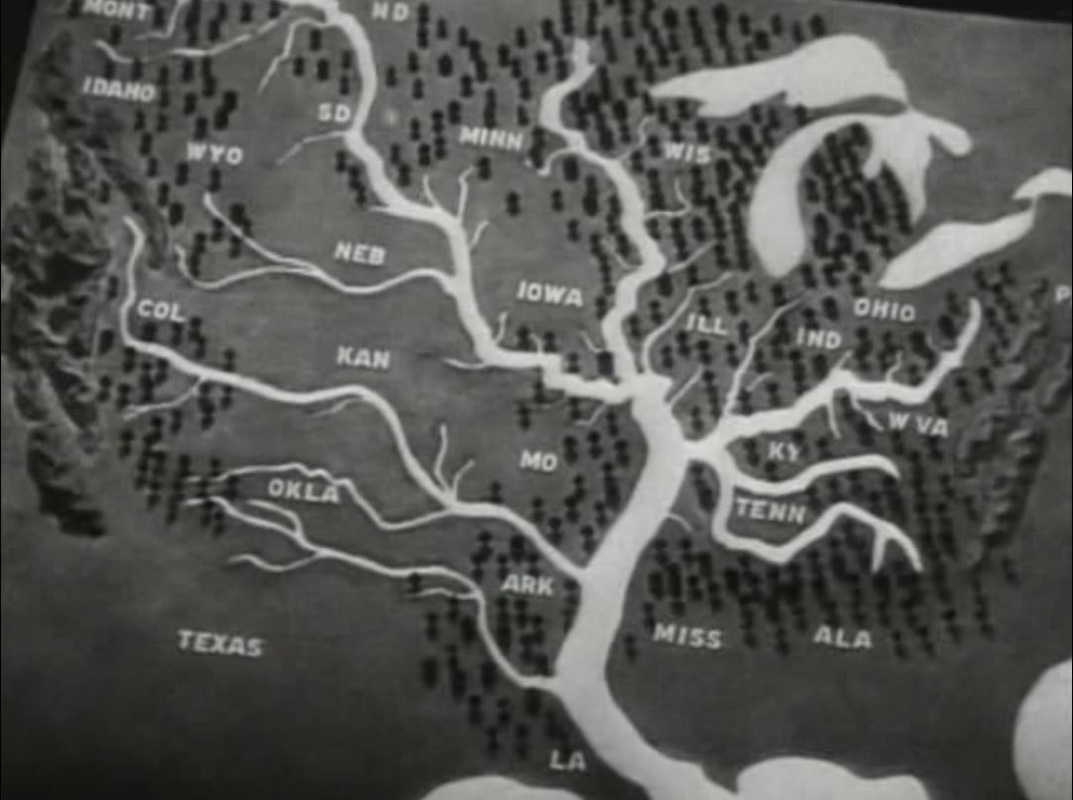
Immediately Lorentz went to work, filming location after location on the ground and from the air. The crew worked their way up the river from the Gulf of Mexico to Cairo, Illinois, oftentimes working for days on end until principal filming wrapped up in early January 1937. In the end the visuals showed less of the Mississippi and more of the many tributaries. This was as much a part of the river’s history as it was the problem, the film purported.
Reaction to a film being made about the Mississippi River was mixed. Although it’s the most important body of drainage water in the U.S., perhaps even the world, to many, the river itself, was nothing particularly pleasing to look at. The water is drab and dirty looking and along it’s shoreline there is very little rock formations or scenery to enhance it. “If driving, you become aware of its presence miles before you reach it,” author Simon Winchester wrote about the river’s approach. “The landscape falls away. There are swamps on either side, dense hedgerows and copses, miles of small lakes of curious shape.”
Indeed the Mississippi River, especially its midsection, is banked by mostly mud. Even Mark Twain’s flourishes of the river’s attributes from the perspective of a steamboat pilot couldn’t push the attitudes toward its appearance into anything more than just a very long strip of dirt-colored water and sludgy shores.
No question beauty is subjective. Hundreds of quaint cities dot the river’s shoreline and dense tree lines along the Mid to Upper sections provide a multi-colored vista in the Fall.
In St Louis, Missouri, a large man-made monument standing as tall as it is wide (630 feet), greet visitors at the river’s edge; a testament to the men who used the Mississippi’s offshoots to chart the west.
When Lorentz made his movie, however, the idea of a symbol like the “Gateway Arch” was nearly 30 years away. But like the early explorers, Lorentz found significance in its vast network. The tributaries and the people who live along them were the key to its resourcefulness.
The visuals, however, were just part of the overall experience of the 30-minute film. The script, dramatically narrated by an opera singer and actor named Thomas Hardie Chalmers, was not only informational, but poetic too. There’s a good reason why. To promote the project, Lorentz had written two articles for McCall’s magazine. One was wordy and statistical, he thought, so he wrote another version that was more lyrically composed:
From as far East as New York,
Down from the turkey ridges of the Alleghenies
Down from Minnesota, twenty five hundred miles,
The Mississippi River runs to the Gulf.
Carrying every drop of water, that flows down
two-thirds the continent.
Carrying every brook and rill, rivulet and creek,
Carrying all the rivers that run down two-thirds
the continent,
The Mississippi runs to the Gulf of Mexico.
McCall’s chose to publish the latter version and readers responded by writing request letters for copies. Lorentz used the more poetic prose in the film. The music, which incorporated part folk and gospel styles, was written by composer Virgil Thomson.
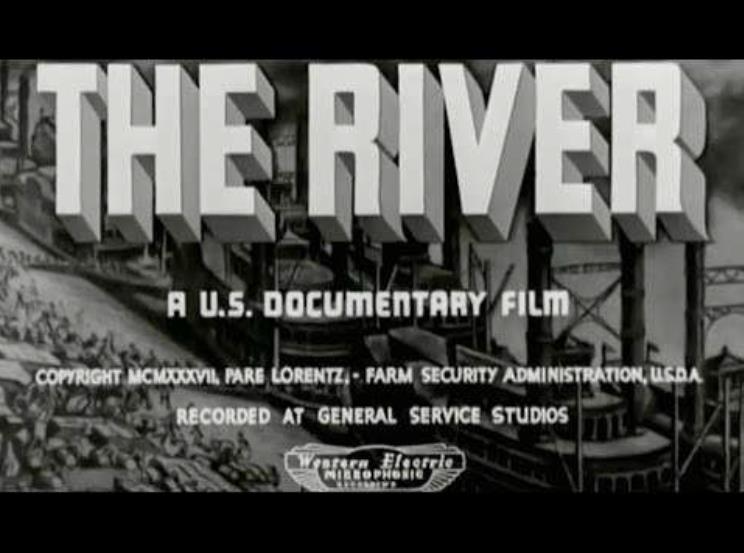
While the unflinching subject matter certainly raised awareness of the need for more locks and dams, the film is best remembered for it’s cinematic achievements. It went on to win the “Best Documentary” at the 1938 Venice International Film Festival and the script was nominated for a Pulitzer Prize in poetry. The noted novelist and poet James Joyce, shortly before his death at age 60, called Lorentz’s script, “the most beautiful prose that I have heard in ten years.”
Before all the artistic accolades rolled in, upon release in October of 1937, the film titled simply “The River” received positive reviews and general widespread acceptance. The first showing at the White House , however, proved less than ideal. While Roosevelt was generally pleased, the president’s Secretary of Agriculture at the time, Henry Wallace, a Midwesterner from Iowa, didn’t know what to think.
“There’s no corn in it,” he said.
The Greatest Showman’s Home Was Everything You Might Imagine It To Be And More

By Ken Zurski
In 1848 a mansion went up in the scenic countryside of Connecticut that looked oddly out of place for its location. Not only was it very large, occupying 17 acres of land, but the building itself with its exotic Indian influenced architecture looked like something you might spot in far off Mumbai or New Dehli, not Fairfield, near Bridgeport, Connecticut’s largest city.
All this was the creation of one man who commissioned the building of the mansion as a “permanent residence” for his family. His name was Phineas Taylor Barnum, better known as P.T. Barnum.
Barnum called his new home the Iranistan.
Barnum’s inspiration for Iranistan was the Royal Pavilion in Brighton, England, a place he visited while doing a tour of Europe with his star attraction at the time, the 25-inch tall man known as Tom Thumb. Unlike others, Barnum was greatly pleased by what he saw. “It was the only specimen of oriental architecture in England, and had not been introduced into America,” he wrote.
Barnum hired a New York architect named Leopold Eidlitz to design it with the stipulation that he hold nothing back in terms of style and decorative elements. “The whole was finally completed to my satisfaction,” Barnum expressed, and on November 14, 1848, he held a house warming party for “a thousand guests.”
The invitees found a casual but garish palace to explore. Outside there was a circular carriage way , a fountain, urns and a decorative facade that was filled with symmetrically placed arched openings and numerous decks and porches. Topping the building were onion-shaped domes and minarets.
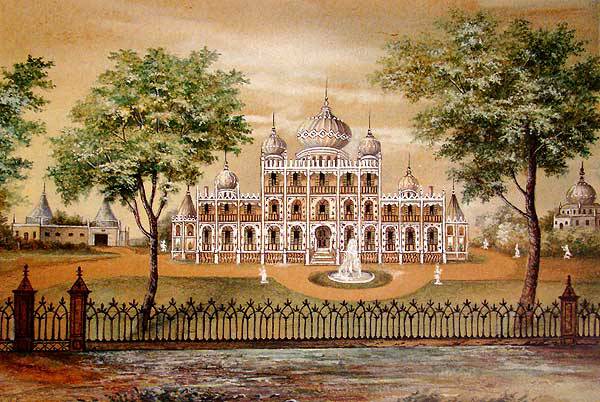
Inside, there was a circular divan under the dome, a large library adorned in Asian landscapes on its walls and elaborate stained glass windows that filled the rooms with colorful light. The grand ballroom sported a shiny wood floor with an inscription, “Love God and be Merry,” words Barnum used often.
“Elegant and appropriate furniture was made expressly for every room in the house,” Barnum would later write. “The stables, conservatories and out-buildings were perfect in their kind. There was a profusion of trees set out on the grounds. The whole was built and established literally ‘regardless of expense,’ for I had no desire even to ascertain the entire cost.”
In addition to the design, Barnum filled his home with animals of all kinds, as he did at his popular American Museum in New York City. Roaming the grounds of Iranistan were mandarin ducks, silver peasants, a cow named Bessie, and a pig named Prince Albert.
The biggest attraction was Iranistan’s largest resident, an unnamed bull elephant. This, of course, was all by design. Barnum felt the addition of the animals, especially the elephant was good promotion for the museum. “When entertaining the public, it is best to have an elephant,” Barnum would later explain. It all started at his home.
But it wouldn’t last.
Late on December 17, 1857, only nine years after it was built, the Iranistan was gone. Barnum, who was refurnishing the mansion at the time got the news the next morning by telegram while staying at the Astor House in New York. The building caught fire, he was told. It was a total loss.
The papers were consoling, but skeptical. Barnum’s good fortunes had recently taken a turn for the worse. It all started when Barnum sought to create a “perfect”town in Connecticut that he would call East Bridgeport. He convinced a large business, the Jerome Clock Company, to move their factory there in the hopes of bringing more people and jobs. The clock company agreed to relocate but first needed help to pay down a debt of $100,000 . Barnum loaned them the money, but was tricked into signing more cash notes. Soon he was responsible for a half million dollars in debt. Barnum was forced to go into bankruptcy and lost a fortune.
Many of his friends supported his plight with sympathy, loans and gifts, but others reveled in his misfortune. To his detractors, Barnum’s latest predicament – more like a humiliation – was subject to ridicule. “Here is a terrible illustration of where the practice of humbug will lead,” proclaimed the New York Herald.
The Chicago Tribune’s headline was even more biting.: “The deceiver is duped,” it read.
In the midst of all this turmoil, Barnum lost his beloved Iranistan.

Initially, no cause of the fire was given. “It is supposed to have been set on fire,” was one newspaper dispatch, not mincing words, but refusing to elaborate. Later, it was suspected a construction worker dropped a lighted pipe. Barnum had recently moved some of the more expense furniture out of the Iransitan during the renovation and claimed he would soon return. His insurance money was far less then the initial cost of $150,000. “My beautiful Iranistan is gone,” Barnum would write in his autobiography.
Barnum recovered financially after going on another successful tour of Europe with Tom Thumb. Upon his return he set out to build another home, again in Fairfield, called Lindencroft, that in its design was spacious, but far less extravagant than the Iranistan. “All the taste that money can could do was fairly lavished upon Lindencroft so that when all was finished it was not only a complete house in all respects, but a perfect home.” Barnum wrote his memoirs.
The biggest disappointment, however, was for the riders on a train line that would pass by the Iranistan grounds everyday. Not only was the impressive building gone, but they missed seeing the elephant, roaming the yard, helping plow the fields, and giving them all a thrill by raising its trunk and bobbing its head in a friendly gesture.

(Sources” The Great and Only Barnum by Candace Fleming; P.T. Barnum: The Legend and the Man by A.H. Saxon; various internet sites)
The Spirit of Giving: When The Winter Warlock’s Heart Was Warmed
By Ken Zurski
One day, quite a long time ago, a tiny baby was left on the doorstep of Burgermeister Mesiterburger, the fun-loathing mayor of Sombertown.
Now, this Burgermeister Meisterburger didn’t like babies.
Not one bit, in fact.
So the grumpy Burgerneister ordered his guards to take the baby away.

But something unexpected happened.
While the guard was pulling the baby through the snowy forest on a sled, the rope broke. Suddenly, the sled and baby went uncontrollably down the mountainside and straight into the home of the Kringle family.
Well, the Kringles were quite surprised by their new visitor. They took the baby in and called him “Kris.” This they explained was because the meaning of KRISTKINDL is the Christ Child.
They raised the boy as their own.
Meanwhile, Burgermeister Meisterburger continued to be a very irritable mayor. One day he tripped on a toy and hurt his leg. So, he outlawed toys! The children of Sombertown were very sad.
What would life be like with no toys?
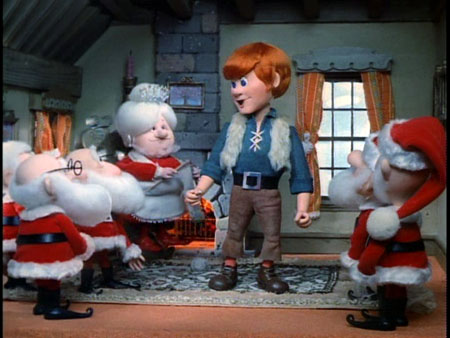
Kris Kringle, now all grown up, sought to bring the joy back to the children. He decided to drop off toys that his family had made to the children of Sombertown. But to get to Sombertown, Kris had to pass through the Land of the Winter Warlock.
Talk about grumpy!

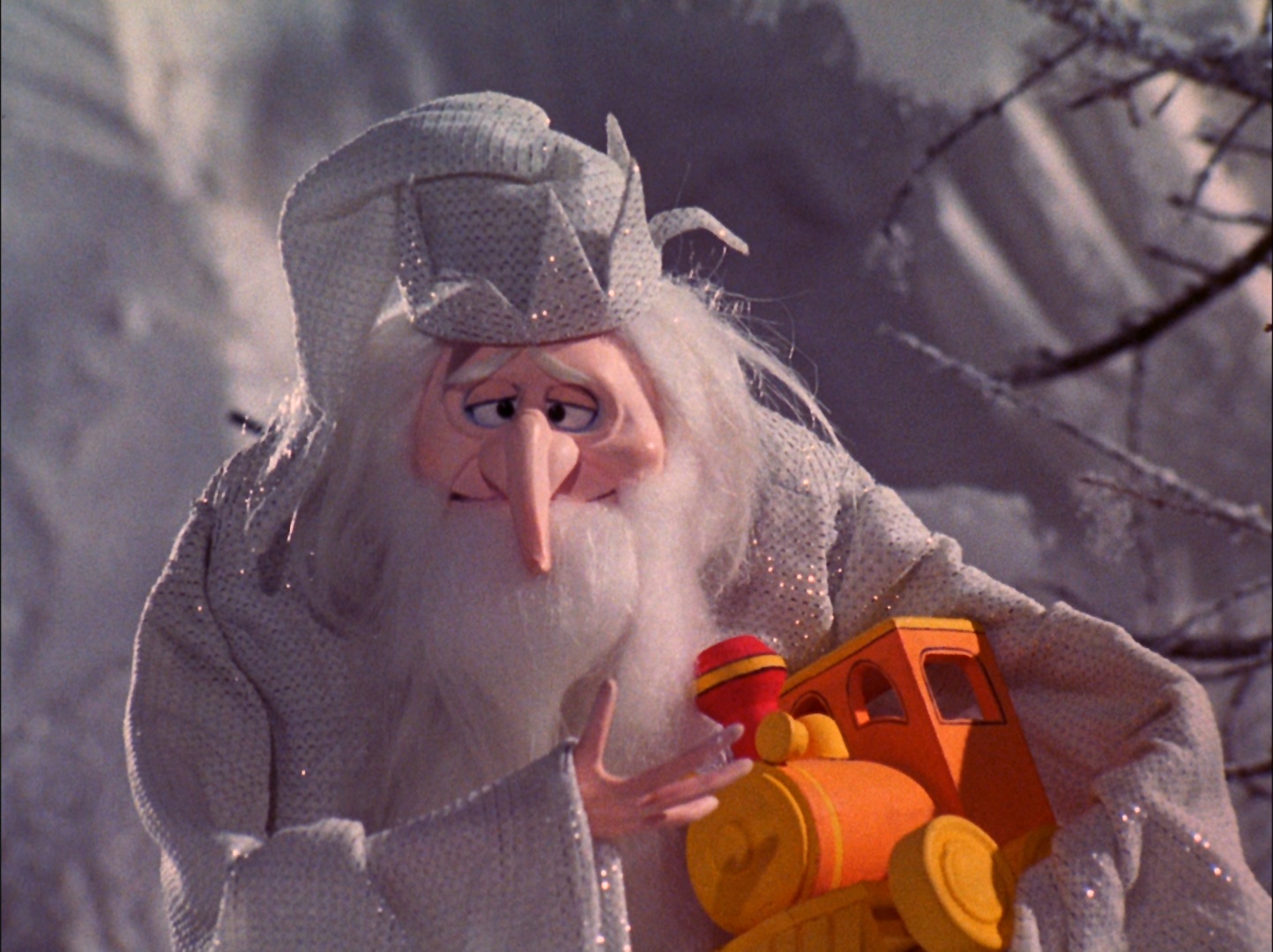
The Winter Warlock was a very mean and bitter man. But Kris knew there was good in the heart of all men. When he gave Winter a gift of a toy train it warmed the Warlock’s cold heart.
All this didn’t sit well with Burgermeister Meisterburger
He ordered Kris arrested for smuggling toys into Sombertown. The Winter Warlock was also arrested along with the other members of the Kringle family. Although all his powers might disappear, the Warlock uses his magic feed corn to make Kris’s reindeer fly.
Together, they all escape.
Finally, thinking his powers will disappear forever, on December 24, the Warlock uses one final bit of magic to create Christmas trees at the wedding of Kris and his girlfriend Jessica, the future Mr and Mrs Santa Claus.
Thanks to the spirit of giving, the Warlock’s powers have magically returned…along with a snowy, white Christmas.

 UNREMEMBERED