
There is a Parachute on the Roof of a Church in France: A D-Day Survival Story
By Ken Zurski
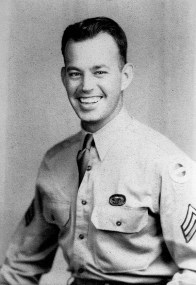
On the night of June 5, 1944, Private John Steele along with several other American soldiers of the 82nd Airborne Division parachuted into an area near Sainte Mere Eglise, a small town in the Lower Normandy region of France close to Utah Beach.
The troopers were ordered to land, secure the perimeter, and cut off the road that led to the German occupied village. But two of the battalions, including Steele’s, were dropped in the wrong location and directly over the town square.
That night in Sainte-Mere-Eglise, church bells were ringing out in alarm. A stray incendiary from anti-aircraft tracers had set a hay barn on fire. The townspeople were worried more businesses and homes would be threatened. So they formed a bucket brigade to extinguish the blaze and prevent any more flare-ups. Meanwhile, the thirty or so German soldiers in town kept firing at the sound of unseen aircraft overhead. Then in the darkness, white chutes appeared. The unfortunate American paratroopers drifting into the city were easy targets. Many were riddled with bullets before they even touched the ground.
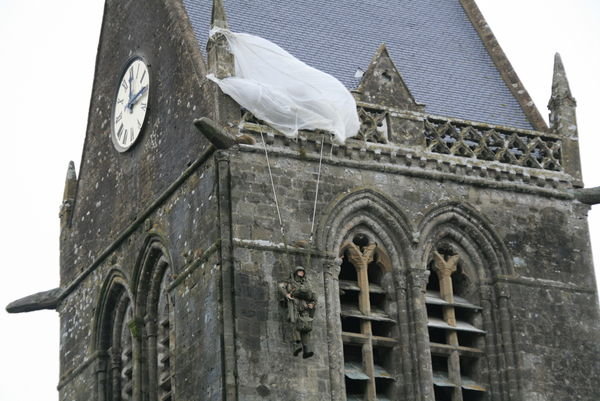
John Steele however made it. He was hit by flak, burnt his foot, and landed on a church roof. His chute caught the pinnacle of the steeple and his suspension lines stretched to full capacity. Another paratrooper named Kenneth Russell also fell on the church. He later recalled the ordeal: “While I was trying to reach my knife to get rid of the straps, another paratrooper hit the steeple and also remained suspended, not far from me. His canopy was hanging from a gargoyle of the steeple, it was my friend John Steele.” Russell was able to cut his lines, free himself, and run for cover.
Steele wasn’t so lucky. He was left dangling on the side of the church, wounded, but conscious. He watched as his buddies were picked off like ducks in a shooting gallery.
Steele’s only recourse was to wait. He hung his head and remained completely still. The Germans eventually found him and thought he was dead. They were going to leave him, but figured he might be carrying important papers. When they cut him down they found Steele alive and immediately took him prisoner. But Steele somehow manged to escape. He soon rejoined his division and helped capture the village, which became the first French town liberated by the Allied Forces after June 6, 1944, better known as D-Day.
Steele was from Metropolis, Illinois, the oldest of his troop at age 32, and the company barber too. He continued to serve in the Battle of the Bulge and the crossing of the Rhine River into Germany when the war ended. He returned home to Illinois in September of 1945. For his efforts, he was awarded the Bronze Star for valor and the Purple Heart for being wounded in combat.
A battle with throat cancer would end his life in 1969, at the age of 56.
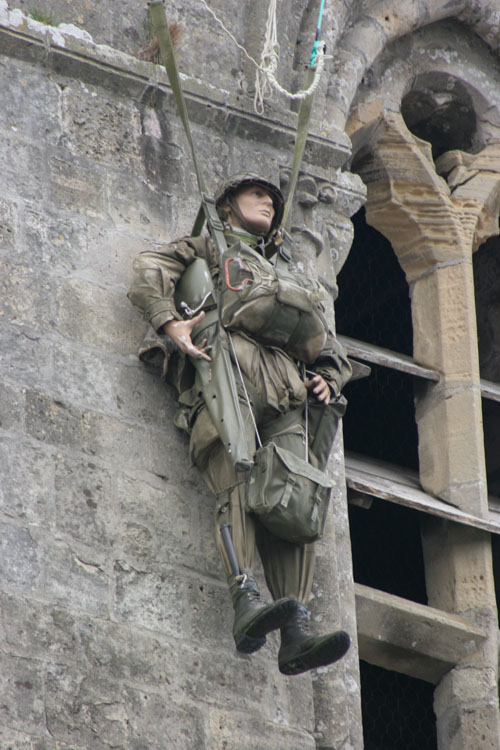
To this day, in his honor, on the very same church where he fell, there is a life-sized effigy of Steele, his parachute snagged, and his body hanging forever from its straps.
The Marathon Runner, Long Pants and Rotten Apples
By Ken Zurski
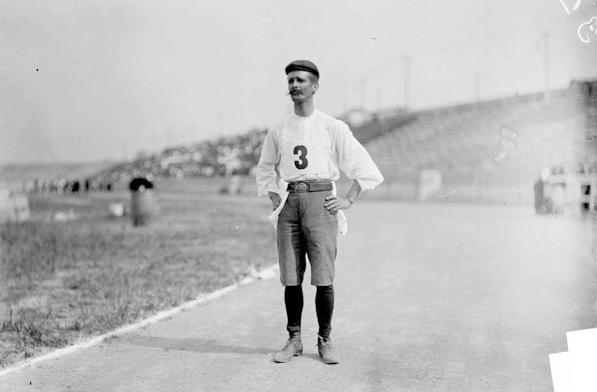
 In 1904, Cuban postman and aspiring runner Felix Carvajal heard a marathon would be held that August at the Summer Olympic games in St. Louis.Without a sponsor, he decided to make the trip alone.
It began poorly. After arriving by steamer in New Orleans, Carahjal lost all his travel money in a craps game. He hitchhiked or walked the rest of the way.
On race day, Carvajal went to the starting line with just the shirt on his back and long wool trousers that he cut off at the knee.
As colorful as it is skeptical, the rest of Carajval’s story continues during the race.
Tired and hungry from the long journey, Carajval reportedly took a brief nap and stopped for a snack at a nearby orchard. He resumed running, but soon cramped from eating rotten apples. Despite this, he did manage to complete the course.
Other runners weren’t so lucky.
It was brutally hot that day, the dirt roads were dry, and dust clouds from lead automobiles and horses choked the participants.
Out of 32 entrants, only 14 made it to the finish line.
The Cuban postman came in fourth.
Well, She Was An Americanized Girl…
by Ken Zurski
 Before the iconic Rosie the Riveter urged women to join the work force in World War II, another strong woman figure was used by the U.S government, this time by the Treasury Department, to sell war bonds.
Her name was Joan of Arc.
Joan was certainly not American. But her story and image gained footing in the U.S. during the first world war.
 Called to serve God in the form of angel’s voices, the teenage Joan takes up the sword, disguises herself as a man, and goes to battle to save the French from evil in the early 15th century. After her capture, she was burned alive at the stake.
In France, even today, she is celebrated as a symbol of nationalism and unity. However, American sensibilities about the mythical Joan are more romanticized.
 In 1946, actress Ingrid Bergman played Joan in a play within a play titled Joan of Lorraine. (Lorraine loosely refers to Joan’s birthplace with the surname Arc.) The play is about a company of actors who stage a dramatization of Joan’s story. Bergman who won a Tony Award for her role, played two parts, Joan and Mary Grey the fictional actress who portrays Joan in the play.
Two years later, Bergman starred in a modified movie version of Joan of Lorraine. The film, renamed Joan of Arc, was a more straightforward retelling of Joan’s story, but still gave Americans a stylized portrayal of the French martyr. By this time, Joan’s image had already been on war posters. “Joan of Arc Saved France,” the ad reads. “Women of America. Save Your Country, Buy War Savings Stamps.”
The ads, which appeared for the first time in 1917, were colorful and attractive, especially the image of Joan.
 In it, Joan is sporting long autumn hair, red lips, and a suit of armor that not only shows a tapered waistline, but a womanly figure as well. “Two orbs of light at the level of her hidden breasts suggest a female bosom that cannot be obscured by the trappings of war,” biographer Kathryn Harrison wrote about the poster’s likeness.
This was not the cross dressing savoir of France, Harrison points out, but a 20th century version, pretty and determined, ready to fight like a man, but remain an empowered woman.
“Oh if I could speak large and round like a boy,” Bergman’s Joan wonders in the play. “But my voice is a girl’s voice and my ways are a girl’s ways.”
Ben Franklin, the Bald Eagle, and the Grudge

By Ken Zurski
Thanks to the sight of its majestic flight, broad 8-foot wing span, and contrasting white head, the bald eagle became the symbol of America when it first appeared on the Great Seal adopted by Congress in 1782.
A year and a half later it had a major dissenter in Benjamin Franklin.
Franklin saw the image of the bird on the badge of the Society of the Cincinnati of America, a military fraternity of revolutionary war officers, and thought the drawing of the bald eagle on the badge looked more like a turkey, a fair and reasonable complaint considering the image looked like, well, a turkey.
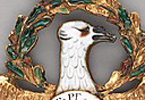
But it was the use of the bald eagle as the symbol of America that most infuriated Franklin. “[The bald eagle] is a bird of bad moral character,” he wrote to his daughter in a complaint letter, “he does not get his Living honestly.” Franklin had a point. The bald eagle was a notorious thief. A good glider and observer, the bald eagle will often watch the more agile Osprey, appropriately called a fish hawk, dive into water to seize its prey. The bald eagle then assaults the Osprey and forces it to release the catch so the scavenging bird can grab it in mid-air and return to its nest with the stolen goods. “With all this injustice,” Franklin wrote as only he could, “[The bald eagle] is a rank coward.”
Franklin then expounded on the turkey comparison: “For the truth, the turkey is a much more respectable bird…a true original Native of America who would not hesitate to attack a grenadier of the British Guards who should presume to invade his farmyard with a red coat on.”
 Franklin’s suggestion of the turkey as the nation’s symbol, however, is a myth. He never suggested such a thing. He only compared the bald eagle to a turkey because the drawing reminded him of a turkey. Franklin’s argument was the choice of bald eagle not in support of the turkey he called “vain and silly.” Some even claim his comments and comparisons were slyly referring to members of the Society, of whom he thought was an elitist group comprised of “brave and honest” men but on a chivalric order, similar to the ruling country to which they helped defeat. This might explain why Franklin’s assessment of the bald eagle in the letter is based solely on human behavior, not a bird’s.
But was it a fair assessment?
Ornithologists today provide a more scientific and sensible explanation. In the”Book of North American Birds” the bald eagle gets its just due, for as a bird, it’s actions are justifiable. “Nature has her own yardstick, and in nature’s eyes the bald eagle is blameless. What we perceive as laziness is actually competence.” Being able to catch a “waterfowl in flight and rabbits on the run,” the book suggests is a noble and rewarded skill.
 Perhaps, a better choice for the nation’s top bird, might have been the golden eagle, who unlike the bald eagle captures its own prey, mostly small rodents, but is powerful enough to attack larger animals like deer or antelope on rare occasions. (Its reputation today is tainted somewhat by rumors that it snatches unsuspecting domestic animals, like goats or small dogs.) But golden eagles don’t want attention. They shy away from more populated areas and appear to be “lazy” only because they can hunt with such precision and ease they don’t really have to ruffle their feathers. Plus, golden eagles were already symbolic. History finds them “perched on banners of leading armies, the fists of emperors and figuring in religious cultures.”
The bald eagle, by comparison, would be truly American.
Perhaps when Franklin made the disparaging comments against the bald eagle he was also harboring a nearly decade old grudge.
In 1775, a year before America’s independence, Franklin wrote the Pennsylvania Journal and suggested an animal to be used as a symbol of a new country, one that had the “temper and conduct of America,” he explained. “She never begins an attack, nor, when once engaged, ever surrenders. She is therefore an emblem of magnanimity and true courage”
Eventually the image Franklin suggested did appear on a $20 bill issued in 1778, adopted for use as the official seal of the War Office, and may have been the inspiration for the Gadsden flag with the inscription, “Don’t Tread On Me.”
But it never officially became the preferred symbol.
Franklin’s choice: the rattlesnake.

P.T. Barnum’s “To-Do” List Blunder
By Ken Zurski
 In addition to his celebrated showy attributes and unabashed self-promotion, P.T. Barnum kept a meticulous daily schedule.
Every day before leaving his lavish home in Fairfield Connecticut, Barnum made a “to-do” list right down to where and what he would eat that day and when he would take a stroll in the garden.
One day, Barnum wrote on his “to-do” list: “drop Charity [his wife] off at the dress maker.”
When Barnum returned home that day, his daughter asked, “Where is mother?”
Barnum thought for a moment then realized he had dropped his wife off as scheduled, but did not return to pick her up because he had not put it on the list.
He immediately called for a carriage to retrieve her.
She was “exceedingly angry,” Barnum explained.
For Roosevelt’s ‘Rough Riders,’ Nothing Beats a Good Smoke
By Ken Zurski

Colonel Theodore Roosevelt didn’t care much for smoking tobacco which is unusual since almost all the men under his command swore allegiance to it. Pipes, cigars, cigarettes or chewing tobacco, didn’t matter as long as they had it. And if they didn’t have it, well now that was a problem too.
The men in reference here are the “Rough Riders,” and thanks to a new book by American West historian Mark Lee Gardner titled Rough Riders: Teddy Roosevelt , His Cowboy Regiment, and the Immortal Charge Up San Juan Hill, a broader picture emerges of these men who in the summer of 1898 famously followed their fearless, toothy-grinned, bespectacled leader to Cuba to fight in the Spanish-American War.
One thing that stands out, besides the lack of war experience at first, was their love of a good smoke.
Gardner cites the writings of war correspondent Richard Harding Davis of the New York Herald. Davis had turned down a commissioned offer to serve, a privilege, since Roosevelt’s diverse group included career men, Ivy League graduates, and experienced horse riders, or the so-called “cowboys” from the west. Most men volunteered but it was more like a contest than an enlistment; not everyone who signed up got to go. Davis had the chance to fight, but chose to write about the war instead. This however tormented him so that during the engagements he carried a sidearm “just in case.” And when the situation presented itself, Gardner relates, “[Davis] borrowed a Krag (revolver) and joined in the final charge.”
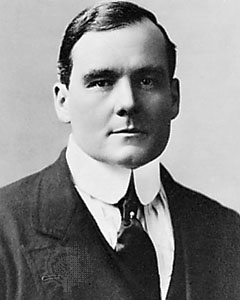
Davis’ most important job, however, was to tell the story and Roosevelt gave journalists, especially his friends, full access. Later detailing every aspect of battlefield life from a soldier’s perspective, Davis described one thing that seemed to be the biggest morale booster of all: tobacco. “With a pipe the soldier can kill hunger, he can forget that he is wet and exhausted and sick with the heat, he can steady his nerves against the roof of bullets when they pass continually overhead,” Davis wrote.
Gardner points out that there were four agonizing days when no tobacco was in the camp. Likely replacement supplies hadn’t arrived yet from the Cuban port city Siboney where American forces came ashore and supply ships were docked. By this point, the men were hopelessly addicted and each day without tobacco was another day of torture. “They got headaches, became nervous, and couldn’t sleep.” Gardner writes.

Tobacco, however, was not a ration. The men had to pay for the privilege. When a shipment arrived there was “as much excitement in the ranks as when they had charged the San Juan trenches,” Gardner notes. When it seemed like some men would have to do without, one of the Ivy Leaguer’s would step in and offer to pay for the lot, about 85 dollars total, to keep others from suffering.
Smoking helped relieve tension too. When Captain Buckey O’Neill, an experienced frontier lawman from Arizona, noticed some uneasiness in the troops, he calmly walked in front of the crouching men smoking a cigarette. Despite their admiration for such courage, O’Neill, who was hoping to settle the men’s fears by example, was tempting his own fate. “Captain, a bullet is going to hit you” the men shouted from the trenches. O’Neill took a long draw of smoke. “The Spanish bullet isn’t made that will kill me,” he boldly proclaimed. Shortly after, a sharp crack was heard. “Like the snapping of a twig,” Gardner described. It was O’Neill’s teeth breaking. A bullet had entered his mouth and traveled through his head, killing him instantly.
“He never even moaned,” a trooper noted.
Most soldiers though had the good sense to wait until the battle was over before lighting up. It was during this downtime – the time in between the bloody skirmishes – that the cravings hit the hardest.
Even Davis in a letter to his father admitted that smoking was an important diversion and one he personally endorsed. “I have to confess that I never knew how well off I was until I got to smoking Durham tobacco,” he wrote.“And I’ve only got a half bag left.”
Some soldiers were so desperate, Davis noted, that they made their own tobacco out of “grass, roots, tea and dried horse droppings.”
Davis graciously doesn’t expound on how that might have tasted.

Her Voice Was Out of This World and You Don’t Know Her
By Ken Zurski
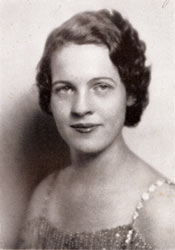
Singer Louille Jean Norman is certainly not a household name, but her voice is an unmistakable part of television history. More on that in a moment. First a little background.
Norman was a coloratura soprano, a vocal range most commonly suited for the opera stage. Unlike counterparts like Maria Callas, however, Norman took her gift to radio instead. It was the 1930’s, and radio was just starting to emerge as an entertainment force. Louille Jean was in her twenties at the time. Her voice and beauty were being noticed. She moved from her native Birmingham, Alabama to New York City to jump start her career. Modeling jobs paid the bills at first, but singing was her passion.
She eventually got bit parts in singing ensembles on several musical variety shows including one with Bing Crosby who would signal her out several times for her solo passages. Norman provided studio background vocals to hitmakers like Sam Cooke, Frank Sinatra, Mel Torme and Elvis Presley. On TV, she appeared on the Dinah Shore Show. with Dean Martin, and back-up on Carol Burnett’s popular variety program. “When you sang,” a colleague once told Norman, “it was the angels.”
But perhaps her most unaccredited and influential contribution is the reason why Norman is unremembered today. It’s why science fiction fans may know her soaring voice, but not her name.
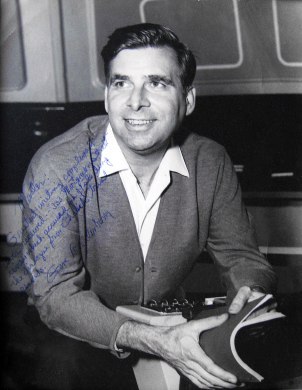
In 1964, when television producer Gene Roddenberry introduced a new space serial titled Star Trek he asked a friend Jerry Goldsmith to write the theme music. Goldsmith was too busy but enlisted fellow composer and collaborator Alexander Courage, who was said to be no fan of the science fiction genre, but drew inspiration from a song he heard on the radio titled “Beyond the Blue Horizon, ” which was featured in the 1930 movie “Monte Carlo” and sung by actress Jeannette McDonald, a soprano.
Courage wrote the theme for the TV series in about a week. Roddenberry heard the music and for reasons some explain were financially motivated, wrote lyrics for the tune. Courage, surprised – and perhaps, a bit offended – by Roddenberry’s contribution, had included a voice in his recording, but no words. The lyric version of the song was never used.
The singer Courage chose for his work was similar to MacDonald, who ironically died the year the theme was written. Norman was another soprano and known for her studio work. Plus she wasn’t a big enough star to turn down such an offer. Norman had the range Courage needed to make the tune work.
Star Trek: The Original Series ran for only three seasons and 79 episodes. In the third and final year, the theme was re-recording without the vocals.
Despite a growing fan base, Roddenberry was hopelessly fighting low ratings, high production costs, and threats from the network to cancel.
He reportedly couldn’t pay Norman her royalty cut that year.

How An Inspired Album Cover Led To An International Phenomenon.
By Ken Zurski
In December of 1981, the English power pop group The Vapors released Magnets, the follow-up to their successful debut album New Clear Days which featured the bouncy and ambiguous hit single, “Turning Japanese.” Although the group had explored dark themes on its first album, Magnets was considered even darker. The title song “Magnets” is about the assassination of the Kennedy’s; “Spiders” and “Can’t Talk Anymore” deal with mental health issues; and “Jimmie Jones,” the single, recounted cult leader Jim Jones and the massacre in Jonestown. Despite the bleak subject matter, however, the songs were mostly upbeat and catchy, a trademark of the group.
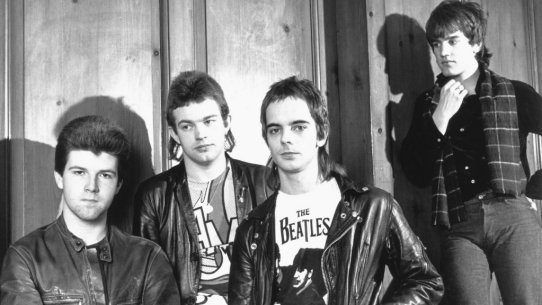
The album, while positively received, was a commercial disappointment. The band blamed it on the lack of interest from their new record label, EMI (later changed to Liberty Records), which bought out United Artists shortly after the first release. Due in part to corporate frustration, The Vapors disbanded after Magnets failed to ignite.
But today, the album has significance for its inspired cover, a complex portrait that mirrored the album’s dark undertones.
Martin Handford was the artist. A London-born illustrator, Handford specialized in drawing large crowds, an inspiration he claims came from playing with toy soldiers as a boy and watching carefully choreographed crowd scenes from old movies.
Handford, who sold insurance to pay bills, was hardly an emerging or successful artist at the time he was asked to design the album cover for Magnets. Drawing upon the theme of the title song, Handford depicted a chaotic crowd scene of an assassination, although you couldn’t tell unless you looked closely. From a reasonable distance, the numerous figures and various colored clothing formed the shape of an eye.
It was both clever and disturbing.
For example, at the top right hand corner of the cover, on the roof of a building, there is a man – presumably the assassin – putting away a rifle. Some of the figures are seen running from the horrific scene unfolding in the “eye’s” iris, while others are curiously drawn to it. Perhaps The Vapors had seen in Handford’s work similarities in their own musical style and themes. The album was an eye-opener, for sure, even before the needle hit the grooves.
But while the cover was certainly an original, the artistic style was not.
In fact it has a name: Wimmelbilderbuch.

Wimmelbilderbuch, or “wimmelbook” for short (German for “teeming picture book”) is the term used to describe a book with full spread drawings of busy place’s like a zoo, farm or town square. The page is filled with numerous humans and animals. It’s geared toward children, but adult’s seemed to like it too, especially when an identified object is hidden, making it more like a puzzle than a colorful picture. Several artists incorporated this style, including a Dutch artist Peter Bruegel, who dates back to the early 16th century, and specialized in drawing intricate landscapes and peasant scenes populated by people in various degrees of distress. Bruegel’s human figures are mostly depicted as frail and challenged.

Handford’s work wasn’t nearly as depressing as Bruegel’s, but they were similar in motive.
Handford purposely drew the Magnets cover with emblematic images, not exactly hidden, but tough to spot, and when found became a personal reward to the viewer – like the tiny assassin on the roof.
This was the inspiration for an idea that eventually became a phenomenon.
Handford came up with a recurring character he would put in all his drawings: a bespectacled man with wavy brown hair who always wore a red and white striped shirt and stocking cap. His name was Wally.
The trick was trying to find Wally in the crowd.
The concept soon became a contest, then a crave. It led to several best selling books and an iconic, some might say exasperating, new enigma emerged.
“Where’s Wally?” is how they describe it around the world.
In America, it’s called “Where’s Waldo?”

The Mercury Dime And The Mysterious Face Debate
By Ken Zurski

When the newly designed 10-cent coin was introduced to the U.S. Mint in 1916, many assumed the figure depicted on the “head” side closely resembled Mercury, the Greek god of commerce. But sculptor Adolph Weinman insisted otherwise. He claimed it was a representation of Lady Liberty.
This confused many observers who thought the profile resembled the features of a man not a woman. In the end, Weinman’s admission didn’t matter.
The coin became known as the Mercury dime.
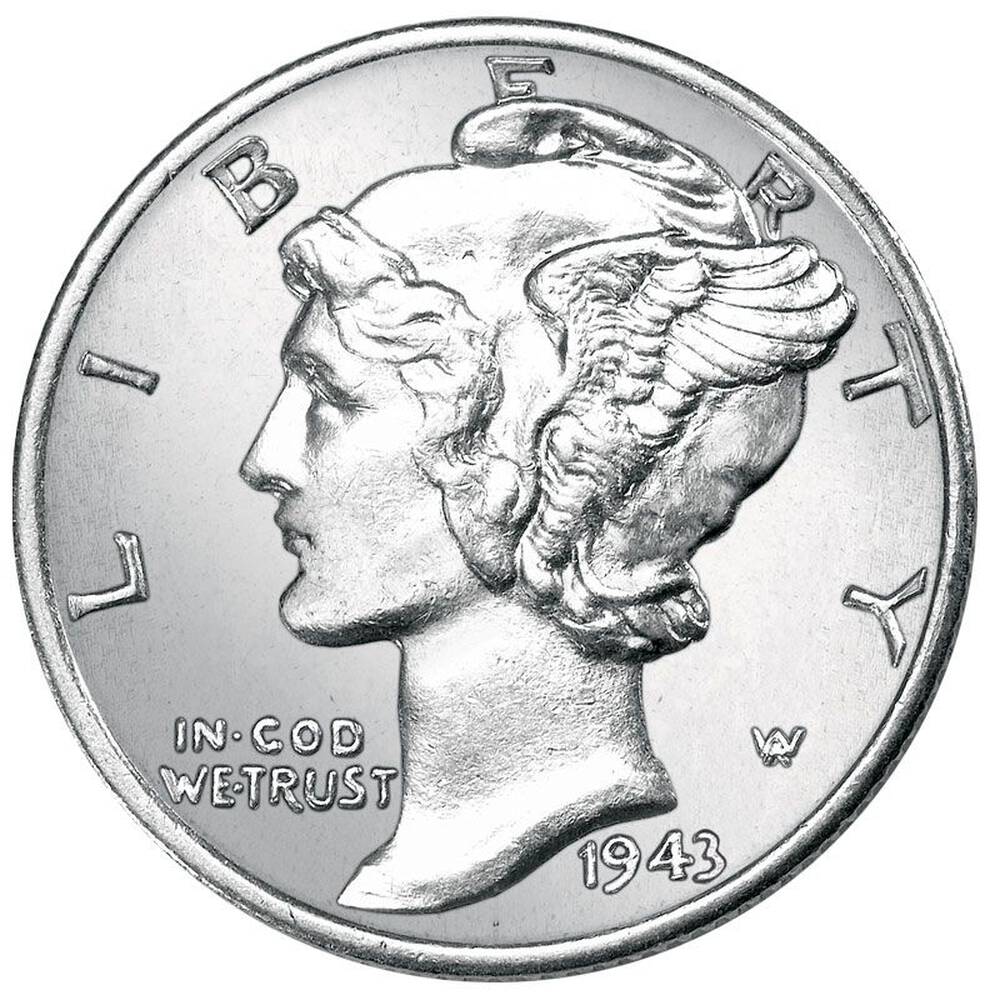
 But more confounding was Weinman’s inspiration.
If as the sculptor professed, it was a woman, not a man; then who was the model?
In 1917, the Reading (Pennsylvania) Eagle newspaper seemed to know the answer with a bold proclamation. It was Elise Viola Kachel, they reported, the wife of of American poet Wallace Stevens, who adorns the coin’s face. According to the Eagle, Kachel was asked to sit for Weinman, a family friend, and the resulting sculpture – a bust—strongly resembles the profile on the dime.

Years later, however, Weinman’s son Robert stoked the fire of debate by claiming the inspiration for his father’s work was a woman named Audrey Munson, a popular silent film star and model.
Munson’s figure had become synonymous with depictions of America’s symbol of freedom lady Columbia, among other portrayals, and usually in various stages of undress.

Neither woman claimed ownership of the dime’s face.
Kachel died in 1963. Her obituary reveals nothing. Munson never mentioned the coin. In 1919, she was embroiled in a scandalous murder case involving a crazed doctor who professed his love to her by killing his wife. Munson was unfairly blamed for the crime. She spent most of her adult life in and out of mental intuitions and passed away in 1996 at the age of 104.
The Mercury dime was discontinued in the 1940’s.
Of Starlings, Shakespeare, and that Annoying Mess on Your Car’s Windshield
By Ken Zurski
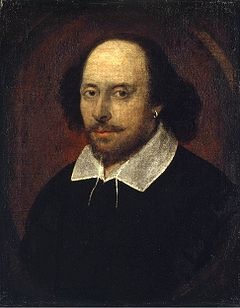
The next time you get bird poop on your car, thank William Shakespeare. Yes, that very same William Shakespeare, the famously known 16th century poet and playwright who penned King Lear and Macbeth among others. But not just Shakespeare, thank Eugene Scheiffelin too.
Or blame Scheiffelin, if you prefer.
Don’t know the name Scheiffelin?
Here’s the story:
In 1890, Eugene Scheiffelin, a member of the American Acclimation Society, a group designed to exchange other plants and animals from another part of the world to the United States, imported about 40 starlings from Europe to New York City.
While Scheiffelin’s reasoning was scientific, it was also borderline fanatic. He loved the writings of William Shakespeare. In fact, he loved Shakespeare so much that he planned to transplant all the birds mentioned in Shakespeare’s plays to America. “I’ll have a Starling [that] shall be taught to speak nothing but ‘Mortimer;” Shakespeare wrote in Henry IV.
Schefflein released about 60 starlings in New York’s Central Park and the following year released 40 more. He really had no way of knowing what effect the birds would have on the ecosystem, good or bad.
Or did he?
About thirty years earlier a man from Brooklyn named Nicolas Pike imported a group of house sparrows from England with good intentions it seemed. Soon, the birds multiplied and spread throughout North America. At first their presence was helpful. They ate caterpillars of certain moths which frequently threatened city shade trees. But their numbers became unbearably large. They were, however, considered friendly birds.
The starlings, because of their aggressive and destructive nature, would be much worse.

Like the sparrow, within a decade at least, tens of millions of starlings plagued the countryside.
Today in the Book of North American Birds, the European Starling (whose name still playfully carries its immigration status) is found in nearly all of inhabitable North America and year round, unlike the common robin, which is seasonal in many parts of the country.
“The starling is ubiquitous,” The New York Times wrote in 1990, the 100th anniversary of the starling in America, “with its purple and green iridescent plumage and its rasping, insistent call. It has distinguished itself as one of the costliest and noxious birds on our continent.”
Costly because it eats – no, hordes – seeds and fruits. Oftentimes this is done in packs of thousands that can devour whole fields in a single day.
Noxious because its droppings are linked to numerous diseases not only to animals but humans too.
Of course starlings eat insects, lots of insects, perhaps more than any other bird species in the U.S. But that doesn’t offset their flair for destruction and overall annoyance to farmers, gardeners and city dwellers. “Starlings,” wrote an ornithologist, “do nothing in moderation.” That would include pooping, of course. They eat so much that they go and go and go. And since they roost in large numbers in well populated areas, they usually go in places – and on things- we least want them too.
Schefflein died in 1906 and for a time enjoyed the pleasures of seeing Starlings in and around New York City’s Central Park, but only Central Park. This, however, meant that his plan to migrate the birds throughout the country was failing. Then in 1896, a nesting of starlings was discovered in the eaves of the Museum of Natural History, which was directly across the street from Central Park. Then in 1900, a letter to the editor of The New York Times asked, “Can you inform me what sort of bird it is which frequents this neighborhood?” The Starlings were on the loose.
Shakespeare would have been proud, Schefflein must have thought at the time.
He had no idea.
Today, there are roughly 200 million starlings in North America.
Check your car windshield. You’ll see.

 UNREMEMBERED