
Henry Travers: The Character Actor Who Landed a Heavenly Role

By Ken Zurski
Travers John Heagerty, better known as Henry Travers, was an English stage actor who came to America in 1917 and starred in numerous Broadway productions that spanned nearly two decades.
His most famous stage role was in “You Can’t Take It With You,” a Pulitzer Prize winning play about “a man from a family of rich snobs who becomes engaged to a woman from a good-natured but decidedly eccentric family.” In over 380 performances, Travers played the role of Grandpa Vanderhof, the patriarch of the oddball Sycamore family. When it came time to make a movie version, however, Travers was passed over for the more well known American film actor Lionel Barrymore. Jimmy Stewart played the lead.
“You Can’t Take It With You” became the highest grossing picture in 1938 and won an Oscar for Best Picture.
Director Frank Capri won Best Director, his third in five years.
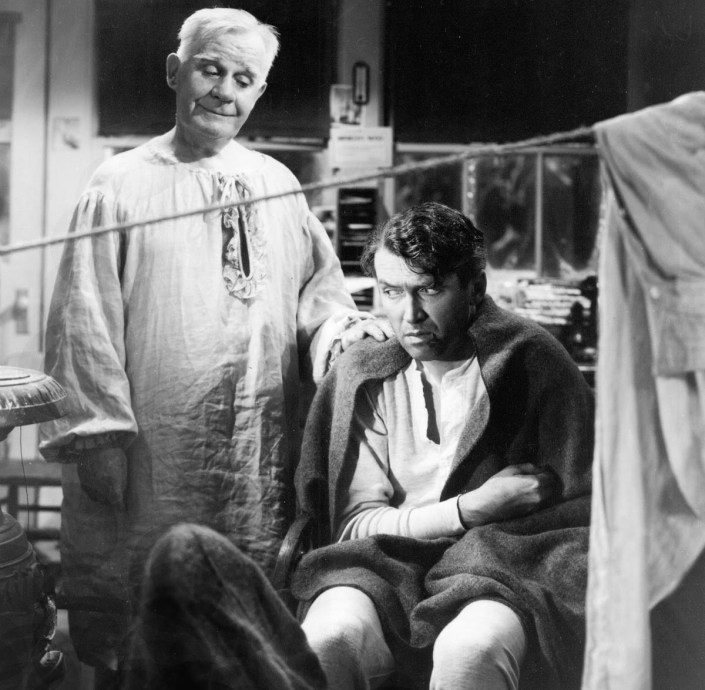
Although Capri went with more established actors in the Oscar winning film, in 1945, when casting for a new production, he found a role for Travers as a bumbling but goodhearted guardian angel who saves a man from taking his own life and shows him the true spirit of living. In turn, the angel earns his wings to heaven.
The angel, of course, was named Clarence and the film was titled “It’s a Wonderful Life.”
The rest of the movie’s cast was a familiarity. Capra tapped the steady Lionel Barrymore to portray the miserly banker, Mr. Potter and mainstay Jimmy Stewart played the part of George Bailey. Travers got fourth billing behind actress Donna Reed who played George’s wife, Mary.
“It’s a Wonderful Life” received 5 Academy Award nominations in 1947, including Best Picture, Best Actor for Stewart and Best Director. It ran its course and faded off as most movies did in mid-20th century. Then in the 1970’s, three decades after it’s release, the movie gained a newfound interest and dedicated fans. It has been a beloved perennial holiday favorite ever since.
“It’s a Wonderful Life” was also a bit of swan song for the interminable character actor. After decades in the business and over 50 films, Travis’ appeared in just one more movie, a 1949 comedy, “The Girl for Jones Beach,” starring Ronald Reagan. That same year, Travis retired from acting. He was 75.
Travers didn’t live long enough to see his character “Clarence” become so revered.
He died in 1965 at the age of 91.
‘It’s a Wonderful Life’ Was Inspired by a Simple Story
By Ken Zurski
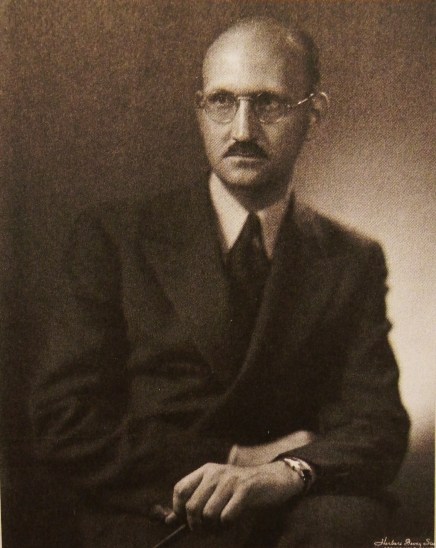
In November 1939 Philip Van Doren Stern, an American author, editor and Civil War historian wrote an original story titled “The Greatest Gift” a heartwarming Christmas tale about a man named George Pratt who gets a dying wish granted that literally changes his life.
Stern’s story begins on a Christmas Eve night as a despondent George leans over the rail of an iron railroad bridge. He contemplates jumping into the river below:
“I wouldn’t do that if I were you,” a quiet voice beside him
said.George turned resentfully to a little man he had never seen
before. He was stout, well past middle age, and his round
cheeks were pink in the winter air as though they had just been
shaved. “Wouldn’t do what?” George asked sullenly.
“What you were thinking of doing.”
“How do you know what I was thinking?”
“Oh, we make it our business to know a lot of things,” the
stranger said easily.
George explains why he is so despondent.
“I’m stuck in this mudhole for life doing the same dull work day after day. I’m just a small town bank clerk. I never did anything useful and interesting and it looks like I never will. I might as well be dead. I might be better dead.”
George then tells the man that he wishes he was never born. The man tells George his wish is granted. “You’ve never been born,” he says.
“The Stranger,” as he is called, then tells George to pose as a door-to-door brush salesman to avoid any confusion with people he knows well, but who now have no idea who he is.
When George confronts his wife Mary, she’s married with a child, a son, who pretends to shoot George with a toy gun. “You’re dead,” the boy tells him. Dejected, George offers her a complementary brush and leaves.
George goes back to the bridge to confront “the stranger” and demands an explanation. “You already had the greatest gift of all,” the stranger explains, “the gift of life.” George begs for his old life back and returns home to Mary. There he finds the brush he gave her.
Stern desperately tried to get his little story published, but it never sold. So in 1943, he made it into a Christmas card book and mailed 200 copies to family and friends.
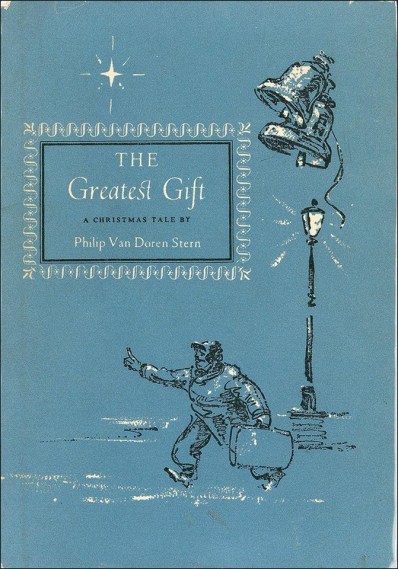
The card book and story somehow caught the attention of RKO Pictures producer David Hempstead who showed it to actor Cary Grant’s agent.
In April 1944, RKO bought the rights but failed to create a satisfactory script.
Grant went on to make another Christmas movie “The Bishop’s Wife.”

However, another acclaimed Hollywood heavyweight, Frank Capra, who already had three Best Directing Oscars to his name, liked the idea. RKO was happy to unload the rights.
“The story itself is slight, in the sense, it’s short,” Capri said referring to Stern’s book. “But not slight in content.”

Capra bought it and brought in a slew of writers to polish and stretch Stern’s book into a full length feature film. They hired another a well-known actor James Stewart to play the main character, now renamed George Bailey. “The Stranger” in the book became a guardian angel named Clarence. And while the rest of the film is mostly a screenwriter’s version, the story of George saving his little brother from a drowning incident was included from the book.
In December of 1946, seven years after Stern wrote the original story, “It’s a Wonderful Life” was released in theaters.

Marvel of the Ford Rotunda: From the Fair to Iconic Landmark to an Enormously Popular Christmas Attraction
By Ken Zurski
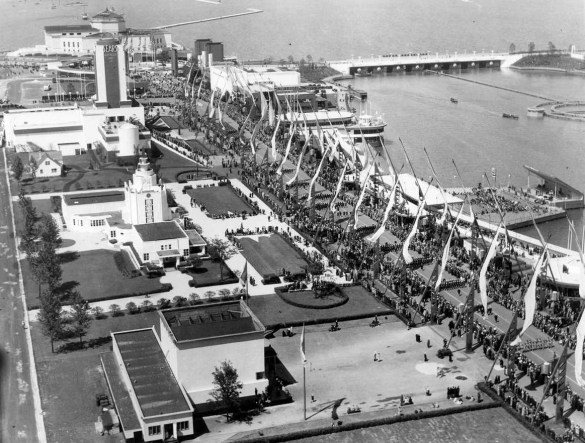
In 1933, at the Chicago’s World’s Fair, among the many distinctive features that lined the city’s lakefront property was a uniquely shaped building, circular in design, with a top that resembled ”a granulated cluster of internally meshed gears.”
The Ford Rotunda, as it was called, was the brainchild of company founder Henry Ford and architect Albert Kahn, who designed the building specifically for the Ford Motor Co.’s contribution to the Fair.
The Fair’s theme was technology, which inspired the tagline: “A Century of Progress,” and since planes, trains and automobiles were a large part of the Fair’s showcase exhibits, Ford fit right in.

The 12-story Ford Rotunda had a long wing extending off the base, thousands of multi-colored exterior lights, and in the open-aired middle, a spotlight that shot skyward and could be seen for miles. Inside was the large rotunda, with moving parts and displays, including a photographic mural of a Ford plant and a 20-foot high globe.

In 1934, when the Fair closed, Ford had the building dismantled and moved to Dearborn, Michigan near the site of the Rogue plant company headquarters.
“The reconstructed rotunda is expected to relive the congestion,” the papers noted, referencing the attendance numbers at the Fair.
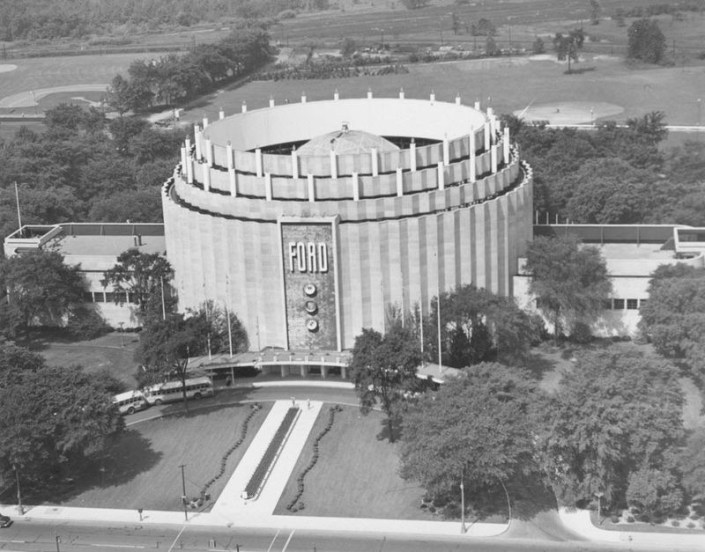
On May 4, 1936, in Dearborn, the Rotunda opened its doors again.
Then in 1953, to celebrate Ford’s 50th anniversary, the Rotunda went through another transformation. A geodesic roof was constructed over the open center. This allowed for more varied and seasonal exhibits, including the appropriately titled “A Christmas Fantasy,” which combined sparkling new Ford cars with holiday-themed displays.

The Christmas tree and doll displays were especially popular.
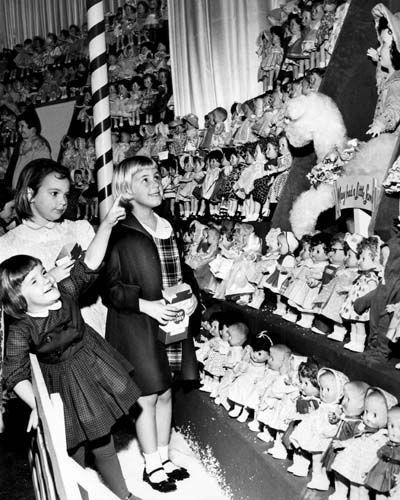
“A Christmas Fantasy” drew so many people that the Ford Rotunda became one of the most famous and frequented buildings in the nation. It quickly surpassed more established tourist attractions like the Statue of Liberty and the Washington Monument in the number of visitors attending each year.
That is until November 9, 1962.
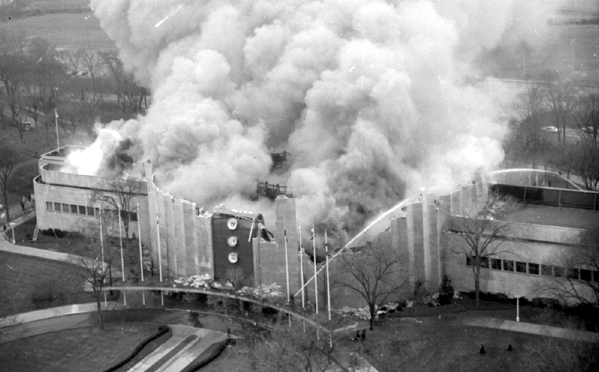
On that day a kettle of hot tar used for winter sealing was left unattended and the Rotunda’s roof caught fire. Thankfully, everyone got out safely and only one worker was slightly injured. But the building didn’t stand a chance.
It was gone in less than two hours.
The Ford Company decided not to rebuild.
What would Thanksgiving be like if the Turkey Had Become the National Symbol?
By Ken Zurski

It’s hard to imagine anything other than the majestic bald eagle as the symbol of the United States of America. But back in the late 18th century, when good and honorable men were deciding such things, there were several considerations, mostly other animals, vying for a symbol which best represented the new country.
Was the turkey one of them?
Perhaps, but it wasn’t Benjamin Franklin who nominated the turkey, as some history lessons would later suggest. He did however admire the flightless bird. But Franklin’s choice for America’s national symbol was much different than both the bald eagle and the turkey.
Here’s the backstory:
In 1783, a year-and-half after Congress adopted the bald eagle as the symbol of America, Franklin saw the image of the bird on the badge of the Society of the Cincinnati of America, a military fraternity of revolutionary war officers. He thought the drawing of the bald eagle on the badge looked more like a turkey, a fair and reasonable complaint considering the image looked like, well, a turkey.
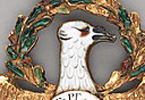
But it was the use of the bald eagle as the symbol of America that most infuriated Franklin. “[The bald eagle] is a bird of bad moral character,” he wrote to his daughter. “He does not get his Living honestly.”
Franklin had a point. It was a a matter of principal. The bald eagle was a notorious thief, he implied. Here’s why: A good glider and observer, the bald eagle often watches other birds, like the more agile Osprey (appropriately called a fish hawk) dive into water to seize its prey. The bald eagle then assaults the Osprey and forces it to release the catch, grabs the prey in mid-air, and returns to its nest with the stolen goods. “With all this injustice,” Franklin wrote as only he could, “[The bald eagle] is a rank coward.”
Franklin then expounded on the turkey comparison: “For the truth, the turkey is a much more respectable bird…a true original Native of America who would not hesitate to attack a grenadier of the British Guards who should presume to invade his farmyard with a red coat on.”
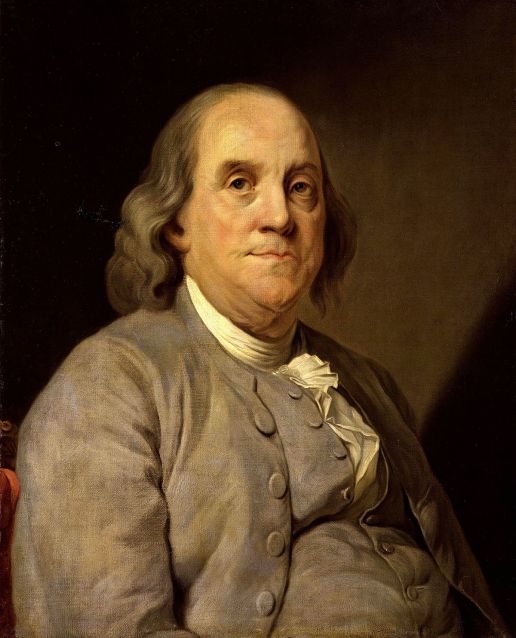
Franklin’s suggestion of the turkey as the nation’s symbol, however, is a myth. He never suggested such a thing. He only compared the bald eagle to a turkey because the drawing reminded him of a turkey. Franklin’s argument was the choice of bald eagle not in support of the turkey he called “vain and silly.”
Some even claim his comments and comparisons were slyly referring to members of the Society, of whom he thought was an elitist group comprised of “brave and honest” men but on a chivalric order, similar to the ruling country to which they helped defeat. This might explain why Franklin’s assessment of the bald eagle in the letter is based solely on human behavior, not a bird’s.
But was it a fair assessment?
Ornithologists today provide a more scientific and sensible explanation. In the”Book of North American Birds” the bald eagle gets its just due, for as a bird, it’s actions are justifiable. “Nature has her own yardstick, and in nature’s eyes the bald eagle is blameless. What we perceive as laziness is actually competence.” Being able to catch a “waterfowl in flight and rabbits on the run,” the book suggests is a noble and rewarded skill.

Perhaps, a better choice for the nation’s top bird, might have been the golden eagle, who unlike the bald eagle captures its own prey, mostly small rodents, but is powerful enough to attack larger animals like deer or antelope on rare occasions. (Its reputation today is tainted somewhat by rumors that it snatches unsuspecting domestic animals, like goats or small dogs.) But golden eagles don’t want attention. They shy away from more populated areas and appear to be “lazy” only because they can hunt with such precision and ease they don’t really have to ruffle their feathers. Plus, golden eagles were already symbolic. History finds them “perched on banners of leading armies, the fists of emperors and figuring in religious cultures.”
The bald eagle, by comparison, would be truly American.
Perhaps when Franklin made the disparaging comments against the bald eagle he was also harboring a nearly decade old grudge.
In 1775, a year before America’s independence, Franklin wrote the Pennsylvania Journal and suggested an animal be used as a symbol of a new country, one that had the “temper and conduct of America,” he explained. He had something in mind. “She never begins an attack, nor, when once engaged, ever surrenders;” he wrote. “She is therefore an emblem of magnanimity and true courage”
Eventually the image Franklin suggested did appear on a $20 bill issued in 1778, adopted for use as the official seal of the War Office, and may have been the inspiration for the Gadsden flag with the inscription, “Don’t Tread On Me.”
But it never officially became the preferred symbol of the new country.
That belongs to the bald eagle.
Franklin’s choice: the rattlesnake.

The Description of a Tornado More Than a Century Apart is Eerily Familiar
By Ken Zurski

The town of Red Bud, Illinois sits in northwest Randolph County on the far southwestern part of the state along Illinois State Route 3, a scenic byway that’s part of the Great River Road, a long designated drive that follows the banks of the Mississippi River from Minnesota south to the Gulf of Mexico. Due to practically, it seems, the River Road branches off the Mississippi banks just south of St. Louis. Then it extends eastward for about a 100 miles before looping back to join the river’s shoreline again in Chester, Illinois.
Basically, where Illinois’ protruding belly – its western border – bottoms out near the southern tip of the state, the River Road is associated with the river in name only.
Red Bud is in the middle of this inland path, about 30 miles east of the river. So comparative to the more picturesque Mississippi shore, the deviated route that passes through Red Bud is pastoral enough, but nothing special. In fact, on an official site map for the Great River Road and its attractions, among the hundreds of interesting places to visit, Red Bud is not listed as one of them.
Those who live there, however, would say otherwise.

Red Bud’s history reads like many other cities of its size and location. A rouge pioneer happens upon the land and builds a log cabin. He begins to farm and prosper and soon other settlers are coming for similar reasons. A school is built along with several businesses. In 1847, the first public lots are sold. Homes are constructed and on each landowners plot there’s a distinctive feature, a colorful tree, known as a redbud. The stout tree, with its distinctive pink and red leaves that bloom during the spring before turning green in the summer, is what the town is named after.
In 1867, Red Bud was chartered.
In 1875 it officially became a city.
Less than 20 years later, in 1892, it was nearly wiped off the map.
The date was November 17.
Whoosh!
It was 3:30 in the morning when the distant rumbling of thunder awakened the less hardy of sleepers. Then streaks of lightening were followed by an awful rush of wind. Suddenly, timbers began cracking in succession and flew like sharpened arrows in all directions. Horses neighed in terror.
Townspeople, already frightened by the sickening sounds of rushing wind and startled animals, huddled inside their homes and watched in horror as their roofs and walls blew out. They held on for dear life as everything around them was swept up by the mighty wind.
Then in a whoosh it was gone, followed by an eerie silence.
At first light, the devastation was apparent. “Where Wednesday night stood a beautiful city, full of happy homes,” the Rolla New Missouri would later report, “there is to-day a scene of wreck and desolation. Houses, barns, fences and orchards are leveled to the earth and spread over the surrounding country. The scene is difficult to describe. The streets when lit up the first streaks of dawn presented a pitiable scene of ruin.”
The search for survivors commenced at dawn. “The streets were blocked with the debris of the storm’s wreck and for some time it was impossible to get an accurate list of the sufferers of the terrible visitation.” the paper read. One thing however was painfully clear. “The number of houses wrecked by the storm is fairly complete.”
What the searchers found, however, was surprising.
While just the loss of one person’s life constitutes a tragedy, the number of dead was far less than expected. A woman referred to in the papers as Mrs. Jacob Koch and her 11-year-old son were so badly injured, went the report, “they will likely die.” Sadly they did. But they were the only two casualties. While many were injured, and some may have later succumbed to their injuries, the mother and child were listed as the only victims of the “terrible twister.”
Most of the other residents, however, while fortunate to survive, were left homeless. Describing one structure as “handsome and solid” before the storm, the paper remarked: “[The residence] was crumbled to a shapeless mass as though it had been a toy house, with scarcely one stone standing above another over the foundation. The destruction was complete.”
Eighty-four buildings in all were destroyed leaving a town not just in utter destruction, but “utter desolation,” the papers reported.
The town’s rebirth is also a remarkable story. In the months and years that followed, the people of Red Bud banded together and rebuilt their homes and their lives. Even the beautiful redbud trees, the ones lost in the raging cyclone, were replaced.
Red Bud literally regrew.
Devastating!
More than 120 years later, in 2013, on the same date, November 17, during a seasonally warm Sunday morning, a tornado ripped through the town of Washington, Illinois, in the central part of the state. While sirens wailed and warned those it was coming, where it would end up and how powerful it would be could only be answered after the twister had cut a destructive path through a tightly packed neighborhood. “Utter destruction,” was a term used again to describe the widespread damage. Large lumber piles sat where mid-sized homes once stood.
The story of the Washington tornado, like Red Bud’s, is a tragic one. A man was killed in the storm and several more later died from injuries.

We know the Washington story well. In the modern day era of social media, instant messaging, and uploaded videos, almost everyone could share in some sense at least, the terror of those few horrifying minutes when the twister barreled through. And like Redbud a century-and-a-quarter ago. Washington’s spirit lives on. Despite the heartbreaking losses, residents rebuilt homes and got on with their lives.
History!
Today, Red Bud does not commemorate the deadly tornado of 1892. It’s just too far removed. But it’s still listed in Illinois history books as one of the most damaging in the state’s history. There are others that have been more deadly, but in comparison to time, and in terms of destruction, it was devastating.
Perhaps what did not change after all these years are the twisters themselves; menacing in size and fury, unsuspecting and weirdly confusing. “Some of the freaks of the storm were marvelous,” the papers described in 1892. “Here a house was literally lifted from the ground and scarce a vestige of it left, while a neighboring residence seemed to have escaped with comparatively little injury.” That report from Red Bud, could have been also been written about Washington. In both cases, in freakish instances, a home on one side of the street was completely leveled while a structure on the other side was left unscathed.
Today, we may be better informed and better prepared when a tornado suddenly strikes, but we are still humbled, awed and shocked by its size, strength and impact. Time has not changed that.
In Illinois, Red Bud and Washington didn’t pick the date, November 17, but the two are forever linked by that day, over a century apart, when a tornado came to their respective towns and changed lives forever.
The Poll That Picked FDR To Lose
By Ken Zurski
In 1920, starting with the election of President Warren G. Harding, a weekly magazine called The Literary Digest correctly picked the winner of each subsequent presidential election up to and including Franklin D. Roosevelt’s decisive victory over Herbert Hoover in 1932.

The Literary Digest, founded by two Lutheran ministers in 1890, culled articles from other publications and provided readers with insightful analysis and opinions on the day’s events. Eventually, as the subscriber list grew, the magazine created its own response-based surveys, or polling, as it is known today.
The presidential races were the perfect example of this system working.
So in 1936, with a subscriber base of 10 million and a solid track record, the Digest was ready to declare the next president: “Once again, [we are] asking more than ten million voters — one out of four, representing every county in the United States — to settle November’s election in October,” they bragged.
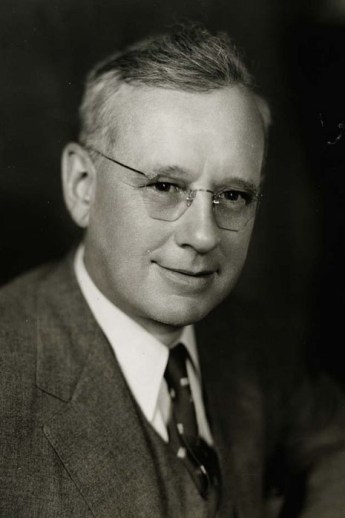
When the tallies were in, the Digest polls showed Republican Alfred Landon beating incumbent Roosevelt 57-percent to 43-percent. This was a surprise to many who thought Landon didn’t stand a chance.
He didn’t.
Roosevelt was a progressive Democrat whose New Deal policies, like the Social Security Act and Public Pension Act, passed through Congress with mostly bipartisan support. Soon, millions of Americans burdened by the Great Depression would receive federal assistance.
Landon, a moderate, admired Roosevelt but felt he was soft on business and yielded too much presidential power. “I will not promise the moon,” he exclaimed during a campaign speech and warned against raising payroll taxes to pay for benefits. It didn’t work. Roosevelt won all but two states, Maine and Vermont, and sailed to a second term with 60-percent of the popular vote. Even Landon’s hometown state of Kansas, where he had been Governor since 1933, went with the President. In the end, Landon’s 8 electoral votes to Roosevelt’s 532 – or 98-percent – made it the most lopsided general election in history.
In hindsight, poor sampling was blamed for the Digest’s erroneous choice. Not only were subscribers mostly middle to upper class, but only a little over two of the ten million samples were returned, skewing the result.

The big winner, however, besides Roosevelt, was George Gallup, the son of an Iowa dairy farmer and eventual newspaperman, whose upstart polling company American Institute of Public Opinion correctly chose the President over Landon to within 1 percent of the actual margin of victory.
In 1948, the validity of public opinion polls would be questioned again when Gallup incorrectly picked Thomas Dewey to beat Roosevelt’s successor by death, Harry S.Truman.
Since it was widely considered Truman would lose his reelection bid to a full term, Gallup survived the scrutiny.
Even the Chicago Tribune got it wrong, claiming a Dewey presidency was “inevitable,” and printing an early edition with the now infamous headline of “Dewey Defeats Truman.” A humiliation that Truman mocked the next day.
The Literary Digest, however, had no say in the matter.
After the embarrassment In 1938, the magazine merged with another review publication and stopped polling subscribers.

The Outspoken, Pipe Smoking Congresswoman from New Jersey

By Ken Zurski
Millicent Fenwick was a four-term Republican member of the United States House of Representatives from New Jersey between 1975 and 1983. She entered politics late in life and was known for her energy and colorful enthusiasm. “The Katharine Hepburn of politics,” a former aide called Fenwick, adding, “With her dignity and elegance, she could get away with saying things others couldn’t.”
Fenwick was regarded as a moderate and progressive within her party and was outspoken in favor of civil rights and the women’s movement. She was also an incessant pipe smoker.
In photos, Fenwick is often seen lighting up in chambers, which wasn’t unusual at the time. House committee hearings were usually filled with billows of smoke from either pipes or cigarettes.
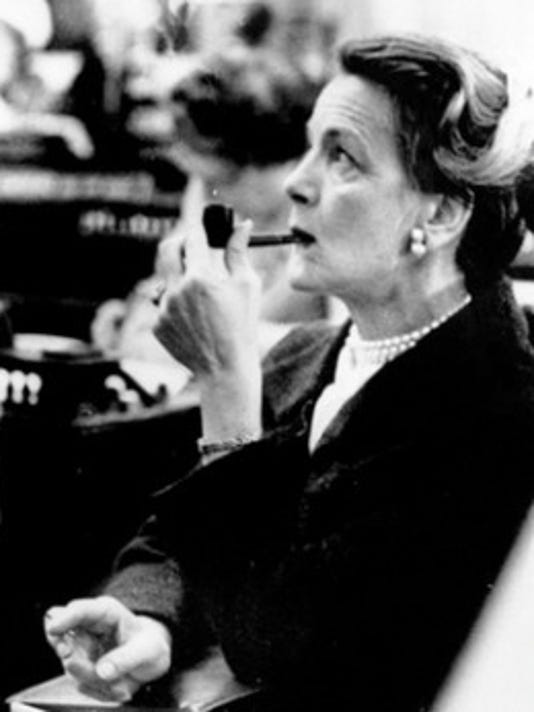
As a woman however, both as a standing member of Congress and a smoker, it drew attention. Fenwick claimed the pipe smoking habit was the result of a physician telling her not to smoke cigarettes.
“Tall and patrician, but down-to-earth and pungent,” is how the New York Times described her.
Today, she is known for being the inspiration behind the Lacey Davenport character in Garry Trudeau’s “Doonesbury” cartoon. Trudeau insists that Davenport was just a composite of several women and no one person in particular came to mind. But the comparison in the look and attitude could not be ignored.

Politically however, it was a different story.
In the comic, Davenport ran for Senate seat and won. In contrast, in the 1982 Senate race, Fenwick at the age of 72, was narrowly defeated by Democrat Frank Lautenberg.
Lautenberg claimed President Reagan’s unpopular polices at the midterm and his opponents age (“She would be almost 80 by the end of her first term”) were all factors that worked in his favor. Lautenberg was 58. He won the seat 51-to-48.
Fenwick, who had been ahead in the polls by 18 points, was stunned. “I had no concession speech prepared,” she said about the surprising defeat.
Fenwick died of heart failure in 1992

The “Greatest Showman” singer Jenny Lind had Several Ships Named After Her
By Ken Zurski
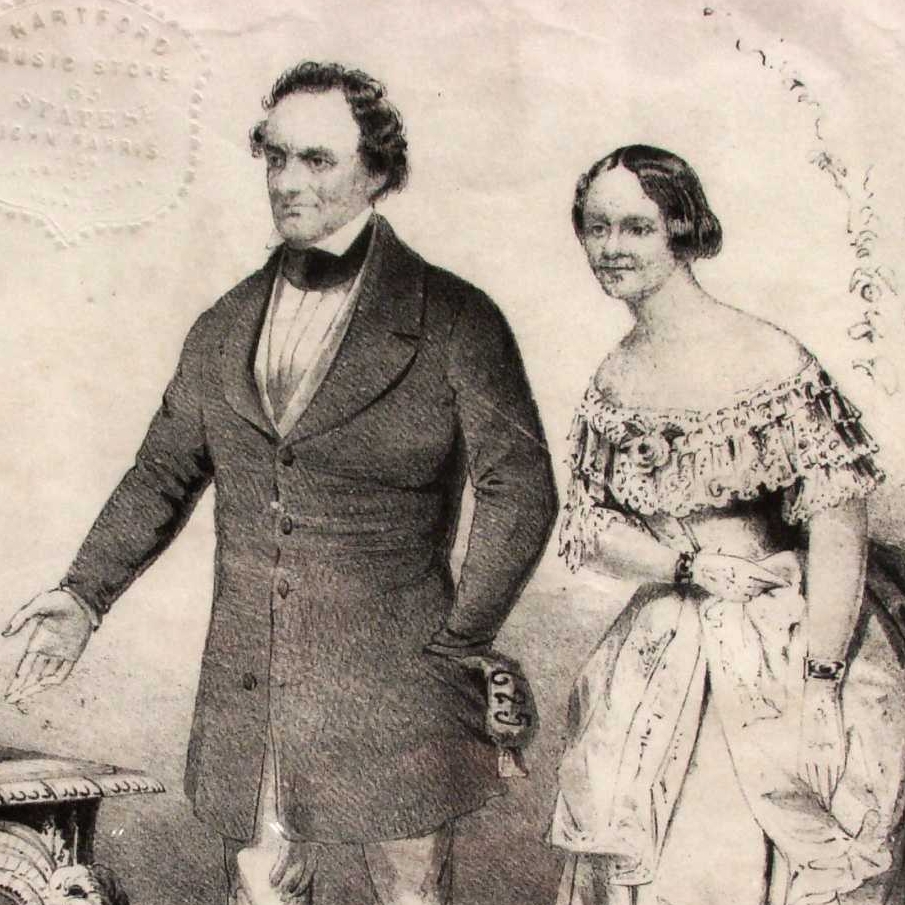
In the movie, The Greatest Showman, the showman in the title, P.T. Barnum, brings a relatively unknown Swedish born singer named Jenny Lind to America. In a dramatic and impressively moving scene, Lind proceeds to captivate an unassuming audience with her soaring voice. Barnum looks on in wonder. A star is born, it seems, even if it is an overtly dramatic depiction.
In reality, Jenny Lind was an opera singer, a soprano, popular in her native Europe, mostly polite and a modest dresser as well. As one article described, she was not the “red lipstick type” portrayed in the movie. Nor did Barnum and Lind have a hint of a romantic relationship as the movie subtly applies.
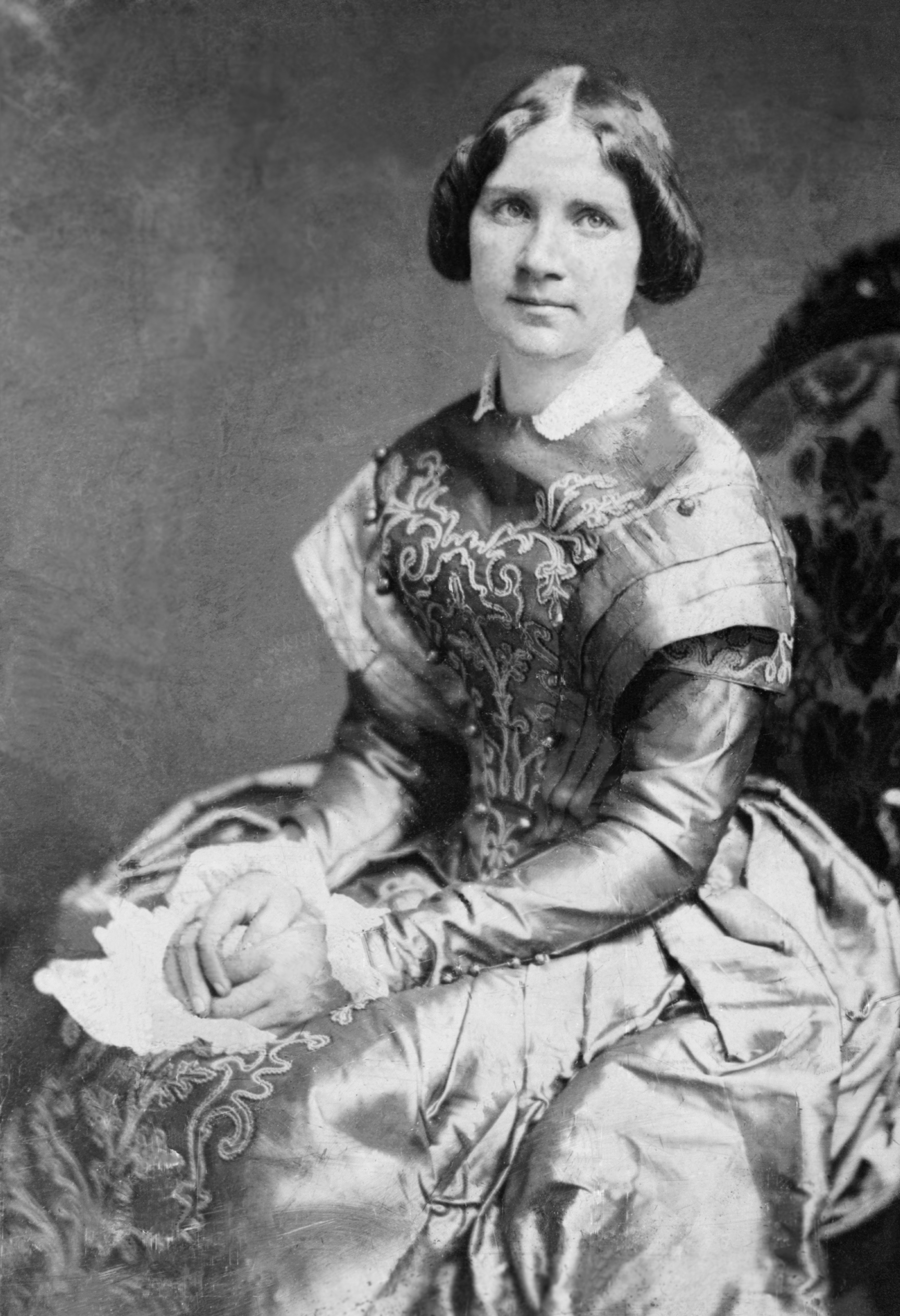
Regardless of the portrayal in the film, one thing was clear, in 1850, Barnum made Lind an international superstar which reverberated in many ways, including Lind’s indirect role in the US Civil War.
Specifically, two war ships named in her honor.
Why name a ship after the popular singer? That was clearer in 1851 before the war when several clipper chips were named “Jenny Lind” or “The Swedish Nightingale,” a Barnum nickname for Lind during the American Tour.
The sailing vessels were notorious for their carved figureheads adorning the bow of the ship. Instead of a menacing cast, something more refined, like that of a proper lady, was the subject of many figureheads.
Lind fit the bill.

In the Civil War, Lind represented both sides. According to Naval Heritage and Command website, the service of the USS Jenny Lind steamer used by the Union Army reads this way : “In February 1863 reference is made to a steamer of this name being used as a troop transport at New Orleans.”
While the Confederate schooner, also named Jenny Lind is “listed among five captured by USS Lockwood, Acting Volunteer Lt. G. W. Graves commanding, on 16 June 1864 at Mount Pleasant, Hyde County, N.C”.
The Union ship suffered a similar fate as its southern counterpart.
According to records: “The [Lind] steamer was captured by the Confederates at the Passes in the Mississippi in June 1863.”
While the ships themselves are quickly forgotten, Lind’s legacy is not. Thanks to Barnum, Lind made a fortune on the American tour and donated much of it to charities and schools.
Her name adorns many of these endowments.
The Wienermobile’s First ‘Little Oscar’ is Someone You Know
By Ken Zurski

In the late 1930’s, meat maker Oscar F. Mayer, on a suggestion from his nephew, built a cylindrical- shaped vehicle per specifications: long and lean, like an actual hot dog.
The “Wienermobile” as it would come to be known, was also very tight inside. So Mayer needed someone who was small enough to squeeze into it and pop his head out the trap door in the back.
Meinhardt Raabe was the perfect fit.
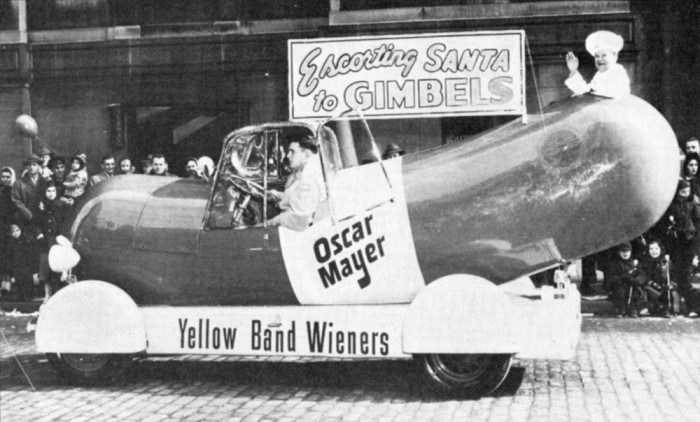
Raabe was a salesman at Oscar Mayer at the time and a natural performer. He was also 3-feet, 4-inches tall. Raabe had just returned from filming a movie in Los Angeles when Mayer approached him about the job.
He accepted and became “Little Oscar: The World’s Smallest Chef.”
“‘Little Oscar’ is a real midget,” the ads read. “47 inches high and weighs 49 pounds.
Bring the Little Ones to see ‘Little Oscar,’ a big hit wherever he goes.”
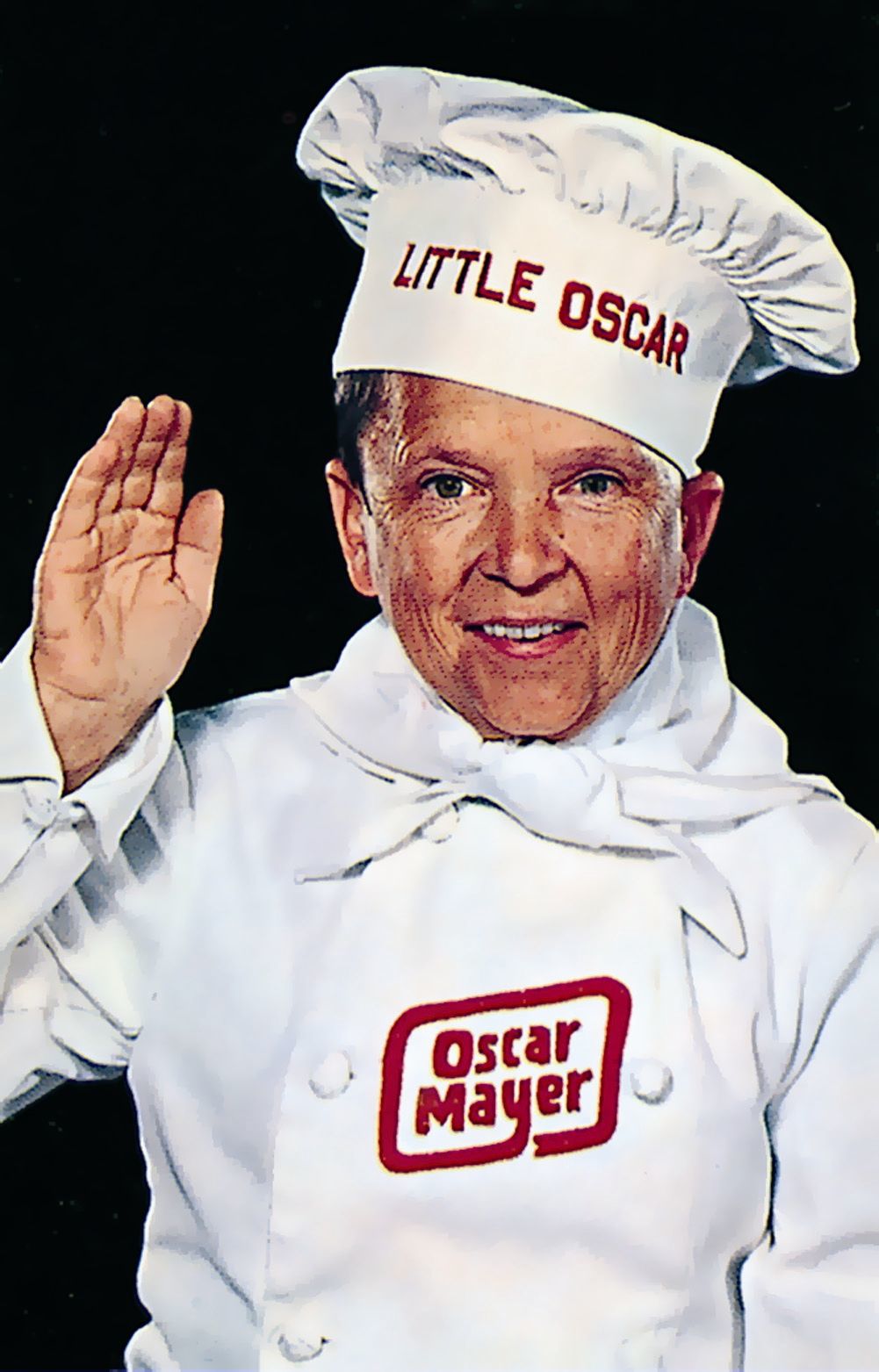
For the next thirty years, Raabe traveled by Wienermoble, appeared in Oscar Mayer ads, and was the smiling face on every single hot dog package sold.
Hardly anyone recognized him from the movie released in 1939. But that would change. Once the film became a Hollywood classic and an enduring legacy to generations of fans, Raabe was in high demand. His striking appearance as the coroner and brief but memorable line from the film, “She’s not only merely dead, she’s really most sincerely dead,” would keep him busy with personal appearances until his death in 2010.
At the time, at the age of 94, he was the oldest surviving munchkin from “The Wizard of Oz.”

‘Private Snafu,’ the U.S. Army’s Unbecoming Soldier

By Ken Zurski
Beginning in 1943, U.S. Army recruits serving in World War II were introduced to a cartoon character named Private Snafu, a rubbery-faced simpleton with a knack for trouble that one writer described as “a model of everything that a model soldier isn’t.”
The cartoon was the mastermind of movie director Frank Capra, head of the Motion Picture Unit of the U.S. Armed Forces at the time, which produced highly stylized propaganda and training films that starred top Hollywood actors like Clark Gable and Ronald Reagan.

But by far the most popular attraction, especially among the rank-n-file, was the bumbling Snafu. Designed to teach proper etiquette in the Army, the Snafu cartoons turned the tables on military protocol by humorously showing what not to do as a soldier.
Capra originally rejected a contract offer from Walt Disney who reportedly wanted merchandise rights and chose Warner Brothers studios instead to make the films and animator Chuck Jones to produce it.
Although it was clearly ridiculous, Snafu seemed oblivious, therefore making the point that a lack of concentration and absentmindedness can often lead to unwanted – oftentimes deadly – consequences.
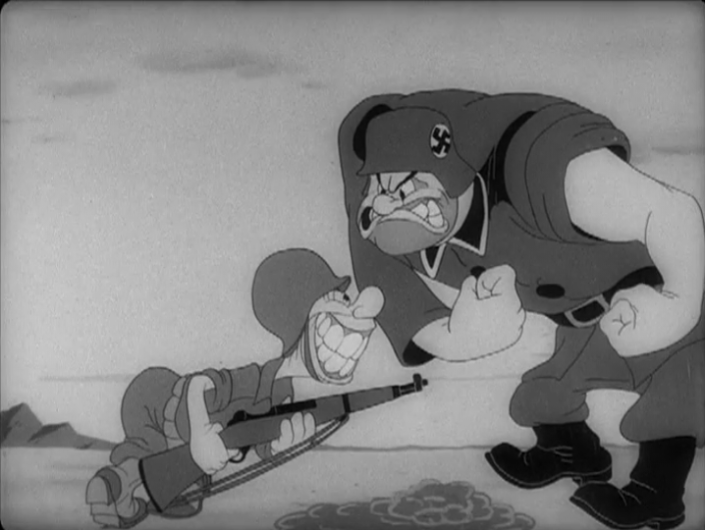
The shorts, all about 10 minutes long, were exclusively the Army’s and not subject to standard motion picture codes. So Jones and his writers, including Theodore Geisel, better known as Dr. Seuss, were limitless in content, although they kept it mostly educational and entertaining at first. In Spies, for example, Snafu forgets to take his malaria medication and gets it in the end – quite literally – by a pesky mosquito.
But that’s only part of the lesson. Snafu, who talks in rhymes, is seen on a pay phone: “Hello Mom, I’ve got a secret, I can only drop a tip. Don’t breathe a word to no one, but I’m going on a trip.” Eavesdropping nearby are the so-called “spies” in the short.
Soon an unsuspecting Snafu is blabbering his secret to anyone within earshot.

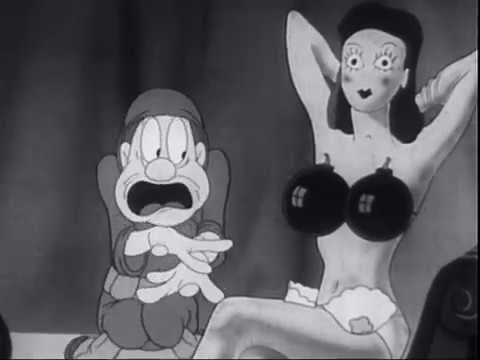
Most of the shorts end with Snafu being killed by his own stupidity. Later as the war neared an end, the shorts got edgier and Snafu got smarter. Even the content became racier, with scantily clad girls with body parts cleverly disguised.
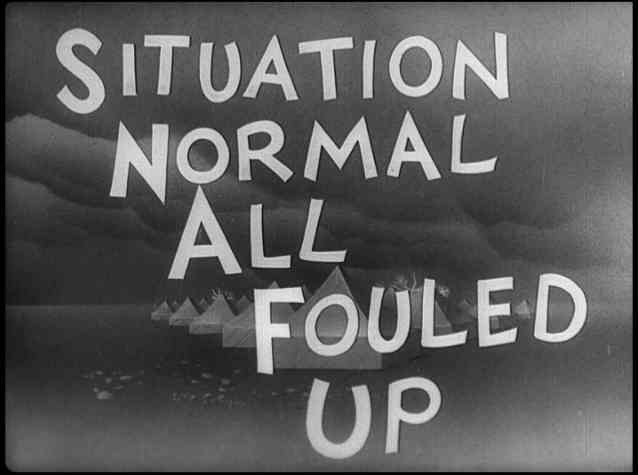
About the only restraint remained in the explanation of the acronym, an unofficial military term: “Situation Normal All Fouled Up.”
 UNREMEMBERED