
History
Andrew Carnegie and the Million Dollar Question
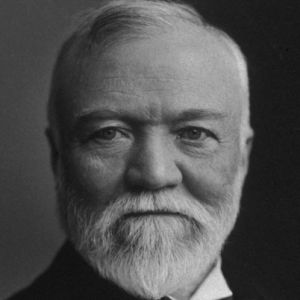
By Ken Zurski
For a man whose mission it was to relinquish his entire fortune before his death, Andrew Carnegie still had plenty of money left when he passed in 1919 at the age of 83. That’s no indictment of a man who built a massively successful business, became the richest man in America, and devoted his later years to giving it all back. It was a noble thing to do. But Carnegie had made so much capital that even he found it difficult to allocate the funds sufficiently.
So he asked for help.
Carnegie grew up poor in Scotland, came to America, and amassed millions in the steel industry. Along the way, he made just as many enemies as dollars. Like many so-called tycoons of his time, Carnegie was accused of cutthroat practices which sacrificed workers’ rights for the bottom line. In protest, workers revolted.
The Homestead Strike of 1892 was due to a dispute between steel workers at Carnegie’s Homestead, Pennsylvania plant and management which refused to raise workers’ pay despite a windfall in profits. The riot that followed is still one of the bloodiest labor confrontations in history. Ten men were killed in the melee and Carnegie who continued production with nonunion workers, was blamed for the uprising.
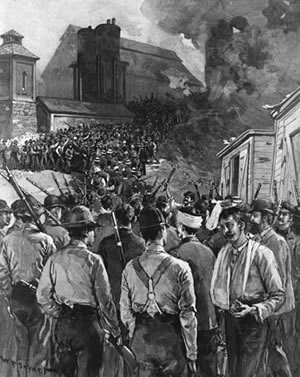
Carnegie viewed it differently than the workers. He believed that reducing production costs meant lower prices to consumers. Therefore, he theorized, the community as a whole profited, not the unions. It was a slippery slope. But, many asked, was it worth men dying for?
Carnegie, of course, thought of himself as a benefactor and did not apologize for becoming a wealthy man. When he retired, however, he made it clear that being rich was only relative: “Man must have no idol and the amassing of wealth is one of the worst species of idolatry! No idol is more debasing than the worship of money! Whatever I engage in I must push inordinately; therefore should I be careful to choose that life which will be the most elevating in its character.”
Carnegie didn’t hand out money haphazardly. He spent it on things and places that moved him. Among other worthy causes, the most prominent were funds for more schools – especially in low income communities – and the building or expansion of public libraries. In each case, he released the money only after specific demands were met, each one designed to make sure none of it went to waste. Carnegie had final approval.
In 1908, at the age of 72, with millions more left to give, Carnegie wrote a letter to people he admired. It was in effect an offer disguised as a question: “If you had say five or ten million dollars (close to 5-billion today) to put to the best possible use, what would you do with it?” Many of the correspondence were business leaders and some were presidents of institutions already bearing the Carnegie name. Most responded in kind that the money should be used to continue fellowships.

The letters were an indication that the burden of giving away a fortune was weighing heavy on Carnegie’s mind.
“The fact is that after spending about $50-million on libraries, the great cities are generally supplied and I am groping for the next field to cultivate,” Carnegie wrote to President Theodore Roosevelt, looking for inspiration. “You have a hard task as present but the distribution of money judiciously is not without its difficulties also and involves harder work than ever acquisition of wealth did.” Carnegie wrapped up the letter by pointing out the absurdity of that last line. “I could play with that and laugh,” he noted.
In the end, of course, Carnegie left enough money behind to take care of his wife and daughter. His loyal servants and caretakers were awarded pensions and his closest friends received substantial annuities.
Carnegie gave away an estimated $350 million dollars, but for the rest, he had one final request. After the will segments were dived up, nearly $20-million remained in stocks and bonds.
He bequeathed that amount to the Carnegie Corporation organization he proudly founded, and which still exists today.

Loammi Baldwin: The Revolutionary War Colonel and Apples Pioneer
By Ken Zurski

In historical reference, Loammi Baldwin should be a name we remember.
For starters, he was a colonel in the Revolutionary War. He bravely commanded several regiments during the battles of Concord and Lexington and accompanied General George Washington when the future president famously crossed the Delaware River to surprise the Hessian’s in Trenton, New Jersey. That distinction alone should be honorable enough for someone who lived in America in the late 18th century.
But that’s not all.
Baldwin was also a member of the Academy of Arts and Sciences who like Benjamin Franklin conducted experiments in electricity. He was elected to the Massachusetts General Assembly and as an engineer was instrumental in pioneering a waterway that connected Boston Harbor to the Merrimac River, known as the Middlesex Canal.
Yes, Col. Baldwin is certainly a man who held many distinguished titles. For some, he is even considered to be the Father of Civil Engineering. Let that one sink in.
But today he is best remembered – or unremembered, if you will – for one thing: an apple.
Let’s backtrack a bit.
While building the Middlesex Canal, Baldwin visited the farm of a man named William Butters. It was on a recommendation from a friend that Butters had grown the sweetest apple in all of New England. Butters told Baldwin that the tree was frequented by woodpeckers who in addition to the apples would eat tree grubs and other damaging insects. Butters called the apple a “Woodpecker” after the bird, or “Pecker” for short. Others had dubbed it “Butters Apple.”
Baldwin was so impressed he planted a row of Pecker Apple trees near his plantation home in Woburn, Massachusetts.”The tree was a seedling,” a historian wrote of Baldwin’s interest, “but the apple had so fine a flavor that he returned at another season to cut some scions, and these being grafted into his own trees, produced an abundant crop.”
 After Baldwin’s death in 1807, the Pecker was officially named in his honor and the Baldwin Apple quickly became the most popular fruit in New England. It’s easy to see why. The Baldwin was smaller than most red apples are today, but its skin was mostly free of blights. Farmers loved the Baldwin because they could harvest large crops and transport them readily with little or no deterioration. The Baldwin’s were also a good apple to make into a rich, sweet cider. The hard texture was perfect for making pies. “What the Concord is to the grapes, what the Bartlett has been among pears, the Baldwin is among apples,” the New England Farmer described in 1885.
Unfortunately, the Baldwin’s dominance wouldn’t last. Too many severe winters took its toll.
In fact, in one particularly harsh year, 1934, nearly two-thirds of all apple trees in the northeast were destroyed. The next year the state of Maine helped growers replenish their decimated orchards. But only Macintosh and Red Delicious seeds were offered. The Baldwins were just too delicate to replant in large numbers. Still some farmers grew small crops of the Baldwins to maintain the rich cider.
Ironically, Loammi Baldwin, besides the name, has another connection to apple folklore.
He is the second cousin of Johnny Chapman, another Massachusetts man and traveling missionary whose work included the planting of apple trees throughout the expanding frontier.
We know Chapman today as Johnny Appleseed.
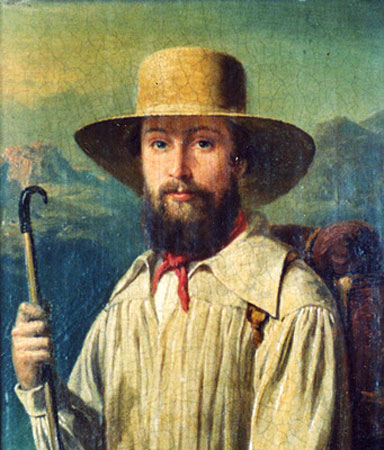
Meet David Lamar: The Original ‘Wolf of Wall Street’
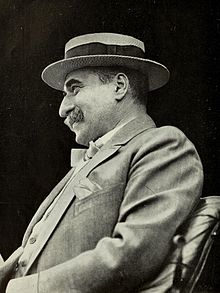
By Ken Zurski
Con artist and market scalper David Lamar was considered the original “Wolf of Wall Street,” a distinction revived in recent years by a Hollywood movie about a more contemporary stock swindler named Jordan Belfort and a role played by an A-list actor named Leonardo DiCaprio who won a Golden Globe and an Oscar nomination for his portrayal of Belfort in the 2013 film.
The movie plays up the lavish lifestyle and and often times rebellious behavior of Belfort, who spent nearly two years in prison for his role in a fraud scheme. Belfort wrote a book about his exploits, hence the movie, and self-titled it, “The Wolf of Wall Street.”

Leonardo DiCaprio’s blistering performance aside, Jordan Belfort had nothing on the original “Wolf of Wall Street,” David Lamar who in the early part of the 20th century first carried that dubious moniker, assigned by others, and metaphorically referring to a “wolf” as a “rapacious, ferocious, or voracious person.”
Although his successes and failures has been debated over the years, Lamar’s brash, cutthroat tactics are the stuff of legends. For example, Lamar once impersonated a US Senator in hopes of taking the floor and driving down steel prices while he unabashedly shorted the stock.
Lamar was arrested and sent to jail several times and was once accused of having a man beaten who was ready to testify against him. His boldest swindle may have been against a Rockefeller, John Jr. , who spent a million dollars of his wealthy father’s money to buy leather stock, only to watch Lamar sell it off.

On January 12 1934, at the age of 56, Lamar was found dead in a modestly priced hotel room in New York City. In his room police found $138 in cash, a suit a hat, a can, a gold watch and chain, and gold cuff links. That was all which remained from a fortune which at one time was estimated in the millions.
The day after his death, an obituary dispatch appeared in newspapers throughout the country.
It read:
It isn’t so much the loss of wealth in David Lamar’s life which excites curiosity, as it is an appreciation of struggles through which it passed. He had one blinding ambition, and that was huge profits through sly operations on the stock market. What he hoped to gain was not wealth, but power and recognition. He had wealth – this strange man. It didn’t mean a great deal to him. On many occasions, he could have retired and lived lavishly and luxuriously, as he did live when in purple, on a great estate in New Jersey at one time and in a mansion on Fifth Avenue at another. Always his ambition drove him on and when he found his path blocked by legal obstacles, it was charged he was none to scrupulous in cutting his way through them. He divided his time between estate and mansion and jail. We said Lamar must have suffered. The only punishment which could be meted out to him was his own conscience. He was contemptuous and indifferent outwardly to what people said of him, what they thought of him and how they created him. He had his own code and his own rule for living. It was a most bizarre, a most extraordinary one. He took delight in good clothes, in good food, in a cosmopolitan. The mysterious Stock Market operations of the Wolf of Wall Street have been ended by death.
The paper’s vitriolic assessment seems to be on the mark. Several years before his death, even a lawyer meant to represent him, conceding to his client’s reputation.
“The name of David Lamar seems to be anathema,” he said.
The American-Made Safe That Survived Hiroshima
By Ken Zurski
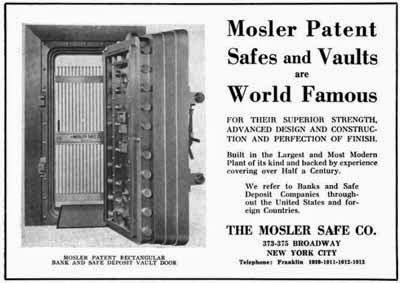
In 1946, a U.S. Army Lieutenant surveying damage left by the massive explosion of the first atomic bomb in Hiroshima a year earlier, sent a letter to a safe-making company back in America. “I found in one of three structures standing, four large vaults built by the Mosler Safe Co. of Hamilton, Ohio,” he explained. “The vaults were entirely intact and except for the exterior being burned and rusted there was no damage.”
Two other vaults he added, made by a Toyko, Japan company, were completely destroyed.

The two-story Teikou Bank built in 1925 was close to the hypocenter of the blast. Made of steel and concrete, the building crumpled from the inside, cracking the exterior and tearing the cement floor to bits. Nearly two dozen employees were in side at the time. None survived.
But the bank vaults did.
This was reassuring news at least to bank executives back in the States.
At the time there was a heightened sense of security against attacks on American soil. Many banks advertised that valuables were better protected because they used Mosler safes.
Even the U.S government chimed in. Mosler was awarded a lucrative contract and eventually built a 25-ton blast door vault in West Virginia mountainside bunker used to hide classified and historical documents.

Then five years after the attack, Mosler received another letter.
This time it was from the manager of the newly rebuilt Teikou bank in Hiroshima. “Your products are admired,” he praised, “for being stronger than the atomic bomb.
“As you know in 1945 the Atomic bomb fell on Hiroshima, and the whole city was destroyed and thousands of citizens lost their precious lives. And our building, the best artistic one in Hiroshima, was also destroyed. However it was our great luck to find that though the surface of the vault doors was heavily damaged, its contents were not affected at all and the cash and important documents were perfectly saved.”
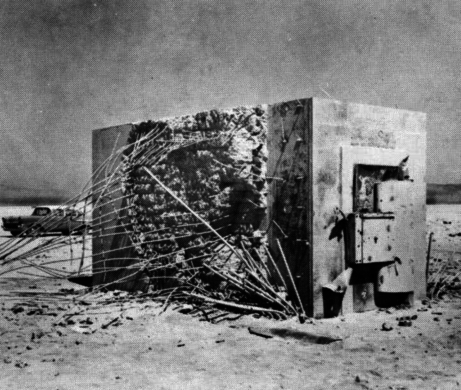
In the late 1950’s, to recreate the same show of strength displayed in Hiroshima, Mosler took their products to the Yucca Flats nuclear testing grounds in the Nevada desert. They placed a Century steel door and concrete vault with various contents in the blast zone.
Once again the vault survived intact.
UNREMEMBERED SCREENING: Woodrow Wilson and the ‘Racist’ Movie That Came to the White House

By Ken Zurski
On Feb 18 1915, the first screening of a major motion picture took place inside the walls of the White House. President Woodrow Wilson instructed it at the request of a friend Thomas Dixon Jr., author of The Clansman, a radical novel published in 1905, which skewed the Reconstruction era by heroizing the Ku Klux Klan’s efforts against an illicit uprising by former slaves in the South.
Dixon’s book had just become a film version, retitled “The Birth of a Nation.” and directed by D.W. Griffith.
Wilson was familiar with the book and its subject matter.

For months, in letters, Dixon had set up the President’s role in promoting the film: “I have an abiding faith that you will write your name with Washington and Jefferson as one of the great creative forces in the development of our Republic,” he wrote. Wilson was flattered, responding: “I want you to know Tom, that I’m pleased to do this little thing for you.” Dixon and Wilson had been law students together at John Hopkins in the 1880’s.
In asking, Dixon was disingenuous at best: “What I told the President was that I would show him the birth of a new art – the launching of the mightiest engine for moulding public opinion in the history of the world.” Dixon was hoping to spread the message of white southern attitudes in the North. This, he explained, was”the real purpose of the film.” In securing a screening, however, Dixon stressed the importance of advancing the medium rather than the content. Wilson took the bait, or as one writer expressed, “fell into a trap.” An assessment, one can argue, was hardly befitting the President’s reputation at the time. In addition, the President had recently lost his beloved wife to illness. He was in no mood to go – or be seen – in a public theater.
So the film came to him.
Dixon set it all up. He along with a projection crew steamed by rail from California to Washington D.C. and lugged twelve reels of film from Union Station to Pennsylvania Avenue. On a chilly February evening the President, along with his family and several cabinet members, viewed the film in the East Room of the White House.
Historical facts get sketchy at this point, especially Wilson’s reaction.
A magazine writer claimed Wilson liked the film enough to contribute an ambiguous quote: “It’s like writing history with lightning. My only regret is that it is all terribly true.”
A Wilson biographer, however, disputes these claims, reporting some sixty years later, that the last living person to view the film that night told a vastly different story. Wilson left early before the movie was over, this person recalled, and didn’t utter a word.
In retrospect, what likely happened is this: It was late, the film was long, and Wilson stepped out to retire to bed.

None of this mattered at the time. Just screening the controversial movie in the White House was awkward enough. And regardless of what Wilson did or did not do, having his presence in the flickering light of the projector prompted Dixon and Griffith to proclaim the film had a “presidential seal of approval.”
For Wilson it was another political embarrassment and solidified the views of many that the President had policies that were designed to separate rather than mix the races.
When the sharp protests began, Wilson was stuck. He tried to remain indifferent, but that was impossible. The NAACP demanded an explanation. Wilson wrote a few letters, eventually disowned any words attributed to him, and left it at that. He had other matters to attend to.
In March of 1915, The Birth of a Nation opened to positive reviews and large crowds. The NAACP’s attempt to get the film banned, some professed, failed because the “mostly white” film board ignored their pleas.
Wilson was too busy to care.
Less than three months later, the British ocean liner RMS Lusitania was attacked by German U -boats, killing 124 Americans and ratcheting up calls for the President to act.
In April 1917, Wilson declared the U.S. entering the Great War.

Symbol of America? Benjamin Franklin Didn’t Just Love the Turkey, He Hated the Bald Eagle

By Ken Zurski
Thanks to the sight of its majestic flight, broad 8-foot wing span, and contrasting white head, the bald eagle became the symbol of America when it first appeared on the Great Seal adopted by Congress in 1782.
A year and a half later it had a major dissenter in Benjamin Franklin.
Franklin saw the image of the bird on the badge of the Society of the Cincinnati of America, a military fraternity of revolutionary war officers, and thought the drawing of the bald eagle on the badge looked more like a turkey, a fair and reasonable complaint considering the image looked like, well, a turkey.
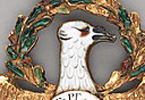
But it was the use of the bald eagle as the symbol of America that most infuriated Franklin. “[The bald eagle] is a bird of bad moral character,” he wrote to his daughter. “He does not get his Living honestly.”
Franklin had a point. It was a a matter of principal. The bald eagle was a notorious thief, he implied. Here’s why: A good glider and observer, the bald eagle often watches other birds, like the more agile Osprey (appropriately called a fish hawk) dive into water to seize its prey. The bald eagle then assaults the Osprey and forces it to release the catch, grabs the prey in mid-air, and returns to its nest with the stolen goods. “With all this injustice,” Franklin wrote as only he could, “[The bald eagle] is a rank coward.”
Franklin then expounded on the turkey comparison: “For the truth, the turkey is a much more respectable bird…a true original Native of America who would not hesitate to attack a grenadier of the British Guards who should presume to invade his farmyard with a red coat on.”
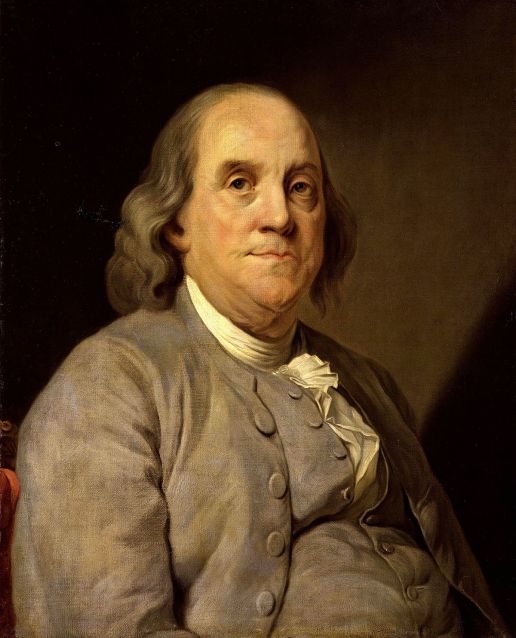
Franklin’s suggestion of the turkey as the nation’s symbol, however, is a myth. He never suggested such a thing. He only compared the bald eagle to a turkey because the drawing reminded him of a turkey. Franklin’s argument was the choice of bald eagle not in support of the turkey he called “vain and silly.” Some even claim his comments and comparisons were slyly referring to members of the Society, of whom he thought was an elitist group comprised of “brave and honest” men but on a chivalric order, similar to the ruling country to which they helped defeat. This might explain why Franklin’s assessment of the bald eagle in the letter is based solely on human behavior, not a bird’s.
But was it a fair assessment?
Ornithologists today provide a more scientific and sensible explanation. In the”Book of North American Birds” the bald eagle gets its just due, for as a bird, it’s actions are justifiable. “Nature has her own yardstick, and in nature’s eyes the bald eagle is blameless. What we perceive as laziness is actually competence.” Being able to catch a “waterfowl in flight and rabbits on the run,” the book suggests is a noble and rewarded skill.

Perhaps, a better choice for the nation’s top bird, might have been the golden eagle, who unlike the bald eagle captures its own prey, mostly small rodents, but is powerful enough to attack larger animals like deer or antelope on rare occasions. (Its reputation today is tainted somewhat by rumors that it snatches unsuspecting domestic animals, like goats or small dogs.) But golden eagles don’t want attention. They shy away from more populated areas and appear to be “lazy” only because they can hunt with such precision and ease they don’t really have to ruffle their feathers. Plus, golden eagles were already symbolic. History finds them “perched on banners of leading armies, the fists of emperors and figuring in religious cultures.”
The bald eagle, by comparison, would be truly American.
Perhaps when Franklin made the disparaging comments against the bald eagle he was also harboring a nearly decade old grudge.
In 1775, a year before America’s independence, Franklin wrote the Pennsylvania Journal and suggested an animal be used as a symbol of a new country, one that had the “temper and conduct of America,” he explained. He had something in mind. “She never begins an attack, nor, when once engaged, ever surrenders;” he wrote. “She is therefore an emblem of magnanimity and true courage”
Eventually the image Franklin suggested did appear on a $20 bill issued in 1778, adopted for use as the official seal of the War Office, and may have been the inspiration for the Gadsden flag with the inscription, “Don’t Tread On Me.”
But it never officially became the preferred symbol of the new country.
Franklin’s choice: the rattlesnake.

The Vapors and ‘Waldo’: There’s a Connection.
By Ken Zurski
In December of 1981, the English power pop group The Vapors released Magnets, the follow-up to their successful debut album New Clear Days which featured the bouncy and ambiguous hit single, “Turning Japanese.”
I’m turning Japanese
I think I’m turning Japanese
I really think so
Although the group had explored heavy themes before on its first album, Magnets was considered even darker. For example, the title song is about the assassination of John F. Kennedy’s, with references to “the motorcade” and the Kennedy children. “Spiders” and “Can’t Talk Anymore” dealt with mental health issues and “Jimmie Jones,” the single, recounted cult leader Jim Jones and the massacre in Jonestown.
They tell me jimmies seen a sign
Says he understand everything
They tell me jimmies got a line
To the man from the ministry
Despite the bleak subject matter, however, the songs were mostly upbeat and catchy, a trademark of the group.
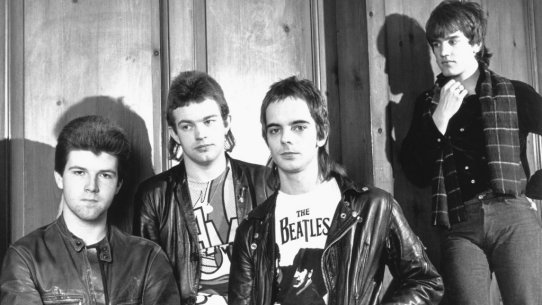
But it didn’t light up the charts.
The album, while positively received, was a commercial flop. The band blamed it on the lack of interest from their new record label, EMI (later changed to Liberty Records), which bought out United Artists shortly after their first release. Due in part to corporate frustration, The Vapors disbanded after Magnets failed to ignite. But today, the album has significance for its inspired cover art, a complex portrait that mirrored the album’s dark undertones.
Martin Handford was the artist.
A London-born illustrator, Handford specialized in drawing large crowds, an inspiration he claims came from playing with toy soldiers as a boy and watching carefully choreographed crowd scenes from old movies.
Handford, who sold insurance to pay bills, was hardly an emerging or successful artist at the time he was asked to design the album cover for Magnets. Drawing upon the theme of the title song, Handford depicted a chaotic crowd scene of an assassination, although you couldn’t tell unless you looked closely. From a reasonable distance, the numerous figures and various colored clothing formed the shape of a human eye.
It was both clever and disturbing.
:format(jpeg):mode_rgb():quality(90)/discogs-images/R-2057270-1340650452-6500.jpeg.jpg)
For example, at the top right hand corner of the cover, on the roof of a building, there is a man – presumably the assassin – putting away a rifle.

Some of the figures are seen running from the horrific scene unfolding in the “eye’s” iris, while others are curiously drawn to it. But while the cover was certainly an original creation, the artistic style was not.
In fact it has a name: Wimmelbilderbuch.
Wimmelbilderbuch, or “wimmelbook” for short (German for “teeming picture book”) is the term used to describe a book with full spread drawings of busy place’s like a zoo, farm or town square. The page is filled with numerous humans and animals. It’s geared toward children, but adult’s seemed to like it too, especially when an identified object is hidden, making it more like a puzzle than a colorful picture. Several artists incorporated this style, including a Dutch artist Pieter Bruegel, who dates back to the early 16thcentury, and specialized in drawing intricate landscapes and peasant scenes populated by people in various degrees of work or distress. Bruegel’s human figures are mostly depicted as frail and challenged (Fleet Foxes used a Bregel painting The Elder for its 2008 self titled debut album).

Handford’s work wasn’t nearly as depressing as Bruegel’s, but they were similar. Handford purposely drew the Magnets cover with emblematic images, not exactly hidden, but tough to spot, and when found became a personal reward to the viewer – like the tiny assassin on the roof.
This was the inspiration for an idea that eventually became a cultural phenomenon.
Handford created a recurring character he would put in all his drawings: a bespectacled man with wavy brown hair who always wore a red and white striped shirt and stocking cap. His name was Wally.
The trick was trying to find Wally in the crowd.
The concept soon became a contest, then a crave. It led to several best selling books and an iconic, some might say exasperating, new enigma emerged.
“Where’s Wally?” is how they describe it around the world.
In America, it’s called “Where’s Waldo?”


Ingrid Bergman, War Bonds, and the Americanization of ‘Joan of Arc’
By Ken Zurski
Before the iconic Rosie the Riveter urged women to join the work force in World War II, another strong woman figure was used by the U.S government, this time by the Treasury Department, to sell war bonds.
Her name was Joan of Arc.
Joan of Arc was certainly not American. But her story and image gained footing in the U.S. during the first world war.
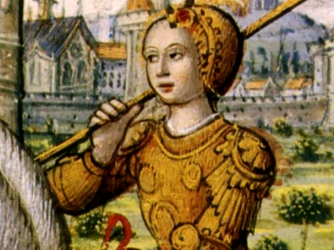
Called to serve God in the form of angel’s voices, the teenage Joan takes up the sword, disguises herself as a man, and goes to battle to save the French from evil in the early 15th century. After her capture, on May 30, 1431, she was burned alive at the stake.
In France, even today, she is celebrated as a symbol of nationalism and unity. However, American sensibilities about the mythical Joan are more romanticized.

In 1946, actress Ingrid Bergman played Joan in a play within a play titled Joan of Lorraine. (Lorraine loosely refers to Joan’s birthplace with the surname Arc.) The play is about a company of actors who stage a dramatization of Joan’s story. Bergman who won a Tony Award for her role, played two parts, Joan and Mary Grey the fictional actress who portrays Joan in the play.
Two years later, Bergman starred in a modified movie version of Joan of Lorraine. The film, renamed Joan of Arc, was a more straightforward retelling of Joan’s story, but still gave Americans a stylized portrayal of the French martyr. By this time, Joan’s image had already been on war posters. “Joan of Arc Saved France,” the ad reads. “Women of America. Save Your Country, Buy War Savings Stamps.”
The ads, which appeared for the first time in 1917, were colorful and attractive, especially the image of Joan.

In it, Joan is sporting long autumn hair, red lips, and a suit of armor that not only shows a tapered waistline, but a womanly figure as well. “Two orbs of light at the level of her hidden breasts suggest a female bosom that cannot be obscured by the trappings of war,” biographer Kathryn Harrison wrote about the poster’s likeness.
This was not the cross-dressing savoir of France, Harrison points out, but a 20th century version, pretty and determined, ready to fight like a man, but remain an empowered woman.
“Oh if I could speak large and round like a boy,” Bergman’s Joan wonders in the play. “But my voice is a girl’s voice and my ways are a girl’s ways.”

The Man Who Walked a Lifetime

By Ken Zurski
British poet William Wordsworth liked to go for long walks. A commendable act today for sure, but in the late 18th century, highly unusual for a man of Wordsworth’s class and stature.
That’s because walking was considered impractical and unnecessary for the rich and connected. This was also true for many artists of the era, mostly painters, who chose not to waste their own time and energy getting to a picturesque location. A stately horse and carriage did just fine, especially for those who could afford one.
But Wordsworth was different. He loved nature too much to spoil the journey. So in 1790, while a student at Cambridge, Wordsworth organized a walking tour through Switzerland and France.

When he returned to England, his walks became daily occurrences, usually accompanied by his sister Dorothy. The two would venture off by foot into areas unknown, oftentimes relishing the thought of getting lost, sometimes for hours, even in the family’s lavish gardens.
For Wordsworth, preparation was essential. He would always carry a bag with him – about the size of a modern day briefcase. Inside were his writing tools: a journal, pencil, coat, book, and for longer jaunts…a sandwich.
One winter day, Wordsworth and his sister walked a fair distance between home and a hotel for an engagement. The snow was falling and the path slippery. But when they arrived, Wordsworth insisted they turn around and do it again. The second time was just as “heavenly” as the first, Dorothy wrote about her brother.
Of course all this walking was an inspiration for his poems.
I wandered as lonely as the cloud
That floats on high o’er valleys and hills
When all at once I saw a crowd
A host of golden daffadils
After Wordsworth’s death in 1850 at the age of 80, a friend calculated he had walked 175-thousand miles in his lifetime.
TV’s Groundbreaking Documentary on “Cancer” Had a Face…Dr. Tom Dooley
By Ken Zurski
On April 21 1960, a Thursday, CBS television aired a taped documentary titled “Biography of a Cancer” that for its day, was as timely as it was informative. That’s because in the 1950’s doctors had just begun experimenting with a combination chemotherapy and radiation as treatment. In the public eye, there were just as many questions about its clinical usefulness as there were answers. So the network’s objective was to present a cancer patient and show “truthfully and graphically” the various stages of the disease.
They found the perfect subject in Dr. Thomas A. Dooley.

A lieutenant and rising star in the Navy, Dooley scrapped plans to be an orthopedic surgeon, left the military, and devoted his life to serve those in less fortunate areas of the world. He was profiled by some as a globetrotting playboy, both good looking and successful, who became an “idealistic, crusading servant of the poor and depressed.”
Dooley didn’t care how he was perceived. His mission was clear. But due to this mix of admonition and admiration, his story got notice. Dooley wrote three best-selling books about his humanitarian crusade. One was titled: “Deliver Us From Evil.”
Then he got cancer.
When Dooley agreed to be filmed by CBS he was just about to have surgery on the malignant tumor found near his shoulder.
In August of 1959, the cameras rolled.

Nearly a year later in April, the show aired.
One that day, a newspaper preview titled “Today’s Television Highlights” read like this:
CBS Reports looks at cancer in general and the case of Dr. Tom Dooley in particular on tonight’s “Biography of a Cancer.” Using Dooley as a typical case, we follow his treatment. There are shots of two operations – an exploratory one and a major bit of surgery – which are fairly strong stuff, but important in the complete story. And at the end, there is a conversation between Dooley and cancer researcher Dr. Murray Shear which is an abrasive, no punches-pulled affair. The conclusion, in both Dooley’s case and the broader story in general, is what producer Albert Wasserman terms, “Judiciously Optimistic.” Anyone concerned with cancer should see this, and might be wise for everyone to look in; it dispels a few myths.
One person who didn’t see the TV special airing that night was Tom Dooley. That day, he was in Southeast Asia treating the sick. In fact, Dooley kept a constant travel schedule even after the diagnosis and surgery. His will and determination was an inspiration to the staff of MEDICO, the world-wide health organization Dooley founded. Many of his patients called him “Dr. America,” but his team knew him simply as “Dr. Tom.”
“Walt Whitman, I think, said that it’s not important what you do with the years of your life, but how you use each hour, “ Dooley told the television viewers in the CBS special. “That’s how I want to live.”
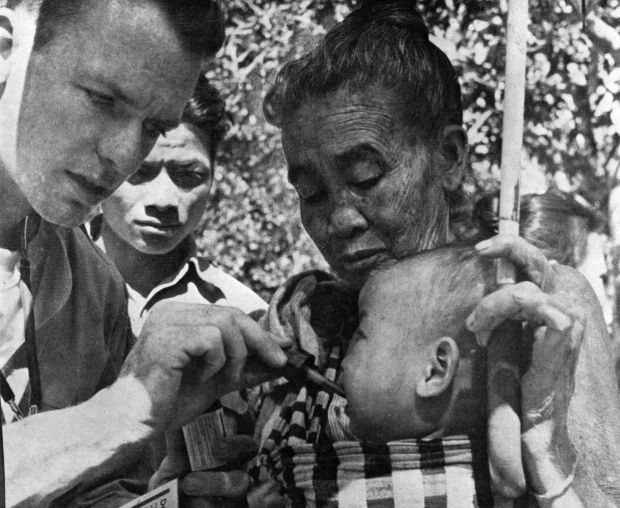
Eventually his body weakened, but not his spirit. “I’m not going to quit. I will continue to guide and lead my hospitals until my back, my brain, and my bones collapse,” he said after being admitted for treatment for the last time.
On January 18, 1961, just a month after returning from a mission to Bangkok, Tom Dooley died. He was one day short of his 34th birthday. For all his frantic and tireless efforts, both in front and behind the camera the end was “a quiet, peaceful slipping away,” a friend said about Dooley’s final hours.
At the time of his death, the dedication to his work, and not the brief stint on television, was the focus of numerous articles and memorials.
“Tom Dooley didn’t lose the fight,” one newspaper headline read. Even to the end, “he was fighting for time to carry on his work as long as he could”

 UNREMEMBERED