
History
“Shoot a horse,” they said. Good thing he didn’t take that literally
By Ken Zurski
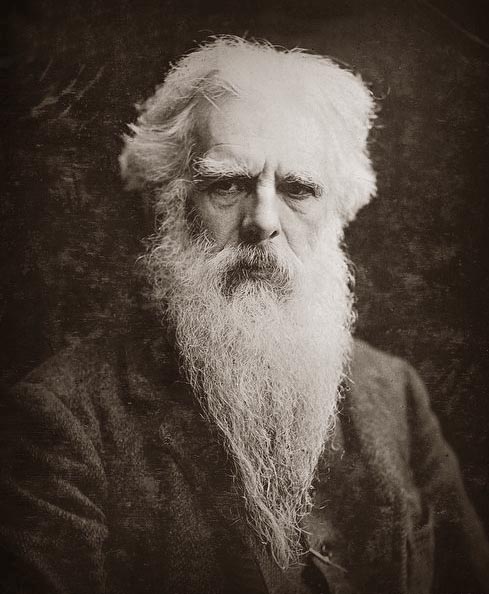
In 1860, while traveling by stagecoach across the Texas plains, capitalist Eadweard Muybridge fell and suffered a serious head injury. Some say he never fully recovered.
His doctor however suggested more fresh air.
So Muybridge took up photography and began shooting landscapes.
Then in 1872, railroad magnate Leland Stanford hired Muybridge to shoot a horse. Not literally, of course, but with a camera. Stanford wanted to know if a horse lifts all four feet off the ground simultaneously during a gait.
Muybridge managed to show a horse seemingly suspended in midair. But the shot, published as a line drawing at first, drew jeers from a skeptical public.

Muybridge found a way to convince them. He invented a machine called the Zoopraxiscope, where a silhouette image of a picture is painted on a revolving glass plate.
When the light is shown through the cylinder the drawings seem to move.
“A magic lantern gone mad,” raved the Illustrated London News.

Vindicated, Muybridge sought to improve his design. He went to see a man he thought might be able to put actual photographs on the cylinder.
After all, he had done the same thing with sound.
That man was Thomas Edison.
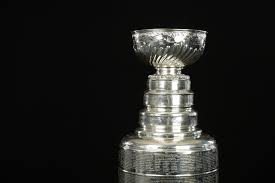
The Hand-Picked Ornament that Became the Stanley Cup
By Ken Zurski
In 1891, Charles Colville, secretary for the Lord Frederick Stanley, the British appointed General Governor of Canada, was ordered to sail back to England and return with a hand-picked ornament.
Stanley had something particular in mind and Colville knew just where to look.
On Regent Street near Piccadilly Circus, he stepped into the shop of George Richmond and Collis Co. and spotted a “silver bowl lined with a gold gilt interior.”
Colville bought the bowl for 10 guineas, the equivalent of about 10-thousand U.S. dollars today.
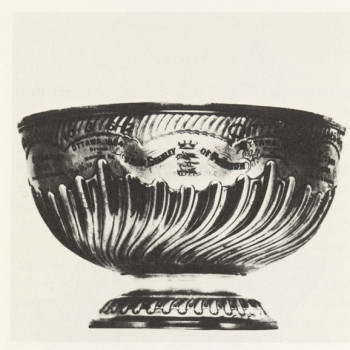
Stanley was ambivalent at first. “It looks like any other trophy,” he remarked.
Generally, though, he was pleased.
In 1893, the first Stanley Cup, as it was called, was awarded to Montreal, the champions of the Ontario Hockey Association. Stanley, a big hockey supporter, offered the trophy as a gift.
The first Cup presentation however came with a dubious start.
Lord Stanley’s team was Ottawa. So animosity between the two teams was apparent. When Montreal was awarded the inaugural cup bearing Stanley’s name, only a few players were on hand.
Even more telling, no Montreal team officials bothered to show up.
Sgt. Edward Younger’s Orders
By Ken Zurski
In March 1921, a few years after the end of the first World War, a congressional resolution was passed calling for an American serviceman, remains unknown, to be buried at Arlington Cemetery.
Four unidentified bodies were drawn from separate regions of the European theater.
In a small French village, at a makeshift chapel, one would be selected.
Sgt. Edward Younger of Chicago was the unassuming soldier chosen to make the pick. Younger had served in the war, went home, and then reenlisted. He was on special duty when he got orders. “Take these flowers,” his commanding officer told him, “proceed to the chapel and place them on one of the caskets.”
Alone and in silence, Younger circled the four caskets. He touched each one. He knelt and prayed. Then something drew him to the second casket on the right. “It seemed as if God himself guided my hand,” Younger recalled.
A voice said to him, “This is a pal of yours.”
He gently set the flowers down and saluted.
On Armistice Day, November 11, 1921, that body Younger picked was lowered into a tomb at Arlington Cemetery. The inscription reads: “Here rests in honored glory an American soldier known but to only God. ”
The Tomb of the Unknown Soldier.

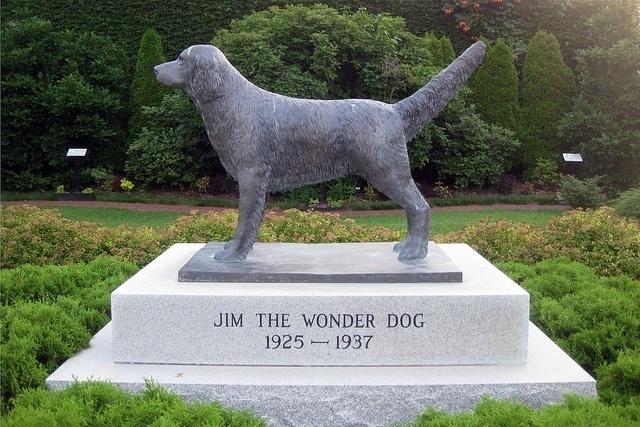
Meet Jim: The ‘Wonder Dog’ Who Correctly Picked Kentucky Derby Winners
By Ken Zurski

In the 1930’s, the Llewellyn setter known as “Jim the Wonder Dog” correctly picked the winner of seven Kentucky Derby’s in a row. An improbable feat even for the most adapt handicapper, but Jim’s owner Sam Van Arsdale insisted there was nothing deceitful about his dog’s apparent ability to predict the outcome of the prestigious race year after year.
Here’s how it worked: Van Arsdale would set down sealed envelopes each containing the name of a horse in the race. Jim would walk up to one and put his paw on it. The envelope was then stored in a locked safe. After the race, the envelope was reopened revealing the winning horse each time. The soft spoken Van Arsdale never wanted to profit off his prized pooch so he turned down all offers to reveal the contents of the envelopes before the race.

Jim is also credited with accurately guessing the gender of unborn children and in 1936 correctly picked the New York Yankees to win the World Series.
Skeptics and doubters were aplenty, but Van Arsdale insisted it was no trick
Jim died in 1937 at the age of 12.
A Legacy in One Book, Never Seen by it’s Author
By Ken Zurski
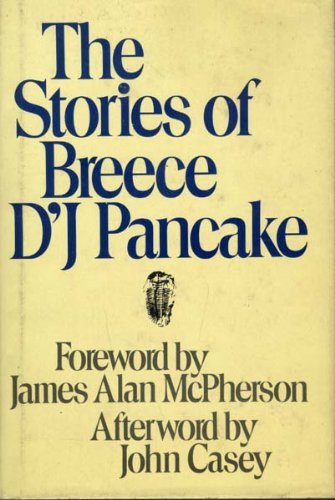
Breece D’J Pancake never had a book published in his lifetime. He died at the official age of 26, just shy of his 27th birthday. But four years after his death, The Stories of Breece D’J Pancake was released to critical acclaim. In fact, it was nominated for a Pulitzer Prize.
“A young writer of such extraordinary gifts that one is tempted to compare his debut to Hemingway,” praised a fellow author, Joyce Carol Oates.

Born in 1952, the name Pancake is a surname of German origin. The odd apostrophe in D’J was a printer’s error, which stuck.
Pancake wrote about hardships of rural life in the Appalachian Territories where he grew up and rarely strayed. Most of his stories fly by in time, examining just hours of a character’s life, but packed with personal and social struggles both past and present.
When I was a young punk, I tried to run away from home. I was walking through the meadow on the other side of the Hill, and this shadow passed over me. I honest to god thought it was a pterodactyl. It was a dammed airplane. I was so damn mad. I came home. (“Trilobytes” Breece D’J Pancake)
The stories appeared in Atlantic magazine and Pancake submitted them only after he composed four long-hand drafts and ten more on the typewriter.
Ultimately, he struggled with alcoholism, but his untimely death by self-inflicted gunshot in 1979 may have been a tragic accident, some believe, due to a bout of sleepwalking.
It all adds to his lore.
One book, however, remains.
The /rel·e·van·cy/ of a Dictionary Maker
By Ken Zurski

In 1858, Herbert Coleridge, a British philologist, took on the daunting task of compiling and completing a new English dictionary.
It was not an easy undertaking. Wordbooks as they were known had dated back to the early 17th century, and by the 19th century, an American lexicographer named Noah Webster made dictionaries that were based mostly on personal assessments of the English language, which in Webster’s opinion was too closely identified with the British.
Coleridge’s dictionary would be different and involve hundred of volunteers who would find unlisted words in books and write them down on note cards along with the word’s source.
The note idea was not Coleridge’s but rather that of Richard Chenevix Trench, a British professor and lexicographer, who proposed using everyday readers to participate in the dictionary’s creation. “It would be necessary to recruit a team moreover, a huge one comprising hundreds of unpaid amateurs,” Trench proposed.

Trench’s vision took hold and Coleridge was called upon to make it happen.
Coleridge went to work designing a system of collecting the reader’s notes and organizing them. He also grossly underestimated that it would take only two years to complete the work. In reality, near the two year mark, the dictionary was far from finished, and Coleridge, unfortunately, was dead.
Officially Coleridge died of consumption, or a bout of tuberculosis, which makes sense. However, biographers paint a more fanciful ending. While walking to a lecture hall in London’s St. James Square, Coleridge got caught in a downpour and sat soaking wet in an unheated upstairs room for several hours listening to the speaker. His chills turned to a debilitating fever and eventual death.

Despite his untimely demise, the dictionary idea did not go with him. Several enthusiastic wordsmith’s picked up the slack. Soon they learned what a formidable task Coleridge faced. In just a few years of work, Coleridge had only gotten halfway through the first letter. Undeterred the vision carried on and in 1878, nearly a quarter century after Coleridge began. A New English Dictionary on Historical Principles was released. Today, the book is cited as the basis for the inaugural Oxford English Dictionary which was released in 1895.
Coleridge is often listed as its first editor.

The Brutal Reality of Caesar’s Death
By Ken Zurski
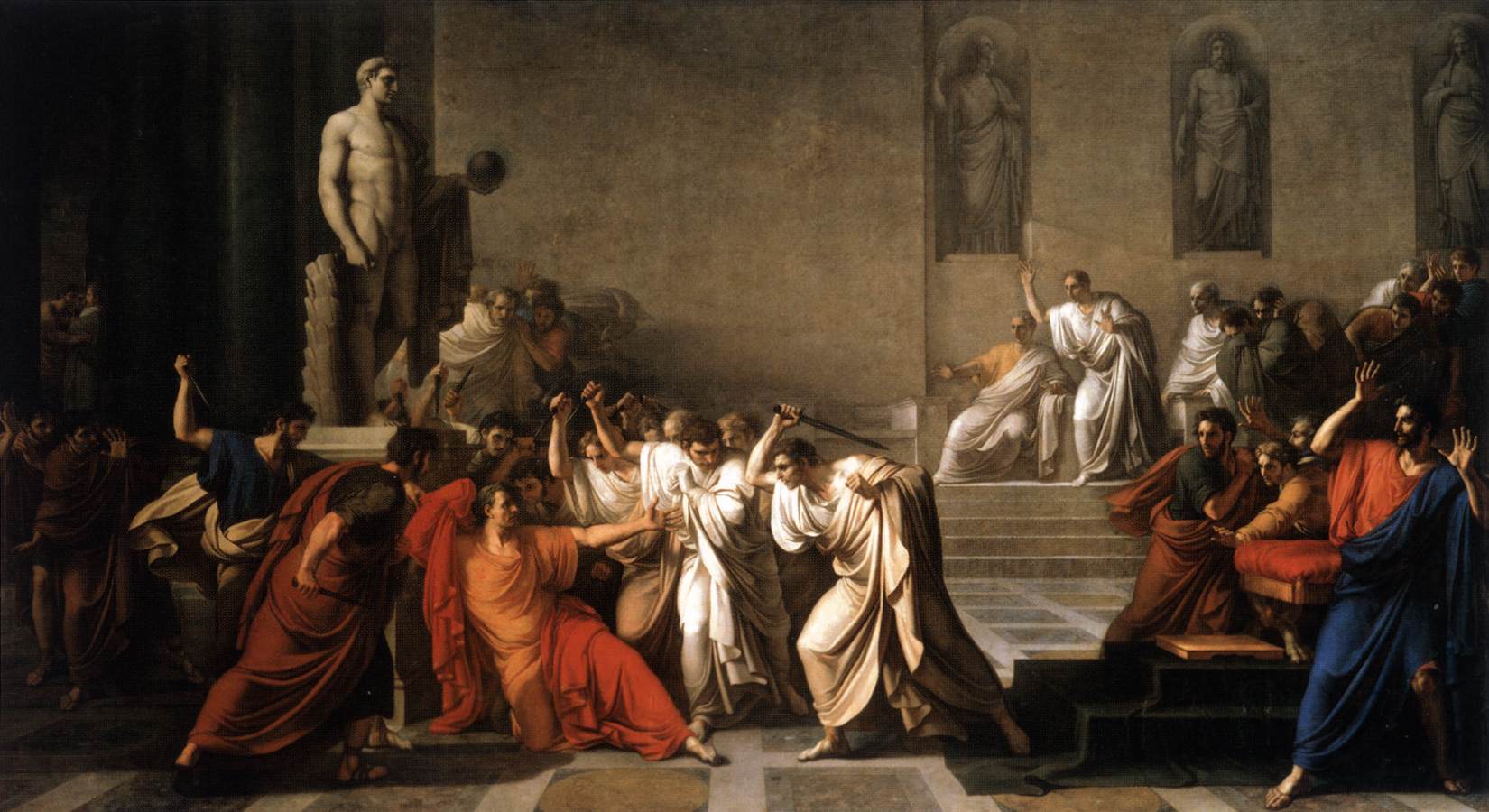
The Death of Caesar is an 1867 painting by Jean-Léon Gérôme’, a 19th century artist and sculptor known for the French inspired “academism” artistic style. Among the many portraits and works inspired by Greek mythology, Gérôme’’s portfolio also includes historical recreations.
So here, as the title not so subtly suggests, he recreates the assassination of Julius Casear on the Ides of March, 44 B.C.

Gérôme’ paints the tale of Ceasar’s death in stark clarity. He shows the moment immediately following Ceasar’s murder as the unfortunate victim is seen in the foreground crumpled on the floor. The throne chair is overturned signifying a struggle and those not part of the killing are seen fleeing the room in terror. The conspirators celebrate by raising their weapons in victory.
The only man not holding a weapon above his head is Brutus.
His back is turned. He is walking toward the other celebrants and dragging his weapon behind. Perhaps, as history suggests, this signifies Brutus dealt the final blow. He also carries what appears to be a sword, not a dagger. This would seem appropriate for the time, since swords were commonly used by Roman soldiers in battle. But as history books explain, the weapon of choice to kill Casear was a dagger, not a sword.
Brutus all but confirms it in a coin he commissioned after Caesar’s death. On the coin are two daggers with different shaped hilts. Presumably, the first dagger belongs to Brutus. The second likely belongs to another assassin.
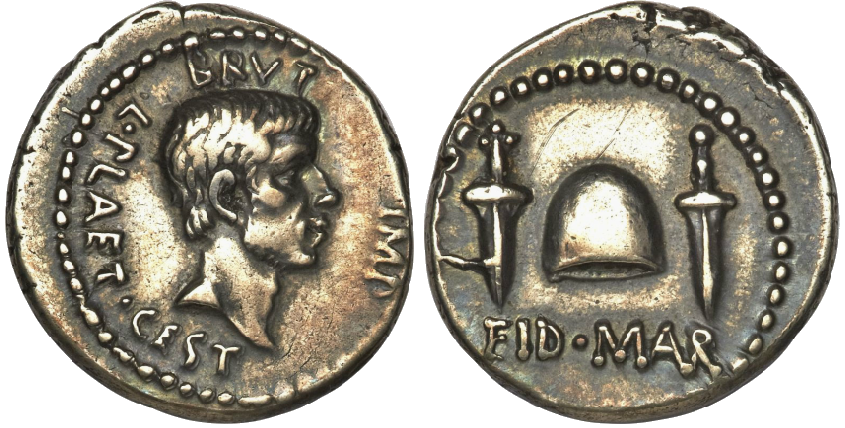
The shorter daggers make more sense in the killing of Caesar.
Daggers were as martial arts experts explain today, “streamlined and remarkably light.” They were also very effective, especially at close range. Plus, a dagger could easily be hidden in a toga and retrieved quickly. The only advantage a sword would have over a dagger is the distance between the striker and the intended target.
But that was in combat. Caesar was ambushed, presumably unarmed, and received blow after excruciating blow. A task, while effective, that took stamina and strength. Instead of celebrating with weapons held high (as Gérôme’s painting suggests) more realistically, the band of conspirators would be hunched over from exhaustion. Their hands and white garments covered in blood.
Author Barry Strauss in his book The Death of Caesar says this about the use of daggers in warfare: “Few felt comfortable talking about it and fewer still doing it.”
In another painting of Ceaser’s frantic death titled The Death of Caesar (1798), artist Vincenzo Camuccini seems to show a more accurate portrayal of the weapons used in the murder. The depiction portrays most of the mob carrying the shorter daggers, except for a few who still sport a longer blade.
Is one of them Brutus?
One might debate, and likely get few detractors, that Brutus used a sword for the final blow, thus marking Ceasar’s end for all eternity: Et tu, Brute
Yet, despite the graphic detail, there’s still no bloody mess.
That’s because the representation shown in Camuccini’s painting is the moment before Ceasar is struck not after like Gérôme’s and therefore spares the viewer the gory aftermath.
Churchill’s Gift from the U.S. Was a Literary Surprise
By Ken Zurski

On June 25, 1954, British Prime Minister Winston Churchill visited Washington D.C. to talk policy with then U.S. President Dwight D. Eisenhower.
At the time of his visit, the 79-year-old Churchill was showing his age and associates were urging him to retire. “His head was bent and his eyes, with their pale lashes were downcast, lest he stumble,” one biographer wrote of his appearance that day.
Despite Churchill’s weary appearance, Eisenhower greeted the Prime Minister warmly and the two got down to business.
History records a significant meeting which resulted in Churchill’s insistence that Eisenhower attend the tri-lateral talks with the Soviet Union. But history buffs, especially those who love literature, celebrate the trip for another reason.
During the visit, Churchill was presented with a gift from the Library of Congress and the U.S Copyright Office. The “handsomely bound, gold lettered” 35-page bibliography was the result of a massive undertaking to catalog all copyrighted works pertaining to Churchill, including books, periodicals, and his own writing. In the end, they found 565 contributions about or attributed to Churchill between the years of 1898 and 1953.
In a letter, the Library of Congress Reference Division Chief Richard MacCarteney wrote: “The bibliography was not the result of any special request. … It grew out of a realization of the tremendous effect Sir Winston Churchill’s utterances have had upon world history and thus our obligation to develop as nearly complete a copyright record of them as possible. ”
Churchill was obviously pleased, but explained that one book was still missing. “A modest work,” he implied.
Two years later, A History of the English Speaking People’s, an 800,000 word, 1,760 page four volume set, was released. Churchill had finally appeased his wife and close advisers by resigning from office and finishing the book. “It opens like an angel’s wings,” Churchill gushed about its stately design.
Shortly after it was published, a spokesman for the U.S. Copyright Office, who had made a promise to Churchill during his visit, “eagerly anticipated” the book and subsequently added it to the bibliography list.

Agostino Ramelli: The Ingenious Mind Behind The Book Wheel
By Ken Zurski
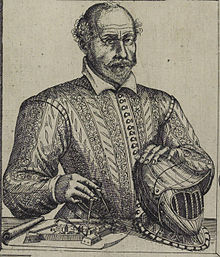
Agostino Ramelli was a military engineer, which meant he wore the armored suit and carried the sword, but used his brain rather than brawn on the battlefield. This came in handy during the 16th century French Wars of Religion. The Italian born Ramelli went to France, took up arms with the Catholic League, and was captured by the Protestants (Huguenots). While incarcerated, Ramelli not only found a way to break out, but in as well.
After he escaped – or was exchanged – Ramelli returned and breached the fortification by mining under a bastion. From that point on, he called himself “Capitano” and dedicated his life to figuring things out.
In 1588, he released a book titled, Various and Ingenious Machines of Capitano Ramelli. The expertly illustrated book was a compilation of 195 machines that made laborious tasks more practical. Many of the machines lifted things in crafty ways, like water, or solid objects, like doors off their hinges. One machine milled flour using rollers rather than stones.
Then there was the Book Wheel.
“This is a beautiful and ingenious machine, very useful and convenient,” Ramelli wrote. By convenient, he meant for those suffering from gout, a painful joint disease which made walking or standing difficult. A noble gesture, for sure, but the wheel itself was six-feet in diameter. So its doubtful Ramelli designed it strictly for the disabled. Nevertheless, its usefulness is left up to the user to decide. The operator remains seated while the books, eight in all, each come to the front by turning the wheel.
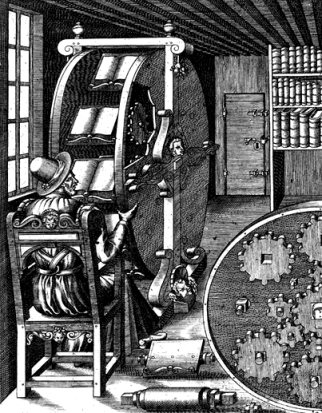
Ramelli was especially proud of the gearing system that kept the books constantly level to the ground. He built an intricate gear for each slot and prominently featured a diagram in his book. The impressive technology was similar to that used in an astronomical clock.
It was also wholly unnecessary.
A simple swivel pivot and gravity could do the trick just as engineer George Ferris would prove many centuries later in a similar design of a wheel carried people rather than books.
Speculation is Ramelli knew this, but as a mathematician, and a bit of a swank, couldn’t help himself.
Pauline Chase and the Overtly Sensual Life of ‘The Boy Who Wouldn’t Grow Up’
By Ken Zurski
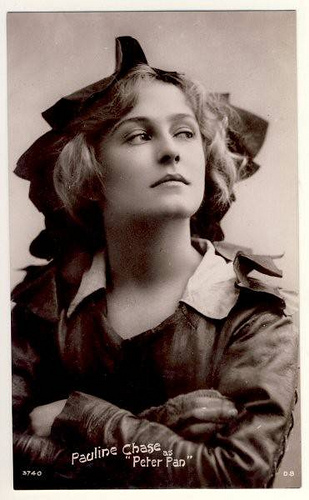
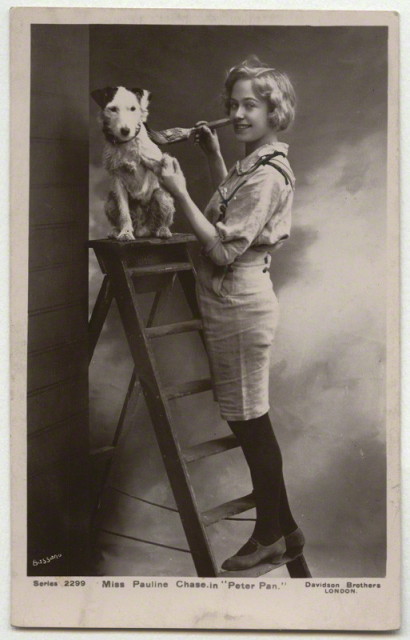
In 1906, at the age of 21, Pauline Chase was asked to portray Peter Pan on stage, a play about “the boy who wouldn’t grow up,” and a title role that had been played by only two people before her – and both female. Chase continued that trend and in the process became the face of the role too. Even today based on the number of performances – nearly an estimated 1400 – Chase is arguably the most popular actress ever to play the boy Peter. And you probably have never heard of her.
But in the early 20th century thanks to her continuing success in the play, Chase became an instant celebrity. Not for the innocence of the character she portrayed, in fact, quite the opposite. Chase was a bit of a jezebel in real life. “She certainly knew what she wanted from a man, and it wasn’t a good heart or worthy talent,” wrote author Gavin Mortimer in his book Chasing Icarus about the early aviators (more on that in moment). And men, well, they couldn’t resist her either. Their pursuance, however, came with stipulations.
“I’ve no time to waste on duffers with no position or money,” Chase once told a reporter, firmly setting down the ground rules. Even her performances were sarcastically criticized by one glaring – more like obvious – diversion. Her strikingly good looks.
“Distractingly pretty.” is how the Chicago Tribune put it.
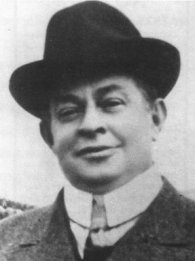
Enter Charles Frohman. The world renowned theater producer recognized Chase’s talents early on when she was just a teenager. He promoted his new find and kept a close watch on her like a daughter. It was Frohman who suggested to James M. Barrie, the author of Peter Pan, or The Boy who wouldn’t Grow Up, that Chase take over the title role after another actress Cecelia Loftus got sick. Barrie already knew Chase, who was one of the Lost Boys in the London production. But playing the high-flying main character was a different matter.
“Barrie and I are coming down to see you act,” Frohman wrote Chase before the show,”and if we like you well enough, I will send you back a sheet with a cross mark on it.” After the performance, Chase received a piece of paper. It had a cross mark on it.
Frohman was devoted to Chase, his star in the making, and although rumored, their relationship was never sexual. Soon after his untimely death in 1915 along with more than a thousand other unfortunate souls aboard the ill-fated RMS Lusitania, it was discovered that Frohman had a longtime live-in companion, Charles Dillingham, another theater producer.

Robert Falcon Scott, the debonair British naval officer and explorer was another who reportedly had a close friendship with the magnetic Chase. The connection was influenced by Scott’s association with Barrie. “I never could show you how much your friendship meant to me,” Scott wrote to his author friend, “for you had much to give and I nothing.”
Perhaps that gift was Chase.
Scott reportedly went to see a production of Peter Pan in 1906 the year Chase took over the role. Was it just flirtation or something more? No one knows for sure. Scott’s affections toward Chase apparently ended in 1909 when he married the cosmopolitan and socialite Kathleen Bruce. Barrie reportedly penned a letter to Chase breaking the news. “Capt. Scott wrote to me that he is to be married to Miss Bruce soon. So there!” (In 1912, Scott perished along with his crew in Antarctica.)
Claude Grahame-White was another interest of Chase’s.
Perhaps the most desired bachelor in all of England at the time, Grahame-White made the ladies swoon over his athletic six-foot frame and naturally good looks. As one of the early aviation pilots, Grahame-White became instantly famous. Handsome, dashing and adventurous, Grahame-White mixed all of these traits to great advantage.
How Chase and Grahame-White met is unknown, but they were reportedly friendly for many years before becoming lovers. Grahame-White attended multiple performances of Peter Pan and would invite the pretty actress aboard his Farman biplane for joy rides.
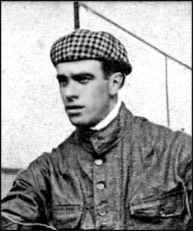
Chase was charmed by her latest admirer. Grahame-White had all the attributes she was looking for: money and status. Their courtship and engagement in 1910 was the stuff tabloid’s are made of. But it didn’t last. The next year Chase and Grahame-White drifted apart.
The industrious flyer had spent all his assets on expensive business ventures and earnings from his flying career was waning. Sparked by a sudden fear of dying in a plane crash – something that was happening quite frequently on the show circuit – Grahame-White decided to quit flying altogether and forgo the riches that came with it. Chase was typically frank when she told a reporter, “Mr. Grahame-White could not compensate me from my retirement from the stage.” They separated and divorced.
Chase ended her seven year reign as Peter Pan in 1913 and never appeared on stage again. Her sexual exploits, true or not, continued to make headlines, especially the extensive string of male suitors. In addition to Capt. Scott and Grahame-White, the list also included a nameless American millionaire, an English auto manufacturer, and even James M. Barrie, the author who created the character that changed her life. Chase eventually married into a wealthy British family, had three children, and died at the age of 76.
“The boy who wouldn’t grow up” was her most famous and final role.
 UNREMEMBERED