
Uncategorized
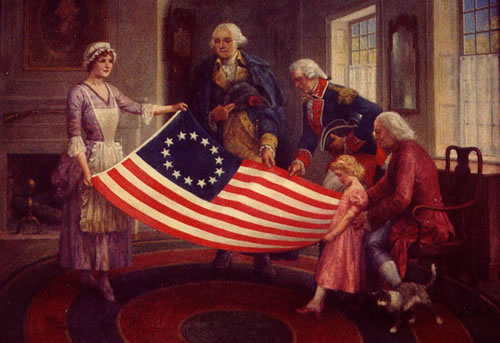
For a Long, Long Time No One Knew who ‘Betsy Ross’ Was
By Ken Zurski

In 1752, in Philadelphia on New Year’s Day, Elizabeth Griscom was born to a strict Quaker family who emigrated to the United States from England in the late 17th century.
A free spirit in her twenties, Elizabeth ran off and met John Ross an upholsterer’s apprentice and an Episcopalian. Her parents forbade the union outside the Quaker faith, but Elizabeth didn’t care. She married John in a ceremony that took place in a tavern and formally became Elizabeth Ross or “Betsy,” for short.
Today, Betsy Ross is certainly name we recognize.
So much so that in contemporary surveys, many people acknowledge the name Betsy Ross more than interminable historical stalwarts like Benjamin Franklin or Christopher Columbus. However, until her name became synonymous with America’s symbol of freedom, Betsy Ross was a sister, a mother, a widow (three times over), a seamstress, and by the time the rest of the country got to know her – dead for nearly 50 years.
If there was something special about her life, a slice of American folklore, perhaps, she told her family and no one else.
In 1870, however, that would change.
That year, Ross’s last surviving grandson William Canby went before the Historical Society in Philadelphia and told an amazing story about his grandmother, General George Washington, and the birth of the American Flag.
According to Canby, Washington had visited Ross’s upholstery shop in Philadelphia with a sketch idea for a unified flag and asked if Betsy could recreate it. “With her usual modesty and self-reliance,” Canby related, “she did not know, but said she could try.”
Canby says among other revisions, Betsy suggested that the stars be five-pointed rather than six as Washington had proposed (Washington thought the six-pointed star would be easier to replicate). The story was as revealing as it was skeptical. No one had heard of Betsy Ross and previous stories of the first flag was apocryphal at best. There were many nonbelievers and even today historians have doubts. There are no records to support Canby’s claim, they insist, even though Canby had signed affidavits to back up his story.
At the time of Washington’s proposed visit in 1777, Ross would have been in her 20’s. Her life was typical for a young women at the time. She endured two marriages that ended tragically (her first and second husband’s death were both attributed to war.) A third marriage produced five children. She passed away in 1836 at the age of 84. There is no documentation that she publicly promoted her own role in making of the flag – or was even asked. Apparently only her family knew.
Nearly a century later, however, in the midst of the Reconstruction period, a changing nation embraced Canby’s story of his grandmother and Ross became the face of America’s first flag. The early flag became affectionately known as “The Betsy Ross Flag,” and trinkets of the thirteen stars and stripes were a big seller.
Even hardened critics, who claim many seamstresses may have played a role in the flag’s creation are willing to concede, for history’s sake at least, that one name gets credit for the five-pointed stars.
Betsy Ross.
Thanks to Sousa’s Brain Band, ‘The Stars and Stripes Forever’ Came Quickly
By Ken Zurski
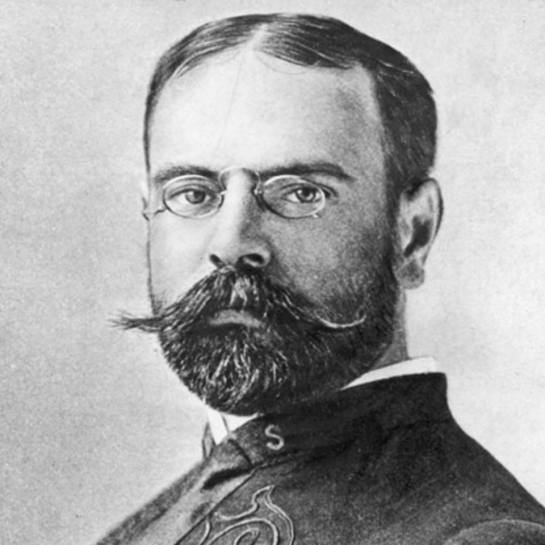
Bandleader and composer John Philip Sousa was never one to hurry a piece of music. A tune would come to him and he would play it over and over in his mind until it was just right – or as he called it, the “brain band” would perform it in his head before a single note was ever recorded.
That’s exactly what happened in 1896, while Sousa was returning from a trip overseas.
Sousa was forced to cut the trip short after receiving news that his longtime manager had passed away. Pacing the deck of the steamer Teutonic, Sousa heard a tune in his head and the “brain band” took over.
“Day after day,” he said,” as I walked, it persisted in crashing into my very soul.”
When Sousa returned to America, he set it to paper: “It was a genuine inspiration, irresistible, complete, and definite and I could not rest until I had finished the composition.”
“The Stars and Stripes Forever” quickly became Sousa’s most popular march.

The Immortally Important Fifteen-Star and Fifteen-Stripe Flag
By Ken Zurski
In December 1794, on the opening day of the Third Congress of the United States, the first order of business concerned the country’s symbol of freedom: the American flag.
In question was whether or not it should be changed.
Senator Stephen R. Bradley had introduced legislation that called for the flag to carry fifteen stripes and fifteen stars, two of each added to the current flag, to represent the newest additions to the Republic, his home state of Vermont and Kentucky. The measure passed through the Senate without debate.

The House however was another matter. Traditionalists wanted to keep the flag as originally intended. “We may go on adding and altering at this rate for a hundred years to come,” a Massachusetts Federalist argued.
Another lawmaker named Israel Smith was also against change. “Let us have no more alterations of this sort,” he insisted, citing among other things, the expenditure. Basically, he contended, continually altering the flag would be a costly venture. “Let the flag be permanent,” Smith demanded.
In the end, a slight majority agreed the flag should represent all states, lest they be offended.
The legislation passed 50-42.

Nearly two decades later, during the War of 1812, it was the sight of that altered fifteen-star flag flying high above the battle scarred Fort McHenry that inspired a Maryland lawyer to put his emotions into words. “O, say does that star spangled banner yet wave. O’er the land of the free and the home of the brave.”
Eventually the words of Francis Scott Key, who was aboard the British ship Tonnant to negotiate the release of U.S prisoners, was set to music and “The Defence of Fort McHenry,” known today as “The Star-Spangled Banner,” was soon being performed at military inspired gatherings.
In 1931, thanks to a congressional resolution, a shortened version of the original song officially became the national anthem of the United States of America.


This Uninhabited Island is a Good Thing for the Sport of Curling

By Ken Zurski
Thanks to a small island just off of mainland Scotland in an area known as the Firth of Clyde, a sport which date backs to the early 19th century continues to prosper.
They don’t play the sport of Curling there, nor does anyone actually live there. It’s currently uninhabited by humans. But its resource, the Blue Hone Granite is used for making the stones that gives Curling its unique name, as in the curl of a spinning stone over an icy surface.
Fairy Rock
The 60 million year old island named Ailsa Craig which in Gallic means “Fairy Rock,” although other alternative interpretations include the less fanciful and more directly expressive definition of “Cliff of the English,” is the plug of an extinct volcano. Monks, castles, chapels, a prison and lighthouses are all part of its lore. In the early 15th century the Ailsa Craig Castle was owned by the monks of Crossraguel Abbey.
But lately, it’s known for two things: birds and curling stones.

The island is exclusively a bird sanctuary. Puffins and gannets use Ailsa Craig as a breeding ground. This is fairly recent development and only after an infestation of rats first introduced to the island during shipwrecks, were eradicated in the early 1990’s. Once the rats were gone, the birds came back.
Blue Hone
Since 1851, however, the company Kay’s of Scotland, named after its founder Andrew Kay, who established the first curling stone manufacturing business over a hundred years ago, has been harvesting the granite boulders from the island to use in curling stones. Only two places on earth is said to have the Blue Hone or Common Green granite which has a low absorption rate and keeps water from freezing and eroding the stone: Ailsa Craig and the Trefor Granite Quarry in Wales.

Even today, 60-70 percent of all curling stones comes from granite extracted from Alisa Craig. The company says the last harvest of granite from the Island took place in 2013 when 2,000 tons were extracted, sufficient to fill orders until at least 2020.
Recent efforts have been made to reduce the dependency of the centuries old island as the only supplier of the curling stones, but a plastic substitute and a denser granite found in Canada are relatively new developments and not yet widely accepted or used in the sport.
Not yet, at least.
The Cheese
All this is good news for a sport which has seen a popularity surge in the past decade, especially in North America.
After all, before the discovery of granite on Ailsa Craig, stones used for curling were made of whinestone, often basalt, which was cut into a circular shape called “The Cheese” and weighed 70 pounds or more.
The current stone weight is just under 50 pounds.

Roof Top Barrels Served a Practical Purpose
By Ken Zurski
In the mid to late 19th century as railroad lines expanded and towns literally grew on land where the trains ran, depot buildings were built to accommodate riders on the various stops.
Today, pictures show the old depots with long stretched decks and indicator signs welcoming passengers to the train towns (in the photo below it’s “Ponca City (Oklahoma)” for example).

But look closely and you’ll see large barrels on the rooftops, maybe one maybe more. In some instances, if the depot is long and thin, a line of barrels covers the roof’s top, strategically positioned in between the buildings brick chimney’s.
Much debate has been made about these barrels, but there purpose was apparent: save the depot from burning to the ground.
Basically, it was a fire suppression method, an early and primitive sprinkler system, if you will.
Here’s how it worked:
The barrels were solid and thick, made of hardwood (usually oak, walnut, hickory or whatever was available) and bound by heavy iron or steel hoops. This sturdiness was to keep the liquid, in this instance water, from leaking out. In many remote locations, water was scarce and the air dry. So the threat of fire from a passing or stopped train was increased.
The trains pulling into the station were especially threatening to the depot. Cinder sparks from the wood and coal engines would land on the roof and ignite. If caught in time, someone from the station, usually a ticket agent or even a passenger would go to the roof and open the barrels. In most cases, a permanent ladder was placed atop the slanted roof and another along the narrow crest to make it easier, in theory, to reach the barrels before the building went up in flames. Water-filled barrels were also placed near chimneys since a stoked fire from a pot belly stove could easily create a spark which ignited the roof.
In 1869, a large roundhouse in Truckee, California caught fire and burnt to the ground. Nearly a dozen engines were parked inside. Luckily, a nearby mill worker spotted the blaze and alerted the night watchman. The building with its oil soaked boards went up quickly, but most of the engines were saved. The trains carried lumber freight along the Central Pacific line from Truckee to nearby Sacramento, so a large supply of timber was stacked inside and along the back wall. Since there was no proper supply of water nearby, saving the roundhouse, more like a tinderbox in this case, was hopeless. Thankfully, no one was killed.
When the Truckee roundhouse was rebuilt a new characteristic was added: the rooftop water barrels. After that, it was reported, several more fires flared up, but were quickly extinguished.
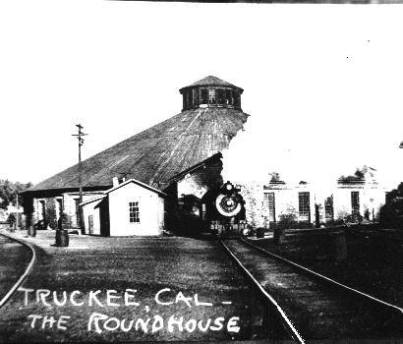
History cannot record all the near misses, but the Truckee roundhouse fire is a good example that the makeshift safety feature worked in principle at least. While the threat of a fire could not be eliminated, perhaps the resulting inferno could. Not a fully reassuring notion, for sure, but what other choice did they have?
If anything, the barrels on rooftops helped calm nerves each time a train whistle blew and sparks flew.

John Banvard and the ‘Three-Mile Painting’
By Ken Zurski
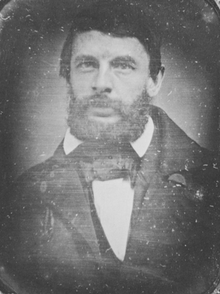
In the 1840’s, artist John Banvard created the largest, longest and most ambitious painting of its time. Figuratively rather than literally, it was named “Three-Mile Painting” because it consisted of a series of large painted scenes in sequence called a “moving panorama.”
Banvard chose the continuous landscape of the Mississippi River as his subject. He spent two years on the river traveling by boat and hunting for food to survive. He sketched hundreds of scenic vistas from St Louis to New Orleans and when finished holed himself up in Louisville, Kentucky to begin rolling and unrolling canvases. He then transferred the sketches at a breakneck pace.
It was as massive an undertaking as the subject itself.
Each panel stood 12 feet high and together stretched for 1300 feet – not quite a quarter of a mile in total. That was far short of the “three miles” Banvard had advertised, but who was counting?
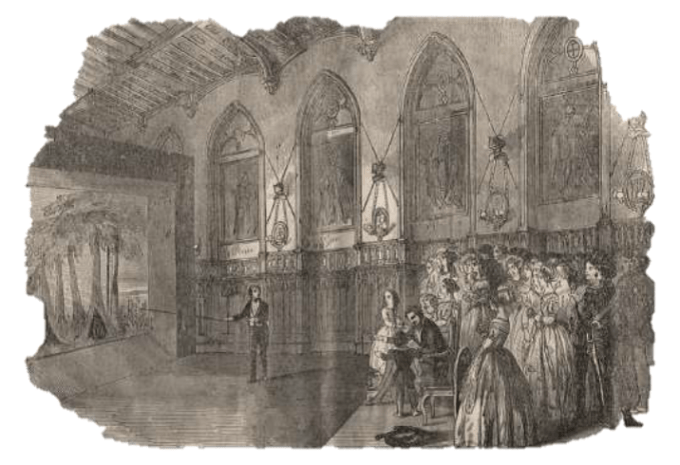
Banvard presented the work to packed houses and appreciative audiences and in 1846, by request, brought the massive painting to England and Queen Victoria for a private showing in Windsor Castle.
Banvard made a fortune and took his success personally. He fought with fellow panorama artists calling them “imitators” and in return they called Banvard ”uncultivated.” When Banvard built a castle-like estate on 60 acres in New York’s Long Island, it was admonished by locals for being overtly excessive, pretentious and impractical. They called it “Banvard’s Folly.” It later became a lavish hotel.
In 1851, in direct competition with Banvard, another panorama depiction of the Mississippi River was presented by artist John L Egan. Although it was advertised as a whopping “15,000 feet” in length, a more factual estimate puts it closer to 348 feet. Each panel was 8- foot high and 14-feet long. The rolled canvas was so large that matinee viewers were treated to a stroll down the river’s stream in the afternoon while in the evening performance, as the canvas was rolled back in reverse, a trip upstream was presented.
While Banvard claimed to be first to showcase the wonders of the mighty river on canvas, Egan’s deception is better known today because its scenes have been saved, making it the last known surviving panorama of its time.

Unfortunately that is not the case with Banvard’s “Three-Mile Painting.” It was never persevered or copied. Because of its size and quantity, the panels were separated and used as scenery backdrops in opera productions.
When the canvases became worn from exposure they were shredded and recycled for insulation in houses.

The First Debacle of Millard Fillmore’s Unexpected Presidency
By Ken Zurski
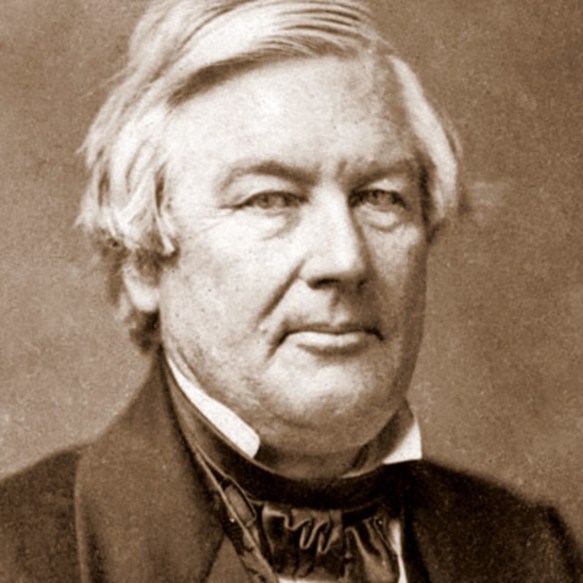
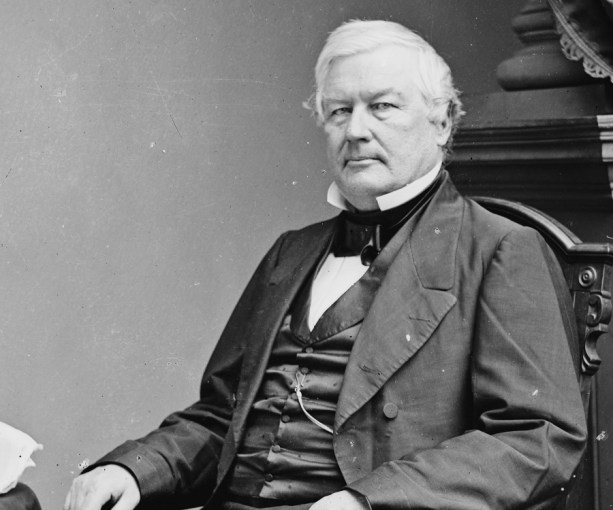
On July 10, 1850, MILLARD FILLMORE unexpectedly became the Thirteenth President of the United States.
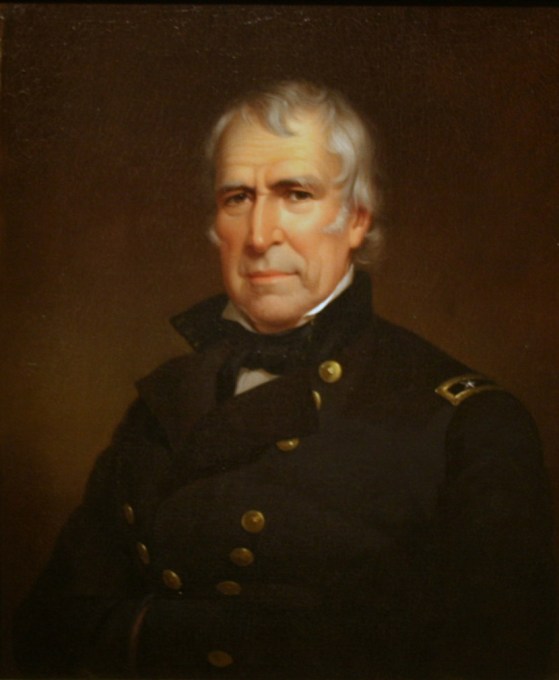
No one saw it coming, not the least of which was Fillmore, who had been vice president to Zachery Taylor at the time, a job he sought but ultimately didn’t think he would get.
Even Taylor, a popular military general, had reservations about running for president. But duty called. “If my friends deem it good for the country that I be a candidate,” Taylor obliged. “so be it.” Fillmore, not known as politically savvy or ambitious, was picked as Taylor’s running mate because he was more of a Whig, especially on slavery.
Once in the White House, however, Fillmore had little to do. The job held no great power or influence and only one vice president, John Tyler, had ever assumed the presidency unexpectedly, when the ninth president William Henry Harrison died of pneumonia just 31 days into his term of office.
In similar unexpectedness, just sixteen months into his own presidential term, Taylor was dead.
A bad stomachache and poor medical care did him in. A Stunned Fillmore took the oath of office and set the stage for what is considered to be one of the worst presidencies in history.
An attribution that was set with Fillmore’s first act as president.
As the story goes, immediately after Taylor’s death, the members of his cabinet, in ceremonial unity and respect, turned in resignation letters. They fully expected Fillmore to deny their requests. Their thinking was two-fold. For one, Fillmore was inexperienced. In another sentiment, he surely needed their help. Plus, Fillmore and Taylor were associates, not adversaries. Politically speaking, and in technicality too, they were all on the same team. Whether they personally liked the vice president or not, and most did not, a nation’s stability and Taylor’s legacy was at stake.
Clearly, Fillmore could grasp that, they thought.
They were wrong.
Fillmore accepted their resignation letters and in effect fired them all. But, he asked, could they stay on a month so he could appoint a new team.
Each one refused.
Baseball’s ‘Pastimes’ Played the Game For Fun Only

By Ken Zurski
In the heart of Brooklyn, in 1858, a group of men known as the Pastimes, hiked up their wool trousers, buttoned-down their flannel shirts, and ran onto an open grassy field to play a game they fondly referred to as “base ball.”
The team was one of several in the New York area, but the Pastimes were different. Instead of being a ragtag lot of patchwork players, the Pastimes billed themselves as more refined and high-minded. Many of the members were prominent citizens, some even held government jobs. They enjoyed spending the day together, socializing and being seen.
Base ball, the game, they said, was just good exercise.
To signify their self-worth, the Pastimes arrived at away games in carriages and usually in a line. “Like a funeral procession passing,” remarked one observer. You couldn’t help but notice.
After the game they invited their rivals, win or lose, to a fancy spread of food and spirits. Oftentimes this was the reason for getting together in the first place. The game was the appetizer. The day’s highlight however was the feast. The opposing players rarely complained.

Despite the revelry off the field, the Pastimes did actually play the game. But it hardly represented what we know baseball to be today. Pitchers tossed the ball (there was no “throwing” allowed) and strikes were rare. With no called balls, a batter could wait through 30 to 40 tosses or more before deciding to hit it. The batter was out when a fielder caught the ball on a fly or on “a bound.” And player’s running the bases rarely touched them. After all, who was going to make them? “What jolly fellows they were at the time,” wrote Henry Chadwick, a New York journalist and Pastimes supporter, “one and all of them.”
Most of the early history of baseball hails from New York, with Cooperstown, considered to be the place where the game was invented and the current site of the Baseball Hall Of Fame and Museum, as a prime example. While bat-and-ball type games were popping up throughout the country, in New York, an actual team emerged in the 1840’s calling themselves the Knickerbockers. While they’re not trailblazers in creating the game, they can be considered pioneers when it comes to the sport. The Knickerbockers actually made and followed some rules.
The play itself was raw, almost comical, but enjoyable for spectators. “Ball Days” became popular, and the Knickerbockers were fun to watch. Soon other teams would join in, some more determined than others. The Pastimes had their reasons too.

At some point, as more teams participated, the game started changing. It became more challenging and competitive and the Pastimes who had been enjoying a day of friendly raillery – and not much more – had to adjust. “Until the club became ambitious of winning matches and began to sacrifice the original objects of the organization to the desire to strengthen their nine-match playing,” Chadwick wrote, “everything went on swimmingly.” But losing takes its toll. And for the lowly playing Pastimes, the fun went out of the day. “Finally the spirit of the club, having been dampened by repeated defeats at the hands of stronger nines, gave out,” Chadwick grumbled on. “The Pastimes went out of existence.”
Well that and the start of the war too.
Conventional wisdom would suggest that the Civil War slowed the progress of the game. And that was true, to a point. Inevitably as men marched off to war, there just weren’t enough players to take the field. Many top players did heed the call to serve, but others chose to delay their service and keep playing. Plus there were always reserves, especially in a well populated state like New York. The game carried on, despite the conflict. In fact, it was just as popular for the soldiers who shared a good game of nines to help pass the time. “Each regiment had its share of disease and desertion; each had it’s ball-players turned soldiers,” remembered George T Stevens, of the 77th Regiment, New York Volunteers. Baseball was a game that required an open space, a stick, something to hit, and not much else. Reports of ball games in prison camps were widespread.

Once the conflict was over, the game itself was in for an overhaul. Many of the older players were either injured, weary from the war, or worse. That’s when younger players joined in, skills improved, and rules were implemented.
Base ball became Baseball – a legitimate competitive sport.
The Pastimes would have never fit in.
Perhaps the most appealing part of the early game would have also pleased the more ardent followers of baseball today, especially those who crave the action on the offensive side of the ball. On October 28, 1858, the Pastimes played the Newark Adriatics. According to the rules back then, a game played out every half inning, even in the ninth, and even if the home team was winning.
That day, the Adriatics came to bat in the bottom of the ninth. They were leading 45-13.
The crowd likely cheered them on for more runs.

Decoration Day: The Beginnings of a National Holiday
By Ken Zurski
Before any formal holiday existed, the idea to recognize the war dead with a day of commemoration can be attributed to dozens of communities that organized events adorning the grave sites of local soldiers killed in the Civil War.
Holding prayer ceremonies at grave sites and placing flowers on graves was not an original concept, but beyond the church groups, large turnouts of people of all faiths and races, whether churchgoers or not, were gaining momentum and support for their act of of kindness and reverence. Nearly every town in America had buried dead from the horror of the Civil War and nearly every town had a cemetery as a reminder of the terrible loss.
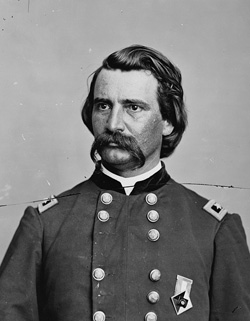
Carbondale, Illinois home of one of the earliest infantry regiments in that state, has a stone marker that recognizes it as the first site of a Decoration Day ceremony, although it too was held several years before the holiday was officially enacted. Their reasoning is valid thanks to the stirring words of a hometown General, John A. Logan, who would later be credited as the “Father of Memorial Day.” “Tell my wife, tell my sister, mother, that I died with my face to the enemy; that my country might live; that the principles of liberty and freedom might be enjoyed; and that they might be protected by the laws and Constitution.”
But like Carbondale, other cities also claimed the distinction.
Columbus, Mississippi, was one town that buried many. After the bloody Battle of Shiloh, many of the wounded and war dead were sent by train to the small Southern town just above the Tombigbee River. Thousands of soldiers on both sides of the battle were interred at the hopefully named Friendship Cemetery. In April of 1866, several Columbus women went to the cemetery and brought bouquets of garland, blossoms, lilies and roses to the site. Miss Matt Moreton was among the gatherers. Moreton was a recent widow. Her husband was a victim of the war. One by one, she and the other women placed flowers on the graves of over a thousand Confederate souls. Miss Moreton showing no partiality, did the same for the federal’s soldiers grave sites as well. “This first act of floral reconciliation was discussed in praise and censure,” a local described. “[But] this sweet woman with whom God has blessed the earth – volunteered, of her own mind, to strew flowers upon the Federal’s graves too. not just upon the fallen Confederates.”
The Mississippi Index praised the event: “We were glad to see that no distinction was made between our own dead and about forty Federal soldiers, who slept their last sleep by them. It proved the exalted, unselfish tone of the female character. Confederate and Federal—once enemies, now friends—receiving this tribute of respect.”
The act prompted Francis Miles Finch to write a poem, famously titled The Blue and the Gray.
…From the silence of sorrowful hours
The desolate mourners go,
Lovingly laden with flowers
Alike for the friend and the foe;
Under the sod and the dew, Waiting the judgement-day;
Under the roses, the Blue,
Under the lilies, the Gray.

Moreton and three other local women were given credit for the gesture, and their story is remembered today in Columbus, where Memorial Day services are still carried out in the same manner.
A century later, in 1966, thanks to a presidential proclamation signed by Lyndon B. Johnson, the New York town of Waterloo, built along the banks of the Cayuga-Seneca Canal, holds the official distinction of being the “birthplace of Memorial Day.”
The effort was originally spearheaded by the governor of New York at the time, Nelson D. Rockefeller, who recognized Waterloo as the first village-wide, annual observance of a day to honor the war dead. The local resolution was inspiring enough to be taken up by Congress, passed by the House and Senate, and sent to the President for approval. Here’s Waterloo’s story: 100 years earlier, in the summer of 1866, Henry Welles, a druggist, suggested a day of social gathering not only to honor the living soldiers but remember the fallen ones as well. General John B. Murray supported the idea and instituted a plan. It was more like a funeral procession. Flags were flown at half-staff and black bunting was hung in respect as soldiers and townsfolk marched to three village cemeteries and placed flowers on the gravesides. The next year, in similar fashion, they did it again, and again the following year, and in each year since.

Perhaps the largest and earliest pre-holiday ceremony was held in Charleston, South Carolina, in a large field known as the Race Course, where prized horses once ran. During the Civil War, the infield was used as a prisoner-of-war camp. Hundreds of mostly young men were either held there or awaited transfer to larger prison camps, like Belle Isle in Richmond or Andersonville in Georgia. Many never made it out of the Race Course, suffering from sicknesses like dysentery, which spread quickly in the inhumane conditions and tight quarters. Some 257 men perished and were quickly buried in a pasture nearby.
In May of 1865, just a year after the war ended, several Charleston residents, went out to see the gravesites, just mounds of dirt really, and still fresh, noted one observer, “with the marks of the hoofs of cattle and horses and feet of men.” They decided to erect a fence and place a monument on the site.

Then, on May 1, 1865, May Day, nearly 3,000 local schoolchildren and “double that the number of grown-ups” went to the Washington Race Course with bouquets of roses and other “sweet smelling flowers.” James Redpath, known as “Uncle James,” a witness, remembered the event. “The children marched from the Race Course singing the John Brown Song and then, silently and reverently, and with heads uncovered, they entered the burial ground and covered the graves with flowers. “It was the first free May Day gathering they ever enjoyed,” Redpath noted, referring to the “colored” children present and their parents, former slaves.
Three years later, on May 5, 1868, General John A. Logan of the Union Veterans—the Grand Army of the Republic—established a day for all Americans to decorate with flowers the graves of war heroes.
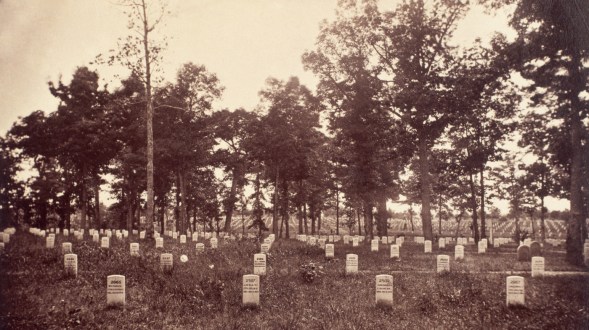
On May 30 1868, just as Logan had ordered, the first Memorial Day service (then known as “Decoration Day”) took place at Arlington Cemetery.
“Touched by What I’ve Seen:” Thank the General’s Wife, Mary Logan, for Memorial Day
By Ken Zurski
General John A. Logan could not go.
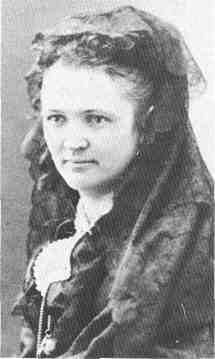
“Blackjack Logan” as his men affectionately dubbed him due to his strikingly dark hair and eyes, was invited by a newspaper man in Chicago, Charles Wilson, to visit Richmond, Virginia. It was March 1868, and Logan now the leader of the Grand Army of the Republic was too busy in the nation’s capital overseeing veteran’s affairs to break away. But Wilson had invited the entire Logan family with him on the trip. So he insisted Logan’s wife Mary, daughter Dolly and Baby son, John Jr. still attend
The general gave them his blessing.
In Richmond, Mary Logan was prepared for the worse. Large portions of the city had been destroyed by fire and now three years removed from the brutality of war, it still resembled a battleground. “Driving from place to place we were greatly interested and realized more than we ever could have, had we not visited the city immediately after the war, the horrors through which the people of the Confederacy had passed,” Mary recalled after arriving.
Because of its proximity to Washington, many Union leaders, including President Lincoln, toured Richmond shortly after the North captured the embattled Southern capital. Lincoln arrived with his son Tad on April 4, 1865 to a military-style artillery gun salute. He viewed first hand the devastation caused by the fires set by the escaping Rebels. The city’s structures were nearly gone, but the war was over. Five days later, General Robert E Lee signed surrender papers. Less than a week after that, Lincoln was dead.
But Richmond survived.
“The hotel we stayed in was in a very wretched condition,” Mary would later write about her trip. “And we expected to find the rebellion everywhere.” Wilson, another war veteran, was interested in seeing Libby prison, so they took a carriage to the site. Along the roads, Mary noticed “colored people” still picking up the remnants of exploded shrapnel, broken cannon and Minie balls to sell for iron scrap at local foundries. She remembers passing a poor little boy, so “thinly clad that he had little to protect him for the inclemency of the weather.” The March chill had given the city a depressing glumness. “Well isn’t it so miserably hot to-day,” Mary recalls the boy humourously calling out to the driver, while at the same time, “his teeth were chattering,” she wrote.
The carriage then made its way to the cemeteries. This is where Mary took pause. Not only were there endless lines of stones, but they were all decorated. Mary was moved by the site. “In the churchyard we saw hundreds of graves of Confederate soldiers. These graves had upon them bleached Confederate flags and faded flowers and wreaths that had been laid upon by loving hands.” Mary stopped to reflect. “I had never been so touched by what I had seen,” she said.

When she returned to Washington, Mary summoned her husband and told him what she had witnessed at the grave sites. Logan said that it was a beautiful revival of a custom of the ancients preserving the memory of the dead. “Within my power,” he promised her, “I will see that the tradition is carried out for Union soldier as well.” A promise he did not wait long to keep.
Almost immediately, Logan sent a letter to the adjunct- general of the Grand Army of the Republic, dictating an order for the first decoration of the graves of Union soldiers. He wrote:
The 30th day of May, 1868, is designated for the purpose of strewing with flowers or otherwise decorating the graves of comrades who died in defense of their country during the late rebellion, and whose bodies now lie in almost every city, village, and hamlet churchyard in the land. In this observance no form or ceremony is prescribed, but posts and comrades will in their own way arrange such fitting services and testimonials of respect as circumstances may permit..
On May 30, Just as Logan had ordered the first Memorial Day service took place at Arlington Cemetery. Logan had given a directive how to proceed:
Let us, then, at the time appointed, gather around their sacred remains and garland the passionless mounds above them with choicest flowers of springtime; let us raise above them the dear old flag they saved from dishonor; let us in this solemn presence renew our pledges to aid and assist those whom they have left among us as sacred charges upon the Nation’s gratitude, — the soldier’s and sailor’s widow and orphan.
Mary says that her husband picked the end of May because “flowers would be in their greatest perfection.” But perhaps most fitting of all was the day itself. Although no one could predict the weather, it was sunny and warm, a perfect start to the summer season. Baskets of brilliantly colored flowers in full bloom and enriched by the warmth of the sun’s light were spread throughout the national cemetery grounds.
It was as Mary would later describe it, “a beautiful day.”

 UNREMEMBERED