
Happy Eighth of July? Not Necessarily a Celebration Day for General Washington
By Ken Zurski
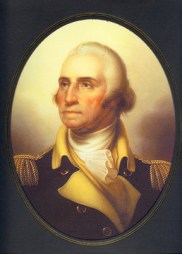 On July 8 1776, just days after the Continental Congress passed the Declaration of Independence, a copy was sent to General George Washington who was preparing for battle in New York. Washington was anxiously awaiting word from the assembly in Philadelphia. He knew how important the declaration would be to his troops.
That’s because up to that point the New York contingent of the Continental Army, who had been together for nearly a full year, hadn’t fired a single shot yet. They were frustrated, antsy and for the most part continually drunk. The declaration would help boost morale, Washington thought.
Certainly talk of such a declaration had been stirring for about a month. In May, George Mason drew up a sentence about being “born equally” with “inherent natural rights,” words later shaped by Thomas Jefferson. And on June 7, Virginian Richard Henry Lee, introduced a congressional resolution declaring that the United Colonies “ought to be free and independent states.” Even Washington , in the spring of that year, crafted a statement that supported the idea of independence as an incentive to fight. “My countrymen, I know, from their form of government and steady attachment therefore to royalty, will come reluctantly into the idea of independency,” he wrote.
So on July 9, at six o clock in evening, Washington ordered his troops to gather. He had previewed the contents of the document and included it in his “General’s Orders,” which would be read aloud to the men.
Washington had warned troops of the consequences that any official documentation of independence would mean if defeated. Treason, he implored, was something the British ruler did not take lightly. Traitors in the past were subject to gruesome disemboweling and beheadings, he explained. Washington himself knew if captured, he would be hanged.
This was literally a fight to the end, he argued.
The men stood with anticipation as the “General’s Orders” were read. Patiently they waited as several mundane paragraphs of typical military reports and directives were announced. One included the procurement of a chaplain assigned to each regiment. “The blessing and protection of Heaven are at all times necessary but especially so in times of public distress and danger,” the missive proclaimed.
Then finally…
“…The Honorable the Continental Congress impelled by the dictates of duty, policy and necessity, having been pleased to dissolve the connection which subsisted between the Country, and Great Britain, and to declare the United Colonies of America, free and independent STATES.”
 Upon hearing the words, the men let up “three huzzas” a witness reported. In fact, their enthusiasm led to an act of debauchery that irked Washington. The soldiers marched down Broadway Street and proceeded to topple the large statue of King George III, decapitating it in the process.
Washington was livid. He told the troops that while their “high spirits” was commendable, their behavior was not. The general wanted an army of orderly respectful men, not savages. Even defacing the likeness of the British King was inadmissible in his eyes.
However sanctimonious that may have sounded, Washington must have been pleased that the statue’s 4 ,000 pounds of gilded lead was melted down to make nearly 43-thousand musket bullets.
Washington was also thrilled by his troop’s eagerness to fight. “They [the British] will have to wade through much blood and slaughter before they can carry out any part of our works,” he wrote about the impending conflict.
Then on July 12, several British ships, including the forty-gun Phoenix, cut through a thin American defense and blasted the city. It was a show of force meant to rattle the colonists into submissiveness. It certainly rattled the nerves of Washington’s untested soldiers who were shaken and distressed by the cries of women and children fleeing the blasts. There was little resistance.
Washington later expressed his disappointment. “A weak curiosity at such a time makes a man look mean and contemptible,” he said chastising the troops.
After the embarrassment, British commander William Howe offered Washington clemency for the rebels if the General surrendered. Washington flatly refused.
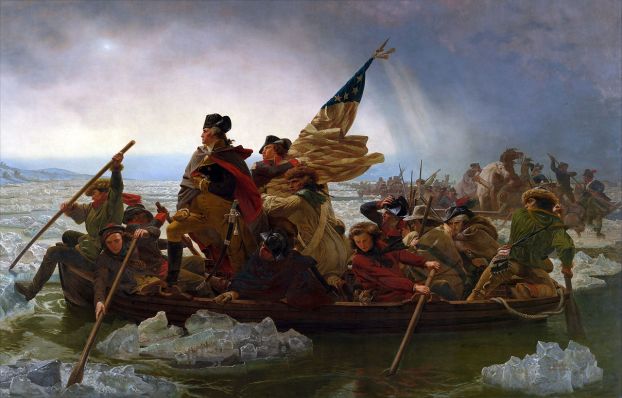
The following month, it would get worse. Due to more defeats, the rebels were forced to flee New York to Pennsylvania and reorganize. Later that year, in December, Washington would famously cross the icy Delaware River for a surprise attack in Trenton, New Jersey.
The Revolutionary War would continue for another seven years.
(Sources: Washington: A Life by Ron Chernow; various internet sights)
Betsy Ross? For a Long Time No One Knew. Then Her Grandson Told a Story
By Ken Zurski

In 1752, in Philadelphia on New Year’s Day, Elizabeth Griscom was born to a strict Quaker family who emigrated to the United States from England in the late 17th century. A free spirit in her twenties, Elizabeth ran off and met John Ross an upholsterer’s apprentice and an Episcopalian. Her parents forbade the union outside the Quaker faith, but Elizabeth didn’t care. She married John in a ceremony that took place in a tavern and formally became Elizabeth Ross or “Betsy,” for short.
Today, Betsy Ross is certainly name we recognize.
So much so that in contemporary surveys, many people acknowledge the name Betsy Ross more than interminable historical stalwarts like Benjamin Franklin or Christopher Columbus. However, until her name became synonymous with America’s symbol of freedom, Betsy Ross was a sister, a mother, a widow (three times over), a seamstress, and by the time the rest of the country got to know her – dead for nearly 50 years.
If there was something special about her life, a slice of American folklore, perhaps, she told her family and no one else.
In 1870, however, that would change.
That year, Ross’s last surviving grandson William Canby went before the Historical Society in Philadelphia and told an amazing story about General George Washington, his grandmother and the birth of the American Flag.

According to Canby, Washington had visited Ross’s upholstery shop in Philadelphia with a sketch idea for a unified flag and asked if Betsy could recreate it. “With her usual modesty and self-reliance,” Canby related, “she did not know, but said she could try.”
Canby says among other revisions, Betsy suggested that the stars be five-pointed rather than six as Washington had proposed (Washington thought the six-pointed star would be easier to replicate). The story was as revealing as it was skeptical. No one had heard of Betsy Ross and previous stories of the first flag was apocryphal at best. There were many nonbelievers and even today historians have doubts. There are no records to support Canby’s claim, they insist, even though Canby had signed affidavits to back up his story.
At the time of Washington’s proposed visit in 1777, Ross would have been in her 20’s. Her life was typical for a young women at the time. She endured two marriages that ended tragically (her first and second husband’s death were both attributed to war.) A third marriage produced five children. She passed away in 1836 at the age of 84. There is no documentation that she publicly promoted her own role in making of the flag – or was even asked. Apparently only her family knew.
Nearly a century later, however, in the midst of the Reconstruction period, a changing nation embraced Canby’s story of his grandmother and Ross became the face of America’s first flag. The early flag became affectionately known as “The Betsy Ross Flag,” and trinkets of the thirteen stars and stripes were a big seller.
Even hardened critics, who claim many seamstresses may have played a role in the flag’s creation are willing to concede, for history’s sake at least, that one name gets credit for the five-pointed stars.
Betsy Ross.

The Fifteen Stars, Fifteen Stripes Flag

By Ken Zurski
In December of 1794, on the opening day of the Third Congress of the United States, the first order of business concerned the country’s symbol of freedom: the American flag. In question was whether or not it should be changed.
Senator Stephen R. Bradley had introduced legislation that called for the flag to carry fifteen stripes and fifteen stars, two of each added to the current flag, to represent the newest additions to the Republic, his home state of Vermont and Kentucky.
The measure passed through the Senate without debate.
The House however was another matter. Traditionalists wanted to keep the flag as originally intended. “We may go on adding and altering at this rate for a hundred years to come,” a Massachusetts Federalist argued.
Another lawmaker Israel Smith was also against change. “Let us have no more alterations of this sort,” he insisted, citing among other things, the expenditure. Basically, he contended, continually altering the flag would be a costly venture. “Let the flag be permanent,” Smith demanded.
In the end, a slight majority agreed the flag should represent all states, lest they be offended. The legislation passed 50-42.
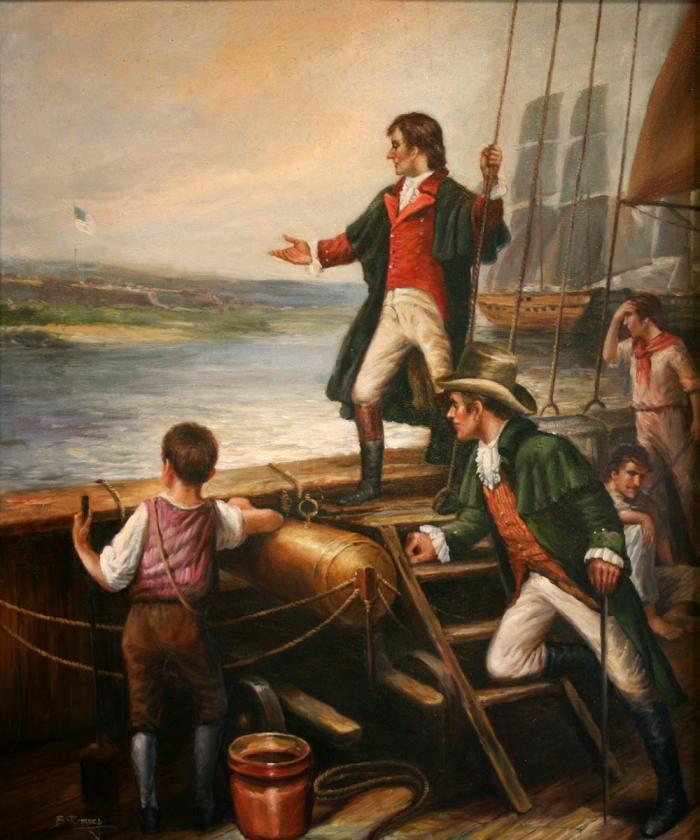
Nearly two decades later, during the War of 1812, it was the sight of the altered flag flying high above battle scarred Fort McHenry that inspired a Maryland lawyer to put his emotions into words.
Aboard the British ship Tonnant to negotiate the release of US prisoners, Francis Scott Key wrote; “O, say does that star spangled banner yet wave. O’er the land of the free and the home of the brave.”
The Island of Monks, Rats, Puffins and Curling Stones
By Ken Zurski
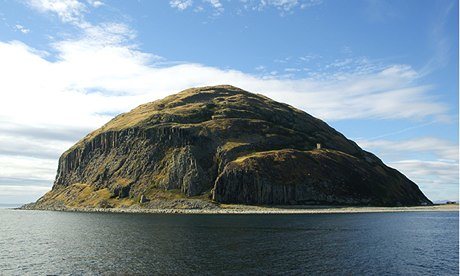
Thanks to a small island just off of mainland Scotland in an area known as the Firth of Clyde, a sport which date backs to the early 19th century continues to prosper. They don’t play the sport there, nor does anyone live there. It’s currently uninhabited by humans. But its resource, Blue Hone Granite is used for making the stones that by sliding and curving on a sheet of ice gives the sport its’ unique name: Curling, as in the curl of a spinning stone.
The 60-million year-old island named Ailsa Craig which in Gallic means “Fairy Rock,” is the plug of an extinct volcano. It’s also known by other less fanciful names like “Cliff of the English.” Monks, castles, chapels, a prison and lighthouses are all part of its lore. In the early 15th century the Ailsa Craig Castle was owned by the monks of Crossraguel Abbey. But lately, it’s known for two things: birds and curling stones.

The island is exclusively a bird sanctuary. Puffins and gannets use Ailsa Craig as a breeding ground. This is fairly recent development and only after an infestation of rats first introduced to the island during shipwrecks, were eradicated in the early 1990’s. Once the rats were gone, the birds came back.
Since 1851, however, the company Kay’s of Scotland, named after its founder Andrew Kay, who established the first curling stone manufacturing business over a hundred years ago, has been harvesting the granite boulders from the island to use in curling stones. Only two places on earth is said to have the Blue Hone or Common Green granite which has a low absorption rate and keeps water from freezing and eroding the stone: Ailsa Craig and the Trefor Granite Quarry in Wales.
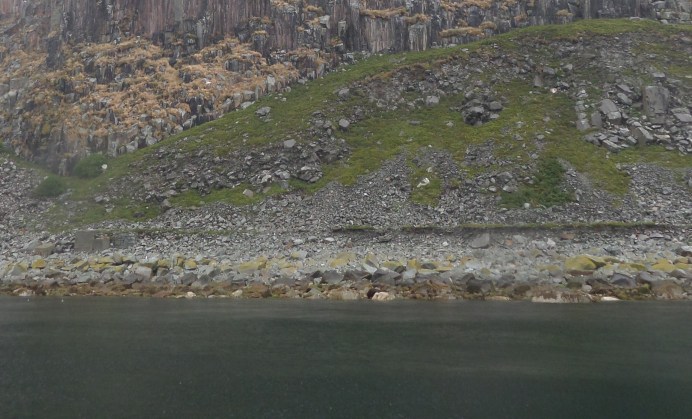
Even today, 60-70 percent of all curling stones comes from granite extracted from Alisa Craig. The company says the last harvest of granite from the Island took place in 2013 when 2,000 tons were extracted, sufficient to fill orders until at least 2020.
Recent efforts have been made to reduce the dependency of the centuries old island as the only supplier of the curling stones, but a plastic substitute and a denser granite found in Canada are relatively new developments and not yet widely accepted or used in the sport.
Not yet, at least.
All this is good news for a sport which has seen a popularity surge in the past decade, especially in North America.
After all, before the discovery of granite on Ailsa Craig, stones used for curling were made of whinestone, often basalt, which was cut into a circular shape called “The Cheese” and weighed 70 pounds or more.
The current stone weight is just under 50 pounds.

Henry Ford, the Vagabonds, E.G. Kingsford, and the History of the Charcoal Briquette
By Ken Zurski
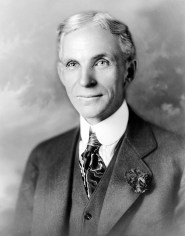
In 1919, car-making giant Henry Ford had been eyeing a significant tract of land on the far western portion of the Upper Peninsula of Michigan known as Iron Mountain. Ford’s cousin, Minnie, to whom he was very close, lived there along with her husband E.G. Kingsford who ran a successful timber business and owned several car dealerships thanks to his wife’s family connections.
Ford had begun wrestling control from his stockholders and purchasing raw materials to be used in making his vehicles. Anything to make his car making process more efficient. Kingsford had a beat on something Ford desperately sought. So Ford invited Kingsford to go camping with him. To talk business, he explained.
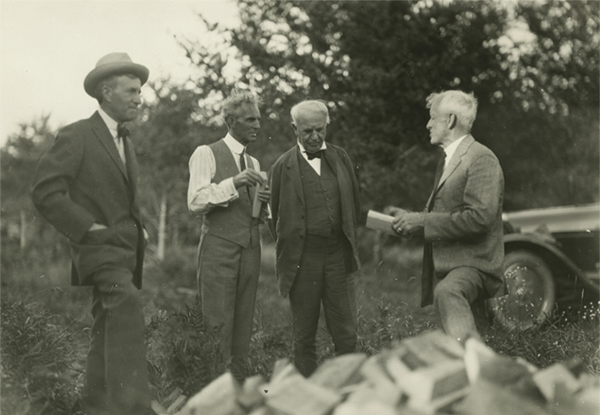
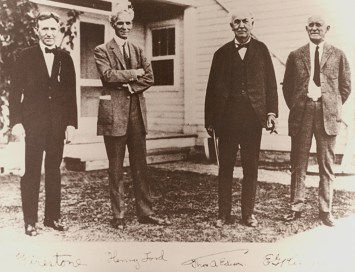
At the time, Ford had been making headlines across the country, not just for making cars, but for actually using one. Ford went on road trips. The press dubbed it, “auto-camping,” because Ford along with his three close friends, who called themselves “the vagabonds” would travel by automobile during the day then set camps at night..
Ford’s camping companions were no slouches. They included Harvey Firestone, the tire company founder; John Burroughs, the conservationist; and inventor Thomas Edison. Their journeys included a jaunt through the Florida Everglades and treks across mountainous regions in West Virginia and New England. Their first trip to the Adirondacks in 1918 was so satisfying they all agreed to make a trip to new destinations every year.
The trips were well-organized, well-stocked and oftentimes well-staffed with cooks and a cleaning crew. Like true campers, though, the formidable men did sleep on folding cots in a ten-by ten canvas tent. Burroughs, in his 80’s and the oldest of the four (Ford was in his 50’s), chronicled most of the adventures. He marveled at their resiliency. “Mr Ford seizes an ax and swings it vigorously til there is enough wood for the campfire,” he wrote.
Each year newspapers ran features of the “vagabonds” latest adventure and newsreels were shown in movie theaters throughout the country. After all these were prominent American inventors and “heroes” to some like Edison and Ford, who despite their gray hair, and unabashed preference to wear business attire – tight collars, three piece suits and ties – even on the retreats, were “roughing it,” so to speak, in the great outdoors.
The papers couldn’t hide the obvious irony of it all. “Millions of Dollars Worth of Brains Off on Vacation,” the headlines blared. Even President Harding joined the men briefly for one excursion.
Burroughs diary accounts however, especially the campfire chats, would be interpreted much differently today. “Mr. Ford attributes all evil to the Jews or the Jewish capitalists,” Burroughs wrote in his diary about one particularly spirited late night conversation. Ford’s antisemitism would surface later, but at the time, the prejudice against Jews was not as divisive as it is today.
But no such controversy followed the “vagabonds”in the papers. “Genius to Sleep Under the Stars,” read one article followed by tales of playful tree climbing, stream wading and bird watching. “The four famous men were like so many little boys,” a Ford biographer wrote,”…the white-haired Huckleberry Finns.”
Kingsford must have been pleased and a little flattered by Ford’s invitation to join “the vagabonds” in Green Island, New York, a popular fishing spot near Edison’s Machine Works company in Schenectady.
Ford had a purpose. He needed land. Specifically, he needed land with timber on it. Nearly one-million board feet a day was used to manufacture the popular Model T’s, whose chassis were made mostly of wood.
Kingsford convinced Ford to buy some flat land near the Menominee River and build a wood distillation plant. Ford heeded his advice and went even further. He would build the plant and an electric dam nearby to power it.
Ford hated to waste anything and in the wood distillation process there was always a lot of waste, specifically wood chip ash, or rough charcoal. So Ford had an idea. He mixed the crushed charcoal with a potato starch glue and pressed the blackened goo into a pillow-shaped briquette. When lit, it burned white ash and produced searing heat, but little or no flame.
 Ford was not the first person to come up with the idea of charcoal in a briquette. That honor goes to a man named Ellsworth B. A. Zwoyer from Philadelphia who patented the idea in 1897. Ford, however, was the first to commercially market it.
He advertised the new product as “a fuel of a hundred uses” and perfect for “barbecues, picnics, hotels. restaurants, ships, clubs, homes, railroads, trucks, foundries, tinsmiths, meat smoking, and tobacco curing.”
For home use, it was less dangerous than a traditional wood fire, but just as useful. “Briquette fire alone is enough to take the chill off a room,” the instructions informed. “Absence of sparks eliminates this menace to rugs, floors and clothing.”
 Ford’s put his signature logo on the charcoal briquettes bags and sold them exclusively at his many car dealerships. When Ford died in 1947, the charcoal business was phased out. Henry Ford II took over and sold the chemical operation to local business men who changed the name to reflect its local heritage: Kingsford Chemical Company.
By that time, Kingsford was not just a person, but a city. Thanks to the economical success of Ford’s wood, parts and charcoal plant, the land used to build the original timber business was named in honor of its first industrialist.
His story is rarely told.
(Pardon, if it reads like a resume, but details are sparse.)
Born in Woodstock, Ontario, Edward George Kingsford moved to Michigan as a young boy. He lived on his parents farm in Fremont before becoming a timber agent and moving to Marquette in the Upper Peninsula. In 1892, Kingsford married Mary Francis “Minnie” Flaherty, Henry Ford’s cousin. Several years later, Kingsford signed a contract to become a Ford sales agent in Marquette and eventually moved to Iron Mountain where he bought tracts of land for timber and opened several Ford dealerships. When Ford called to discuss the possibility of using the massive timber resource for his car making, Kingsford answered. Eventually, the once uncharted land, about five square miles total, was named Kingsford, Michigan.

Despite the distinction, however, Ford, not Kingsford, is prominently associated with the town’s history. Ford was responsible for putting up the large factory, employing hundreds of workers, and building modern houses for the workers and their families to live. Within just one year, in 1920, the population of Kingsford blossomed from a mere 40 residents to nearly 3,000, creating a town out of an enterprise, thanks to Henry Ford.
By the time Ford’s imprint left in 1950, Kingsford the town was established enough to persevere, although the plant’s closing was a blow economically. After the parts plant shuttered the charcoal business also left; moving operations to Louisville, Kentucky in the 60’s.
Ford’s name is still displayed on several establishments in town: Ford Airport, Ford Hospital and Ford Park are just a few examples. In a a publication honoring the city’s 75th Jubilee, Kingsford is refereed to as “The Town that Ford Built.”
Some might say that’s a slight to Kingsford, the man, who by association convinced Ford to venture out to the remote section of the Upper Peninsula, ultimately invest in some land, and put a little city on the map.
Today, you have to go to Kingsford, Michigan to get the full story.
You’ll see. Ford gets the credit.
But when it comes to charcoal, we all know whose name is on the bag.
(Sources: I Invented the Modern Age : The Rise of Henry Ford by Richard Snow; Ford: The Men and the Machine by Robert Lacey; various internet sites)
Amy Johnson, Britain’s Queen of the Air
By Ken Zurski
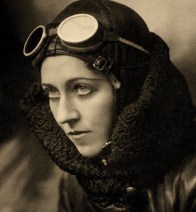
Amy Johnson is considered the English version of American Amelia Earhart which is a fair comparison since both pioneer aviators have similar adventures and equally mysterious fates.
Johnson, however, is not quite as well known.
Born in Yorkshire, Johnson earned an economic degree at the University of Sheffield and received her pilot’s license through the London Aeroplane Club in July of 1929. Flying was just a hobby for the 26-year-old Johnson at first. But that would change. “I have an immense belief in the future of flying”, she wrote. Soon enough she had her sights on breaking solo flying records in Europe, similar to what Charles Lindbergh and Earhart were doing in the States.
Her father and biggest supporter, Lord Charles Wakefield helped finance her flights. The wealthy Wakefield, a well-known figure in London, founded an oil lubricant company that bared his name (later it was changed to Castrol Oil). Wakefield bought Johnson her planes which carried family trademark nicknames, like “Jason.”
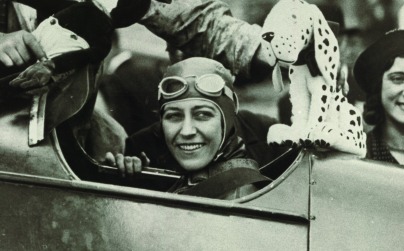
In May of 1930, aboard “Jason,” Johnson set off alone from Croydon, England and 19 days later landed in Darwin, Australia a distance of 11,000 miles. She was given a hero’s welcome upon returning home.
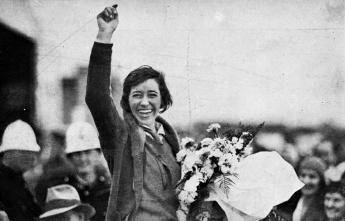 Later along with several co-pilot’s, including her husband Scottish aviator Jim Mollison, Johnson completed more globetrotting flights and set distance records from London to Moscow and Japan. Accomplishments that received international recognition. Even Lindbergh, the most famous pilot in the world, sent Johnson a letter of praise.
In 1941 while working for the Royal Air Force, Johnson was lost during a flight over the Thames Esturay where the River Thames meets the North Sea. The weather was especially bad that day and she reportedly went off course, ran out of fuel, and ditched the plane.
Johnson was last spotted parachuting into the water.
Even today, her fate is debated and rumors circulate about why the plane went down. Some claim Johnson forgot – or failed – to give the correct security codes needed to identify herself as a British pilot and was shot down by friendly fire. Others report she and her aircraft was mistaken for a German bomber. Still others believe she may have been on a secret government mission. All speculation, of course.
Like Earhart, who vanished in 1937 while flying over the Pacific, Johnson, who was assumed drowned, never resurfaced.
A search for her body turned up nothing.
Elbridge Gerry, the Blue Bottle Fly, and the Shaping of the Constitution

By Ken Zurski
Massachusetts statesman Elbridge Gerry was of the cantankerous and crafty sort. He typically came late to engagements and was usually the first to tell the host that he had finally arrived. This is the mark he made on the Constitutional Convention in May of 1787 at Independence Hall in Philadelphia during the drafting of the nation’s first constitution.
Actually he made no physical mark on the Constitution, refusing to sign the document and disagreeing with most of the other 40-plus delegates on how much power to give the government in relation to its people. Gerry had signed the Declaration of Independence and Articles of Confederation, but the Constitution was different. There were too many variables and not enough unity, he argued. “If we do not come to some agreement among ourselves. “Gerry maintained, “some foreign sword will probably do it for us.”
In September, after the final draft of the Constitution was reached, Gerry along with two others, Edmund Randolph and George Mason, all agreed the document needed to protect the rights of people of whom whose basic freedoms should be added. Freedoms similar to the one Mason, the governor of Virginia, had drafted in his home state.
Therefore, they argued, it was incomplete.

Mason urged the framers, now drafters, to stay on as long as needed to finish the task. Gerry seconded the motion. The answer from all the other delegates, however, was a resounding, “No.”
Whether or not any of the other participants agreed such rights were necessary wasn’t the point. Most had been away from their wives and families for months and were ready to leave. In addition, they were weakened by the heat and humidity and disgusted by the cramped sleeping quarters of two to four men per room which during a severe infestation of the blue bottle fly kept the windows shut and the smells in.
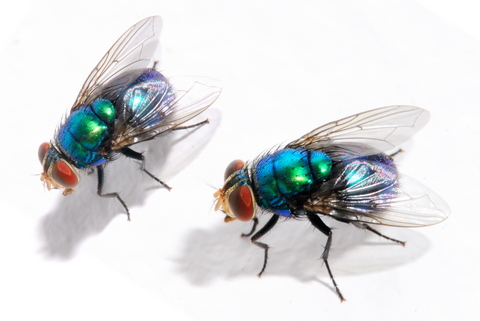
Frankly, they were just plain sick of fly’s, the heat, and each other.
Many nearly walked out a month before in August, but trudged on to complete the task. But staying longer? That was not an option for those who actually signed the document. They went home.
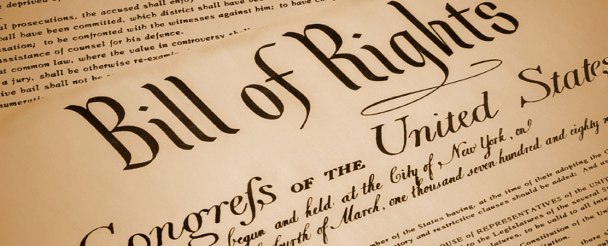
Several years later, James Madison’s proposal of twelve amendments was approved by Congress.
It was appropriately titled the Bill of Rights.
The Once Mysterious and Often Misrepresented Origins of ‘Taps’
By Ken Zurski
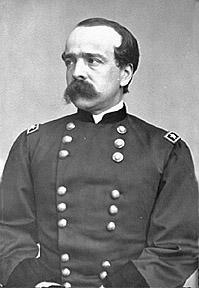
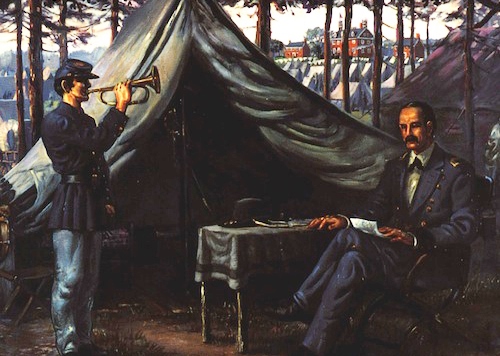
In July of 1862, while a bedraggled group of Union soldiers rested in camp after an bloody and costly week of fighting near Richmond, Virginia known as the Seven Days Battle, Brigadier General Daniel Butterfield decided to make some changes to the military protocol commonly referred to as the bugler’s evening roll call.
Butterfield sent word to his company’s bugler, a man named Oliver Wilcox Norton, to meet him directly at the officer’s tent. According to Norton, Butterfield showed him some notes he had scribbled in pencil on the back of an envelope and asked him to sound it off on his bugle. “I did this several times,” Norton later described, “playing the music as written.” Butterfield adjusted it by ear and Norton played it for him again. “After getting it to his satisfaction he directed me to sound that call thereafter in place of the regulation call.”
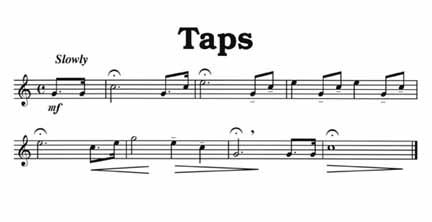
Butterfield had modified the regulation call known as “Tattoo,” or at least the last 5 bars of it, into a 24-note call that was in the general’s own words, “smoother, more melodious and musical.”
“Tattoo,” later changed to “Scott’s Tattoo” for better distinction, refers to the former War of 1812 general Winfield Scott, who supposedly wrote the tune, although he likely only copied a centuries old medley.
Butterfield who was injured and recovering from battle sought to change it – or at least alter it slightly. For some reason, Butterfield thought Scott’s version was too formal sounding. So he came up with another shorter version that’s now more widely known as “Taps,” referring to a drum beat that often followed the call.

“I think no general order was issued from Army headquarters authorizing the substitution of this for the regulation call,” Norton asserts, “but as each brigade commander exercised his own discretion in such minor matters, the call was gradually taken up through the Army of the Potomac.”
Norton gives Butterfield credit for composing “Taps,” but the general himself accepted no such distinction. He chose others to thank for helping him, specifically his wife who wrote down the notes while Butterfield whistled it to her. Being a commander in the Union Army meant that Butterfield knew how to play the bugle as a way of signaling his troops. But as Butterfield admits, he could not read or write music. “I practiced a change in the call until I had it suit my ear,” he claims.
Butterfield, a native New Yorker, rose quickly through the military ranks as colonel of the 12th Regiment of the New York State Militia to commander of the 3rd brigade, First Division, Fifth Army Corps, and eventually Major General after the Peninsular Campaign which included the Seven Days Battle, a crucial turning point for the South. Later Butterfield would serve as a chief of staff for “Fighting Joe Hooker,” the commander of the Army of the Potomac, who fought incessantly with other Union generals and drank like a fish.
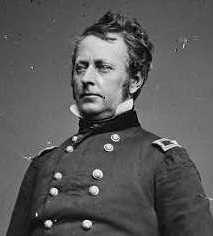
Butterfield and Hooker generally liked each other, which caused others to dislike Butterfield simply by association.
Butterfield however had his own flaws. He was snappish, hot-tempered and pushy. In the spring of 1863 , General Hooker suffered a crushing and embarrassing defeat to Lee’s army at Chancellorsville and was reprimanded and reassigned. (Butterfield would eventually fight in Gettysburg, be awarded the Medal of Honor for his role in the Battle of Gaines Mill, and serve on President Grant’s staff. But all that would come later).
In 1862, after a fierce and arduous week-long campaign, Butterfield and his division were recouping by the James River at Harrison’s Landing counting losses and awaiting word from another general, George B. McClellan, who was said to be retreating back to their position after his supply line was cut. That’s when Butterfield decided to give the standard “lights out” call a tuneful change.
Butterfield claims he had used the variation of the “Tattoo” notes before he presented them to Norton. While his troops were marching, he blew the call as an order to halt or lie down. “The men rather liked their call and would sing my name to it,” Butterfield humorously recounted. “’Dan, Dan, Dan Butterfield,’ [they sang] to the notes when the call came.” In times of trying circumstances, he added, they sometimes sang “Damn, Damn, Damn, Butterfield” instead.
Butterfield did not remember his bugler by name, but does not dispute that it was likely Norton to whom he showed the notes.
Of course the general’s recollections, as is Norton’s, comes in 1898, some 35 years after the fact, so memories of that day may be somewhat distorted. Butterfield was 67 at the time he finally revealed his side of the story.
Amazingly, both men’s responses came only after and an article appeared in Century magazine which basically posed this unanswered question: Where did Taps come from?
Had Norton not written a letter to the editor in response to the magazine article and the editor had not contacted Butterfield directly for his thoughts, the true history of “Taps” might still be unknown. Butterfield died in 1901, only two years after the article was written.
Until then, he took no credit or told anyone his connection to the song.
But the origin of “Taps” as a ceremonial song has even deeper and more romanticized roots. The earliest reference to its official use during a funeral comes up during the Peninsular Campaign. A soldier in Captain John Tidball’s Battery A, 2nd artillery was buried on the field while the battery was hiding in the woods. Tidball felt the customary firing of the three musket volley salute might alarm both sides into a resumption in fighting. So he had the bugler play “Taps,” or some variation of it, instead.
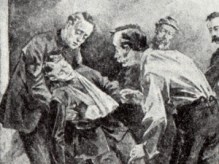 In another account, which began to circulate in the mid-20th century, a Union captain named Robert Ellicombe was with his men in a battle at Harrison’s Landing in Virginia when he heard the moans of a dying soldier nearby. Ellicombe bravely risked his own life to retrieve the soldier who was lying in a grassy area that separated the two sides. With musket balls whizzing over his head, Ellicombe crawled on his stomach and pulled the boy’s body out of danger. Sadly, though, by the time they reached safety, the soldier was dead. That’s when Ellicombe realized the boy was wearing a confederate uniform. When he looked closer he discovered something even more startling. The soldier was his own son.
As the story goes, Ellicombe’s son was studying music in the south and joined the confederate army without telling his father. When Ellicombe checked the s boy’s pocket he found a piece of paper with musical notes written on it. He asked the commanding officer if he could have a military band play the notes at his son’s funeral. His request was denied because the boy was a confederate. But as a concession, they told him, he could have one musician play the notes on one instrument. Ellicombe picked the bugle. The song, as you may have already guessed, was “Taps.”
The story of Ellicombe and his son, however, is not true. Historians have disputed it as simply a tall tale, a good yarn to tell around the campfire. In fact, Captain Ellicombe may not even exist. One good researcher traced the story back to Robert Ripley of “Ripley’s Believe or Not” who used the father and son version of “Taps” to great dramatic effect on his TV show in the late 1940’s. Whether Ripley knew it was pure fiction, didn’t matter. Most of Ripley’s features were subject to scrutiny anyway. But even the Ellicombe story prompted a biographer of Ripley’s to remark: “The denouement of this is a coincidence incredible even by Rip’s standards.”
Ripley apparently tried to pass the story off as the origination of “Taps,” rather than its funeral connotation, which might make more sense.
Either way, it’s fake.
Believe this, however. Norton and Butterfield were real; and together they solved the mystery of “Taps” origins over a century ago.
“Taps” is now the military’s most recognizable and mournful song. It is played to symbolize honor and respect during military funerals, wreath laying ceremonies, flag raisings and other memorial services. It’s often accompanied by a traditional gunfire salute. Butterfield had no idea at the time he made the adjustment to “Scott’s Tattoo ” that it would eventually be used for such a meaningful and solemn purpose.
After all, Scott’s version of “Tattoo,” wherever it came from, was a bit of a devilish thing.
“Tattoo”was also called “Tap-Toe” and derived from a Dutch term doe dan tap toe, or “to turn off the taps.” The song was a signal for men to put out all fires and all lights at night and most importantly stop drinking, hence the “tap” reference. In Scott’s earliest incarnation it was called many things like “Lights Out.” or “Extinguish The Lights.” Later the modified or softer version would be referred to as “Butterfield’s Lullaby.” After lyrics were added (but seldom used), it was often referred to as “Day is Done,” the first line.
Day is done, gone the sun,
From the lake, from the hills, from the sky;
All is well, safely rest, God is nigh.
Fading light, dims the sight,
And a star gems the sky, gleaming bright.
From afar, drawing nigh, falls the night.
Thanks and praise, for our days,
‘Neath the sun, ‘neath the stars, neath the sky;
As we go, this we know, God is nigh.
Sun has set, shadows come,
Time has fled, Scouts must go to their beds
Always true to the promise that they made.
While the light fades from sight,
And the stars gleaming rays softly send,
To thy hands we our souls, Lord, commend.
During the Civil War, the men knew “Taps” as signal of order and didn’t mince words or actions when it sounded in camp.
They knew what to do, even if they didn’t much care for it.
So they appropriately called it, “Go to Sleep.”
Communal Gatherings, Solemn Prayer, Spring Flowers, and the Making of a Day to Honor the War Dead

By Ken Zurski
The idea to recognize the war dead with a day of commemoration can be attributed to dozens of communities that organized events adorning the gravesites of local soldiers killed in the Civil War. This was before any formal holiday existed. Holding prayer ceremonies at gravesites and placing flowers on graves was not an original concept, but beyond the church groups, large turnouts of people of all faiths and races, whether churchgoers or not, were gaining momentum and support, stirred by both the size and scope of the costly war. Nearly every town in America had buried dead from the horror of the Civil War and nearly every town had a cemetery as a reminder of the terrible loss.
Carbondale, Illinois home of one of the earliest infantry regiments in that state, has a stone marker that recognizes it as the first site of a Decoration Day ceremony, although it too was held several years before the holiday was officially enacted. Their reasoning is valid thanks to the stirring words of a hometown General who would later be credited as the “Father of Memorial Day.”
But other cities also claimed the distinction.
Columbus, Mississippi, was one town that buried many. After the bloody Battle of Shiloh, many of the wounded and war dead were sent by train to the small Southern town just above the Tombigbee River. Thousands of soldiers on both sides of the battle were interred at the hopefully named Friendship Cemetery. In April of 1866, several Columbus women went to the cemetery and brought bouquets of garland, blossoms, lilies and roses to the site. Miss Matt Moreton was among the gatherers. One by one, she and the other women placed flowers on the graves of over a thousand Confederate souls. Miss Moreton showing no partiality, did the same for the federal’s soldiers grave sites as well. “This first act of floral reconciliation was discussed in praise and censure,” a local described. “[But] this sweet woman with whom God has blessed the earth – volunteered, of her own mind, to strew flowers upon the Federal’s graves too. not just upon the fallen Confederates.”
The Mississippi Index praised the event:
“We were glad to see that no distinction was made between our own dead and about forty Federal soldiers, who slept their last sleep by them. It proved the exalted, unselfish tone of the female character. Confederate and Federal—once enemies, now friends—receiving this tribute of respect.”
Miss Moreton was a recent widow. Her husband was a victim of the war.
The act prompted Francis Miles Finch to write a poem, famously titled The Blue and the Gray.
…From the silence of sorrowful hours
The desolate mourners go,
Lovingly laden with flowers
Alike for the friend and the foe;
Under the sod and the dew, Waiting the judgement-day;
Under the roses, the Blue,
Under the lilies, the Gray.
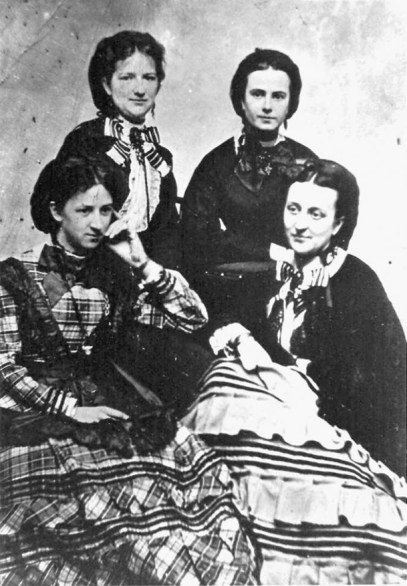
Moreton and three other local women were given credit for the kind gesture, and their story is remembered today in Columbus, where Memorial Day services are still carried out in the same manner.
The New York town of Waterloo, built along the banks of the Cayuga-Seneca Canal, holds the official distinction of being the “birthplace of Memorial Day,” thanks to a presidential proclamation signed by Lyndon B. Johnson in 1966. The effort was originally spearheaded by the governor of New York at the time, Nelson D. Rockefeller, who recognized Waterloo as the first village-wide, annual observance of a day to honor the war dead. The local resolution was inspiring enough to be taken up by Congress, passed by the House and Senate, and sent to the President for approval. Here’s Waterloo’s story: 100 years earlier, in the summer of 1866, Henry Welles, a druggist, suggested a day of social gathering not only to honor the living soldiers but remember the fallen ones too. General John B. Murray supported the idea and instituted a plan. It was more like a funeral procession. Flags were flown at half-staff and black bunting was hung in respect as soldiers and townsfolk marched to three village cemeteries and placed flowers on the gravesites. The next year, in similar fashion, they did it again, and again the following year, and in each year since.
Perhaps the largest and earliest pre-Decoration Day ceremony was held in Charleston, South Carolina, in a large field known as the Race Course, where prized horses once ran. During the Civil War, the infield was used as a prisoner-of-war camp. Hundreds of mostly young men were either held there or awaited transfer to larger prison camps, like Belle Isle in Richmond or Andersonville in Georgia. Many never made it out of the Race Course, suffering from sicknesses like dysentery, which spread quickly in the inhumane conditions and tight quarters. Some 257 men perished and were quickly buried in a pasture nearby.
In May of 1865, just a year after the war ended, several Charleston residents, went out to see the gravesites, just mounds of dirt really, and still fresh, noted one observer, “with the marks of the hoofs of cattle and horses and feet of men.” They decided to erect a fence and place a monument on the site.
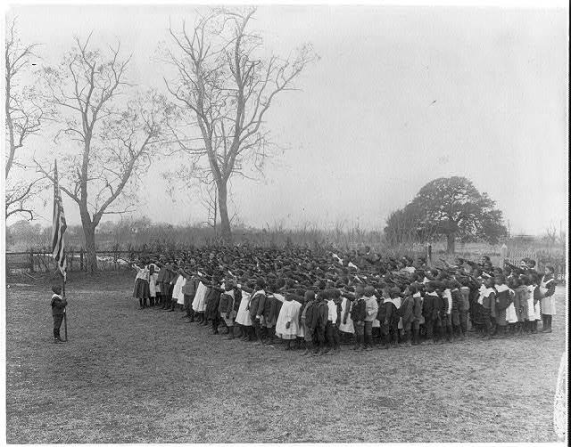
Then, on May 1, 1865, May Day, nearly 3,000 local schoolchildren and “double that the number of grown-ups” went to the Washington Race Course with bouquets of roses and other “sweet smelling flowers.” James Redpath, known as “Uncle James,” a witness, remembered the event. “The children marched from the Race Course singing the John Brown Song and then, silently and reverently, and with heads uncovered, they entered the burial ground and covered the graves with flowers.
“It was the first free May Day gathering they ever enjoyed,” Redpath noted, referring to the colored children present and their parents, former slaves.
Three years later, on May 5, 1868, General John A. Logan of the Union Veterans—the Grand Army of the Republic—established a day for all Americans to decorate with flowers the graves of war heroes.
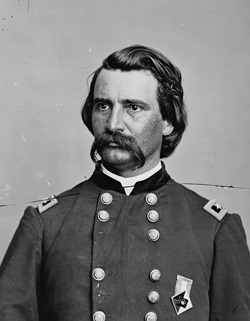
General Logan’s declaration was likely inspired, at least initially, by a day in April 1866 near his hometown of Murphysboro, on the Illinois southern border. In Carbondale, he was joined by 212 veterans at Woodlawn Cemetery for a community-wide observance. Logan stirred the large crowd with his inspiring words. “Every man’s life belongs to his country, and no man has a right to refuse when his country calls for it,” he exalted.
The General’s words were held in high regard. Due to his bravery and steadfast loyalty to his men during battles, Logan was as popular a war hero in Illinois as President Grant. His presence was in demand, not only in honor, but in respect of those who sacrificed their lives. Several months after the cemetery event in Carbondale, on October 11, 1866, General Logan arrived in the state’s second largest city at the time, Peoria, Illinois for the dedication of the Civil War Monument at the courthouse square. There he witnessed firsthand the lengths a city would take to honor its fallen heroes. Bands played as a grand parade of citizens and soldiers traveled down Peoria’s downtown streets lined with onlookers, some hanging precariously from tree branches to get a better look. Logan, a physically imposing man, not in size, but in features, was easy to spot. Due to his slick, jet-black hair; thick, bushy mustache; and dark, focused eyes, his soldier’s affectionately called him “Black Jack.” General Grant called him his “best officer.” Astride his horse, Logan rode alongside his marching unit. “As the procession passed along Adams Street, the space each side was filled with people loudly cheering and manifesting the greatest joy,” the paper reported. “It moved down Adams Street, countermarched, and after marching about the principal streets disbanded into the square to listen to dedication exercises.”
Logan and other dignitaries, including military men and politicians, were scheduled to speak, but all were upstaged briefly by a veteran bald eagle named Old Abe, the “soldier bird” of Wisconsin’s Eighth Regiment, once led by General Logan. Riding a carriage, perched in front of the infantry marching companies, the majestic bird flapped its wings, and the crowds cheered their approval. Later, at the viewing stand, when the drapery was removed and the new statute unveiled, there was a likeness of Old Abe, cast in bronze sitting atop the stone shaft, a symbol of resolve and freedom, a fitting tribute to America’s war dead.
When it was Logan’s turn to speak, the general did not disappoint. Evoking a dying soldier’s last wishes, he passionately intoned, “Tell my wife, tell my sister, mother, that I died with my face to the enemy; that my country might live; that the principles of liberty and freedom might be enjoyed; and that they might be protected by the laws and Constitution.”
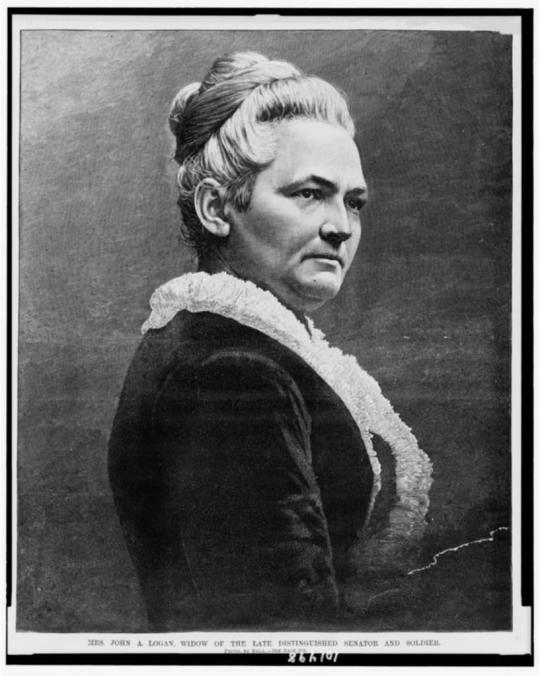
Two years later, Logan’s wife, Mary traveled to war scarred Richmond, Virginia and visited a cemetery in nearby Petersburg. She was emotionally moved by what she observed. Her recollections were later published:
“The weather was balmy and spring-like and as we passed through the rows of graves I noticed that many of them had been strewn with beautiful blossoms and decorated with small flags of the dead Confederacy. The sentimental idea so enwrapped me that I inspected them more closely and discovered that they were everyone the graves of soldiers who had died for the Southern cause.”
The General could not go to Richmond. It was March 1868, and Logan now the leader of the Grand Army of the Republic was too busy in the nation’s capital overseeing veteran’s affairs to break away. But Charles Wilson, a newspaperman from Chicago, had invited the entire Logan family with him on the trip. So he insisted Logan’s wife Mary, daughter Dolly and Baby son, John Jr. still attend The general gave them his blessing.

In Richmond, Mary was prepared for the worst. Large portions of the city had been destroyed by fire after the North’s occupation. Now three years removed from the brutality of war, it still resembled a battleground. “Driving from place to place we were greatly interested and realized more than we ever could have, had we not visited the city immediately after the war, the horrors through which the people of the Confederacy had passed,” Mary recalled after arriving.
Because of its proximity to Washington, many Union leaders, including President Lincoln, toured Richmond shortly after the North captured the embattled Southern capital. Lincoln arrived with his son Tad on April 4, 1865 to a military-style artillery gun salute. He viewed first hand the devastation caused by the fires set by the escaping Rebels. The city’s structures were nearly gone, but the war was over. Five days later, General Robert E Lee signed surrender papers. Less than a week after that, Lincoln was dead.
But Richmond survived.
“The hotel we stayed in was in a very wretched condition,” Mary would later write about her trip. “And we expected to find the rebellion everywhere.” Wilson, another war veteran, was interested in seeing Libby prison, so they took a carriage to the site. Along the roads, Mary noticed “colored people” still picking up the remnants of exploded shrapnel, broken cannon and Minie balls to sell for iron scrap at local foundries.
The carriage then made its way to the cemeteries. This is where Mary took pause. Not only were there endless lines of stones, but they were all decorated. “In the churchyard we saw hundreds of graves of Confederate soldiers. These graves had upon them bleached Confederate flags and faded flowers and wreaths that had been laid upon by loving hands,” she wrote. “I had never been so touched by what I had seen.”
When she returned to Washington, Mary summoned her husband and told him what she had witnessed at the grave sites. Logan said that it was a beautiful revival of a custom of the ancients preserving the memory of the dead. “Within my power,” he promised her, “I will see that the tradition is carried out for Union soldier as well.”
A promise he did not wait long to keep.
Almost immediately, Logan sent a letter to the adjunct- general of the Grand Army of the Republic, dictating an order for the first decoration of the graves of Union soldiers. He wrote: “The 30th day of May, 1868, is designated for the purpose of strewing with flowers or otherwise decorating the graves of comrades who died in defense of their country during the late rebellion, and whose bodies now lie in almost every city, village, and hamlet churchyard in the land. In this observance no form or ceremony is prescribed, but posts and comrades will in their own way arrange such fitting services and testimonials of respect as circumstances may permit.”
Memorial Day
On May 30 1868, just as Logan had ordered, the first Memorial Day service (then known as “Decoration Day”) took place at Arlington Cemetery.
Logan had given a directive how to proceed:
“Let us, then, at the time appointed, gather around their sacred remains and garland the passionless mounds above them with choicest flowers of springtime; let us raise above them the dear old flag they saved from dishonor; let us in this solemn presence renew our pledges to aid and assist those whom they have left among us as sacred charges upon the Nation’s gratitude, — the soldier’s and sailor’s widow and orphan.”
Across the Potomac at the site of the Arlington Mansion, once the home of General Robert E. Lee, bands played and General James Garfield, a future president, spoke. General Ulysses S. Grant and his wife were also there.

After Garfield’s lengthy speech—which lasted nearly two hours – war veterans, some still limping from their battle injuries, were led by schoolchildren from the Soldiers and Sailors orphan home to the cemetery grounds where they placed flowers on every gravesite of both Union and Confederate soldiers. It was a sign of unity in a still-fractured nation.
Although no one could predict the weather, the first Memorial Day turned out to be sunny and quite warm, a perfect start to the summer season. Mary Logan says that her husband picked the end of May because “[Spring] flowers would be in their greatest perfection.” Baskets of brilliantly colored bouquets enriched by the heat of the sun’s heat were spread out throughout the national cemetery grounds.
“It was a beautiful day,” Mary Logan remarked.
Johnny Aitken, the Brick Test, and the First Indy 500
By Ken Zurski

On September 11 1909, at the Speedway in Indianapolis, race car driver Johnny Aitken hopped into his six-cylinder National motor vehicle, the same one he used to break speed and distance records, and gave the engine a go. Like a shot, he drove over several hundred yards of newly laid bricks.
Track officials on hand kept a close eye on the ground, specifically the bricks, which were being considered as a possible replacement for the original “crushed stone” surface. Ever since the track opened earlier that year, the stones, gravel really, was proving to be costly – not only in maintenance, but in lives too.
Just a month before on Aug 9, the first long distance car race took place over the oval track. It was a disaster. A driver’s mechanic who rode shotgun during the race was killed along with two spectators. The race was scheduled for 300 miles, but was mercifully stopped at 235 miles. The drivers and their machines were not the issue. The problem was the track. The stones were too rough and loose. The frequent tire blow outs and debris thrown in driver’s faces led to dangerous and deadly results. The unfortunate victims that day may have been the latest, but certainly not the first, fatalities at the track. Something needed to change.
But what would work?
The National Paving Brick Manufactures Association chimed in. They pitched their product as sturdy and reliable even under racing conditions. But their persuasive bias alone wasn’t enough. It was a costly venture, so track officials needed to see it for themselves. They had crews set down a few hundred yards of bricks and they asked one of the local drivers to help. Run over it, they instructed. Johnny Aitken happily obliged.
Aitken, nicknamed “Happy,” was an Indianapolis native who began testing cars at the National Motor Vehicle Company before racing them full-time with all the derring-do he could muster. Aitken was pretty darn good at driving. He won a few sanctioned races, set speed records for distance and supported another Indiana man, a bicyclist turned car aficionado named Carl Fisher, who used profits from a compressed gas headlight he invented to help finance, along with a few other money men, a showcase track built over farmland in Aitken’s hometown. He called it the Indianapolis Motor Speedway.

- Carl Fisher
Fisher, now track president, was not in attendance when Aitken tested the new bricks, but was eagerly awaiting word. Although resistant at first, since attendance numbers went up after races where someone was killed, Fisher knew that the new sport needed its “heroes” alive, not dead. The newspaper’s reporting, however, was typically less sympathetic and more flippant. “The [killings] only served to increase the excitement,” the Indianapolis News enthused after a driver and his mechanic where thrown from their vehicle to their deaths. The next racing day, the News observed: “There were more women in the crowd…and they appeared to be the most interested spectators.”
Fisher read the papers, heard the outcries from critics, and could no longer ignore the truth. The track was unsafe. He considered changing to a concrete surface at first, before deciding on bricks. However, they would have to be subject to vigorous scrutiny, he insisted, before opening his pocketbook.
After the initial run over the brick surface, Aitken turned his vehicle around and did the same thing again. About a dozen or so track employees waved off the dust and smoke and immediately inspected the bricks for damage. There was none. The next test, however, would be even more revealing.
This time Aitken positioned his vehicle directly on the bricks. Two heavy duty ropes were tied to the front of each tire and secured to a couple posts held firmly by a concrete base. Aitken got the signal and gunned the engine. The tires spun wildly in place creating a massive smoke cloud, but little else. When it was over, not one brick was missing; not a chip out of place. That sealed it. The project was given the go ahead. The bricks would cover the full two-and a half mile track.

- Laying the bricks
Fisher promised the bricks would be installed in two weeks, a gross miscalculation. He even scheduled an air and dirigible show on the grounds just to keep interest up, but when work on the track and new grandstands took longer than anticipated, he was forced to cancel the event. The overall cost of the brick installation ballooned to $700,000 nearly triple the amount Fisher originally budgeted.
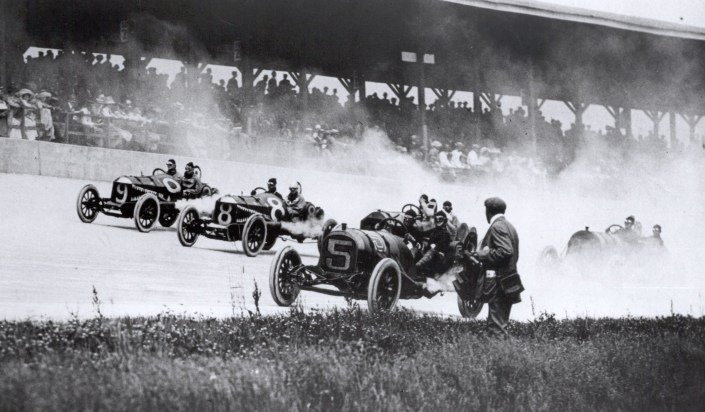
On May 30, 1911, a Tuesday, driver Ray Harroun in a Marmon Wasp won the inaugural Indianapolis 500 with an average speed of just over 74 mph. Or did he? Historians still debate who actually finished the six-hour race first. Another driver Ralph Mulford claimed he was ahead of Harroun at the end, but lost count and went an extra “insurance” lap just to be sure. By the time he crossed the finish line for the second time, Harroun was already celebrating.
Regardless of who actually won the race, nearly 80-thousand enthusiastic fans cheered the drivers on to the very end. “They had seen their hands weaken on the steering wheel,” the Indianapolis Star reported. “They had seen their drawn faces filled with anguish of intense hardship, and time after time they had seen them risk their lives in the speed arena” As for Harroun’s apparent victory: “There were but four tire changes,” the winning vehicle’s manufacturer boasted the next day. The bricks, they subtlety implied, made the difference. “Three of the original ‘Firestone’ tires finished the race.” The track later picked up the moniker, “Brickyard.”
But there was a tragedy. Sam Dickson, a mechanic for the car driven by Arthur Greiner, never made it home. When Greiner’s car lost a tire and ran off the course it looked like it might somersault through the infield’s tall meadow grass. Instead it came to a sudden and horrifying halt. “Rather than keep going,” wrote author Charles Leerhsen, “the car stopped in mid-maneuver, so that it stood straight up, balancing for a moment on its steaming grille.” Then it slowly flopped forward. Greiner was lucky, he was chucked from the cockpit and survived, but Dickson never left his seat and was crushed under the vehicle’s weight. The race was never stopped.
Johnny Aiken also participated in the first Indy 500. He completed 125 laps before a broken connecting rod ended his day.
He did, however, lead the first lap.
Aitken left auto racing in 1917. He worked to promote Peugeot vehicles and even traveled to France during the war to tour their large car making factory. Returning home, he developed “the cough.” The Spanish Flu epidemic had been spreading quickly overseas. The former race car driver recovered from his initial bout of influenza, but only briefly. Soon enough bronchial pneumonia set in. Aitken died on October 15, 1918.
He was 33.
(Sources: Blood and Smoke: A True Tale of Mystery, Mayhem and the Birth of the Indy 500, Charles Leerhsen; Indianapolis Star May 31, 1911; various internet sites)
 UNREMEMBERED