
History
Loammi Baldwin: The Revolutionary War Colonel and Apples Pioneer
By Ken Zurski

In historical reference, Loammi Baldwin should be a name we remember.
For starters, he was a colonel in the Revolutionary War. He bravely commanded several regiments during the battles of Concord and Lexington and accompanied General George Washington when the future president famously crossed the Delaware River to surprise the Hessian’s in Trenton, New Jersey. That distinction alone should be honorable enough for someone who lived in America in the late 18th century.
But that’s not all.
Baldwin was also a member of the Academy of Arts and Sciences who like Benjamin Franklin conducted experiments in electricity. He was elected to the Massachusetts General Assembly and as an engineer was instrumental in pioneering a waterway that connected Boston Harbor to the Merrimac River, known as the Middlesex Canal.
Yes, Col. Baldwin is certainly a man who held many distinguished titles. For some, he is even considered to be the Father of Civil Engineering. Let that one sink in.
But today he is best remembered – or unremembered, if you will – for one thing: an apple.
Let’s backtrack a bit.
While building the Middlesex Canal, Baldwin visited the farm of a man named William Butters. It was on a recommendation from a friend that Butters had grown the sweetest apple in all of New England. Butters told Baldwin that the tree was frequented by woodpeckers who in addition to the apples would eat tree grubs and other damaging insects. Butters called the apple a “Woodpecker” after the bird, or “Pecker” for short. Others had dubbed it “Butters Apple.”
Baldwin was so impressed he planted a row of Pecker Apple trees near his plantation home in Woburn, Massachusetts.”The tree was a seedling,” a historian wrote of Baldwin’s interest, “but the apple had so fine a flavor that he returned at another season to cut some scions, and these being grafted into his own trees, produced an abundant crop.”
 After Baldwin’s death in 1807, the Pecker was officially named in his honor and the Baldwin Apple quickly became the most popular fruit in New England. It’s easy to see why. The Baldwin was smaller than most red apples are today, but its skin was mostly free of blights. Farmers loved the Baldwin because they could harvest large crops and transport them readily with little or no deterioration. The Baldwin’s were also a good apple to make into a rich, sweet cider. The hard texture was perfect for making pies. “What the Concord is to the grapes, what the Bartlett has been among pears, the Baldwin is among apples,” the New England Farmer described in 1885.
Unfortunately, the Baldwin’s dominance wouldn’t last. Too many severe winters took its toll.
In fact, in one particularly harsh year, 1934, nearly two-thirds of all apple trees in the northeast were destroyed. The next year the state of Maine helped growers replenish their decimated orchards. But only Macintosh and Red Delicious seeds were offered. The Baldwins were just too delicate to replant in large numbers. Still some farmers grew small crops of the Baldwins to maintain the rich cider.
Ironically, Loammi Baldwin, besides the name, has another connection to apple folklore.
He is the second cousin of Johnny Chapman, another Massachusetts man and traveling missionary whose work included the planting of apple trees throughout the expanding frontier.
We know Chapman today as Johnny Appleseed.
Meet David Lamar: The Original ‘Wolf of Wall Street’
By Ken Zurski
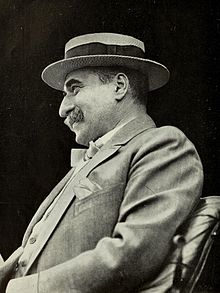
Con artist and market scalper David Lamar was considered the original “Wolf of Wall Street,” a distinction revived in recent years by a Hollywood movie about a more contemporary stock swindler named Jordan Belfort and a role played by an A-list actor named Leonardo DiCaprio who won a Golden Globe and an Oscar nomination for his portrayal of Belfort in the 2013 film.
The movie plays up the lavish lifestyle and and often times rebellious behavior of Belfort, who spent nearly two years in prison for his role in a fraud scheme. Belfort wrote a book about his exploits, hence the movie, and self-titled it, “The Wolf of Wall Street.”

Leonardo DiCaprio’s blistering performance aside, Jordan Belfort had nothing on the original “Wolf of Wall Street,” David Lamar who in the early part of the 20th century first carried that dubious moniker, assigned by others, and metaphorically referring to a “wolf” as a “rapacious, ferocious, or voracious person.”
Although his successes and failures has been debated over the years, Lamar’s brash, cutthroat tactics are the stuff of legends. For example, Lamar once impersonated a US Senator in hopes of taking the floor and driving down steel prices while he unabashedly shorted the stock.
Lamar was arrested and sent to jail several times and was once accused of having a man beaten who was ready to testify against him. His boldest swindle may have been against a Rockefeller, John Jr. , who spent a million dollars of his wealthy father’s money to buy leather stock, only to watch Lamar sell it off.

On January 12 1934, at the age of 56, Lamar was found dead in a modestly priced hotel room in New York City. In his room police found $138 in cash, a suit a hat, a can, a gold watch and chain, and gold cuff links. That was all which remained from a fortune which at one time was estimated in the millions.
The day after his death, an obituary dispatch appeared in newspapers throughout the country.
It read:
It isn’t so much the loss of wealth in David Lamar’s life which excites curiosity, as it is an appreciation of struggles through which it passed. He had one blinding ambition, and that was huge profits through sly operations on the stock market. What he hoped to gain was not wealth, but power and recognition. He had wealth – this strange man. It didn’t mean a great deal to him. On many occasions, he could have retired and lived lavishly and luxuriously, as he did live when in purple, on a great estate in New Jersey at one time and in a mansion on Fifth Avenue at another. Always his ambition drove him on and when he found his path blocked by legal obstacles, it was charged he was none to scrupulous in cutting his way through them. He divided his time between estate and mansion and jail. We said Lamar must have suffered. The only punishment which could be meted out to him was his own conscience. He was contemptuous and indifferent outwardly to what people said of him, what they thought of him and how they created him. He had his own code and his own rule for living. It was a most bizarre, a most extraordinary one. He took delight in good clothes, in good food, in a cosmopolitan. The mysterious Stock Market operations of the Wolf of Wall Street have been ended by death.
The paper’s vitriolic assessment seems to be on the mark. Several years before his death, even a lawyer meant to represent him, conceding to his client’s reputation.
“The name of David Lamar seems to be anathema,” he said.
The American-Made Safe That Survived Hiroshima
By Ken Zurski
In 1946, a U.S. Army Lieutenant surveying damage left by the massive explosion of the first atomic bomb in Hiroshima a year earlier, sent a letter to a safe-making company back in America. “I found in one of three structures standing, four large vaults built by the Mosler Safe Co. of Hamilton, Ohio,” he explained. “The vaults were entirely intact and except for the exterior being burned and rusted there was no damage.”
Two other vaults he added, made by a Toyko, Japan company, were completely destroyed.
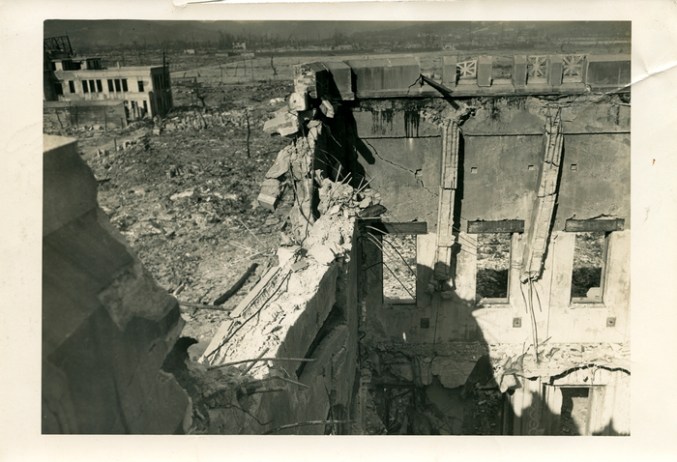
The two-story Teikou Bank built in 1925 was close to the hypocenter of the blast. Made of steel and concrete, the building crumpled from the inside, cracking the exterior and tearing the cement floor to bits. Nearly two dozen employees were in side at the time. None survived.
But the bank vaults did.
This was reassuring news at least to bank executives back in the States.
At the time there was a heightened sense of security against attacks on American soil. Many banks advertised that valuables were better protected because they used Mosler safes.
Even the U.S government chimed in. Mosler was awarded a lucrative contract and eventually built a 25-ton blast door vault in West Virginia mountainside bunker used to hide classified and historical documents.

Then five years after the attack, Mosler received another letter.
This time it was from the manager of the newly rebuilt Teikou bank in Hiroshima. “Your products are admired,” he praised, “for being stronger than the atomic bomb.
“As you know in 1945 the Atomic bomb fell on Hiroshima, and the whole city was destroyed and thousands of citizens lost their precious lives. And our building, the best artistic one in Hiroshima, was also destroyed. However it was our great luck to find that though the surface of the vault doors was heavily damaged, its contents were not affected at all and the cash and important documents were perfectly saved.”
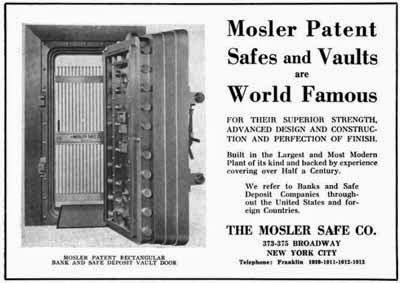
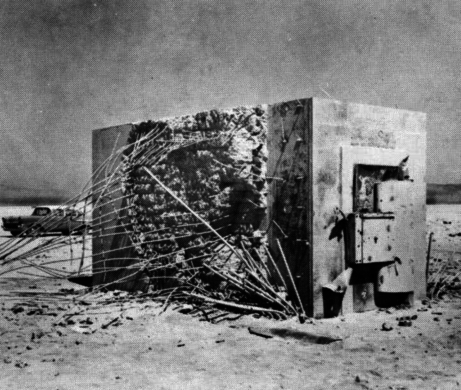
In the late 1950’s, to recreate the same show of strength displayed in Hiroshima, Mosler took their products to the Yucca Flats nuclear testing grounds in the Nevada desert. They placed a Century steel door and concrete vault with various contents in the blast zone.
Once again the vault survived intact.
Symbol of America? Benjamin Franklin Didn’t Just Love the Turkey, He Hated the Bald Eagle
By Ken Zurski
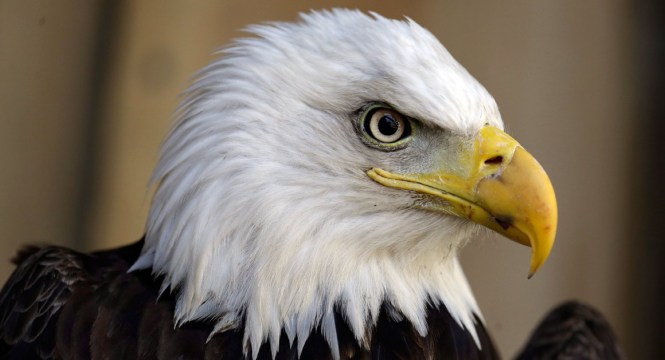
Thanks to the sight of its majestic flight, broad 8-foot wing span, and contrasting white head, the bald eagle became the symbol of America when it first appeared on the Great Seal adopted by Congress in 1782.
A year and a half later it had a major dissenter in Benjamin Franklin.
Franklin saw the image of the bird on the badge of the Society of the Cincinnati of America, a military fraternity of revolutionary war officers, and thought the drawing of the bald eagle on the badge looked more like a turkey, a fair and reasonable complaint considering the image looked like, well, a turkey.
But it was the use of the bald eagle as the symbol of America that most infuriated Franklin. “[The bald eagle] is a bird of bad moral character,” he wrote to his daughter. “He does not get his Living honestly.”
Franklin had a point. It was a a matter of principal. The bald eagle was a notorious thief, he implied. Here’s why: A good glider and observer, the bald eagle often watches other birds, like the more agile Osprey (appropriately called a fish hawk) dive into water to seize its prey. The bald eagle then assaults the Osprey and forces it to release the catch, grabs the prey in mid-air, and returns to its nest with the stolen goods. “With all this injustice,” Franklin wrote as only he could, “[The bald eagle] is a rank coward.”
Franklin then expounded on the turkey comparison: “For the truth, the turkey is a much more respectable bird…a true original Native of America who would not hesitate to attack a grenadier of the British Guards who should presume to invade his farmyard with a red coat on.”
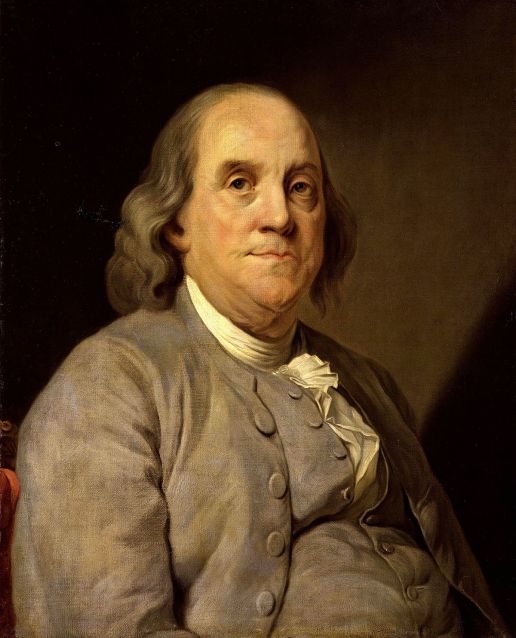
Franklin’s suggestion of the turkey as the nation’s symbol, however, is a myth. He never suggested such a thing. He only compared the bald eagle to a turkey because the drawing reminded him of a turkey. Franklin’s argument was the choice of bald eagle not in support of the turkey he called “vain and silly.” Some even claim his comments and comparisons were slyly referring to members of the Society, of whom he thought was an elitist group comprised of “brave and honest” men but on a chivalric order, similar to the ruling country to which they helped defeat. This might explain why Franklin’s assessment of the bald eagle in the letter is based solely on human behavior, not a bird’s.
But was it a fair assessment?
Ornithologists today provide a more scientific and sensible explanation. In the”Book of North American Birds” the bald eagle gets its just due, for as a bird, it’s actions are justifiable. “Nature has her own yardstick, and in nature’s eyes the bald eagle is blameless. What we perceive as laziness is actually competence.” Being able to catch a “waterfowl in flight and rabbits on the run,” the book suggests is a noble and rewarded skill.
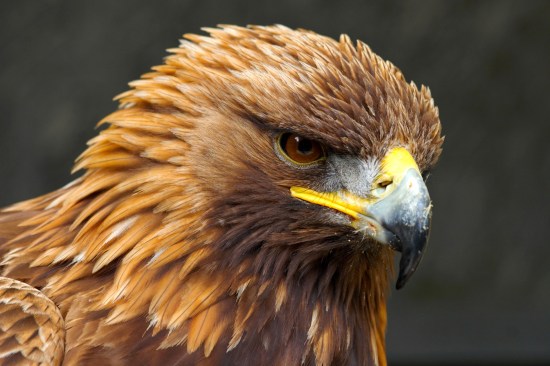
Perhaps, a better choice for the nation’s top bird, might have been the golden eagle, who unlike the bald eagle captures its own prey, mostly small rodents, but is powerful enough to attack larger animals like deer or antelope on rare occasions. (Its reputation today is tainted somewhat by rumors that it snatches unsuspecting domestic animals, like goats or small dogs.) But golden eagles don’t want attention. They shy away from more populated areas and appear to be “lazy” only because they can hunt with such precision and ease they don’t really have to ruffle their feathers. Plus, golden eagles were already symbolic. History finds them “perched on banners of leading armies, the fists of emperors and figuring in religious cultures.”
The bald eagle, by comparison, would be truly American.
Perhaps when Franklin made the disparaging comments against the bald eagle he was also harboring a nearly decade old grudge.
In 1775, a year before America’s independence, Franklin wrote the Pennsylvania Journal and suggested an animal be used as a symbol of a new country, one that had the “temper and conduct of America,” he explained. He had something in mind. “She never begins an attack, nor, when once engaged, ever surrenders;” he wrote. “She is therefore an emblem of magnanimity and true courage”
Eventually the image Franklin suggested did appear on a $20 bill issued in 1778, adopted for use as the official seal of the War Office, and may have been the inspiration for the Gadsden flag with the inscription, “Don’t Tread On Me.”
But it never officially became the preferred symbol of the new country.
Franklin’s choice: the rattlesnake.

The Vapors and ‘Waldo’: There’s a Connection.
By Ken Zurski
In December of 1981, the English power pop group The Vapors released Magnets, the follow-up to their successful debut album New Clear Days which featured the bouncy and ambiguous hit single, “Turning Japanese.”
I’m turning Japanese
I think I’m turning Japanese
I really think so
Although the group had explored heavy themes before on its first album, Magnets was considered even darker. For example, the title song is about the assassination of John F. Kennedy’s, with references to “the motorcade” and the Kennedy children. “Spiders” and “Can’t Talk Anymore” dealt with mental health issues and “Jimmie Jones,” the single, recounted cult leader Jim Jones and the massacre in Jonestown.
They tell me jimmies seen a sign
Says he understand everything
They tell me jimmies got a line
To the man from the ministry
Despite the bleak subject matter, however, the songs were mostly upbeat and catchy, a trademark of the group.
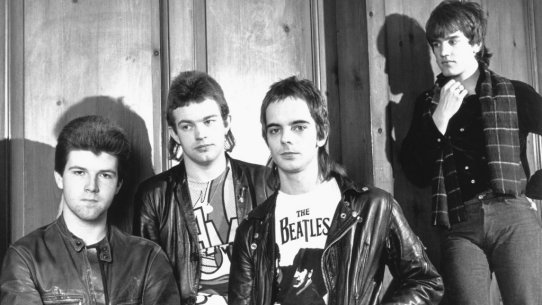
But it didn’t light up the charts.
The album, while positively received, was a commercial flop. The band blamed it on the lack of interest from their new record label, EMI (later changed to Liberty Records), which bought out United Artists shortly after their first release. Due in part to corporate frustration, The Vapors disbanded after Magnets failed to ignite. But today, the album has significance for its inspired cover art, a complex portrait that mirrored the album’s dark undertones.
Martin Handford was the artist.
A London-born illustrator, Handford specialized in drawing large crowds, an inspiration he claims came from playing with toy soldiers as a boy and watching carefully choreographed crowd scenes from old movies.
Handford, who sold insurance to pay bills, was hardly an emerging or successful artist at the time he was asked to design the album cover for Magnets. Drawing upon the theme of the title song, Handford depicted a chaotic crowd scene of an assassination, although you couldn’t tell unless you looked closely. From a reasonable distance, the numerous figures and various colored clothing formed the shape of a human eye.
It was both clever and disturbing.
:format(jpeg):mode_rgb():quality(90)/discogs-images/R-2057270-1340650452-6500.jpeg.jpg)
For example, at the top right hand corner of the cover, on the roof of a building, there is a man – presumably the assassin – putting away a rifle.

Some of the figures are seen running from the horrific scene unfolding in the “eye’s” iris, while others are curiously drawn to it. But while the cover was certainly an original creation, the artistic style was not.
In fact it has a name: Wimmelbilderbuch.
Wimmelbilderbuch, or “wimmelbook” for short (German for “teeming picture book”) is the term used to describe a book with full spread drawings of busy place’s like a zoo, farm or town square. The page is filled with numerous humans and animals. It’s geared toward children, but adult’s seemed to like it too, especially when an identified object is hidden, making it more like a puzzle than a colorful picture. Several artists incorporated this style, including a Dutch artist Pieter Bruegel, who dates back to the early 16thcentury, and specialized in drawing intricate landscapes and peasant scenes populated by people in various degrees of work or distress. Bruegel’s human figures are mostly depicted as frail and challenged (Fleet Foxes used a Bregel painting The Elder for its 2008 self titled debut album).

Handford’s work wasn’t nearly as depressing as Bruegel’s, but they were similar. Handford purposely drew the Magnets cover with emblematic images, not exactly hidden, but tough to spot, and when found became a personal reward to the viewer – like the tiny assassin on the roof.
This was the inspiration for an idea that eventually became a cultural phenomenon.
Handford created a recurring character he would put in all his drawings: a bespectacled man with wavy brown hair who always wore a red and white striped shirt and stocking cap. His name was Wally.
The trick was trying to find Wally in the crowd.
The concept soon became a contest, then a crave. It led to several best selling books and an iconic, some might say exasperating, new enigma emerged.
“Where’s Wally?” is how they describe it around the world.
In America, it’s called “Where’s Waldo?”


The Man Who Walked a Lifetime

By Ken Zurski
British poet William Wordsworth liked to go for long walks. A commendable act today for sure, but in the late 18th century, highly unusual for a man of Wordsworth’s class and stature.
That’s because walking was considered impractical and unnecessary for the rich and connected. This was also true for many artists of the era, mostly painters, who chose not to waste their own time and energy getting to a picturesque location. A stately horse and carriage did just fine, especially for those who could afford one.
But Wordsworth was different. He loved nature too much to spoil the journey. So in 1790, while a student at Cambridge, Wordsworth organized a walking tour through Switzerland and France.

When he returned to England, his walks became daily occurrences, usually accompanied by his sister Dorothy. The two would venture off by foot into areas unknown, oftentimes relishing the thought of getting lost, sometimes for hours, even in the family’s lavish gardens.
For Wordsworth, preparation was essential. He would always carry a bag with him – about the size of a modern day briefcase. Inside were his writing tools: a journal, pencil, coat, book, and for longer jaunts…a sandwich.
One winter day, Wordsworth and his sister walked a fair distance between home and a hotel for an engagement. The snow was falling and the path slippery. But when they arrived, Wordsworth insisted they turn around and do it again. The second time was just as “heavenly” as the first, Dorothy wrote about her brother.
Of course all this walking was an inspiration for his poems.
I wandered as lonely as the cloud
That floats on high o’er valleys and hills
When all at once I saw a crowd
A host of golden daffadils
After Wordsworth’s death in 1850 at the age of 80, a friend calculated he had walked 175-thousand miles in his lifetime.
General Washington Didn’t Receive the Declaration of Independence until July 8.
By Ken Zurski
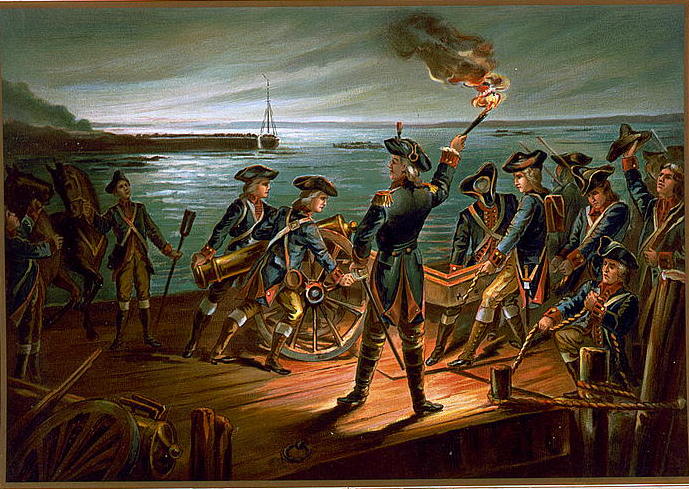
On July 8 1776, four days after the Continental Congress passed the Declaration of Independence, a copy was sent to General George Washington who was preparing for battle in New York City.
Washington anxiously awaited word from the assembly in Philadelphia. He knew how important the declaration would be to his troops. Up to that point the New York contingent of the Continental Army, who had been together for nearly a full year, hadn’t fired a single shot yet. They were frustrated, antsy and for the most part continually drunk. The declaration would help boost morale, Washington thought.
Already, talk of such a declaration had been stirring up emotions within the ranks. In May of that year, in words later shaped by Thomas Jefferson, Virginian George Mason drew up a sentence about being “born equally” with “inherent natural rights.” And on June 7, Virginian Richard Henry Lee, introduced a congressional resolution declaring that the United Colonies “ought to be free and independent states.” Even Washington , in the spring of 1776, crafted a statement that supported the idea of independence as an incentive to fight. “My countrymen, I know, from their form of government and steady attachment therefore to royalty, will come reluctantly into the idea of independency,” he wrote.

So on July 9, at six o clock in evening, Washington ordered his troops to gather. He had previewed the contents of the document and included it in his “General’s Orders,” which would be read aloud to the men.
But it came with a caveat. Washington had warned the troops of the consequences that any official documentation of independence would mean if defeated. Treason, he implored, was something the British ruler did not take lightly. Traitors in the past were subject to gruesome disemboweling and beheadings, he explained. Washington himself knew if captured, he would be hanged.
This was literally a fight to the end, he argued.
The men stood with anticipation as the “General’s Orders” were read. Patiently they waited as several paragraphs of typical military reports and directives were announced. One included the procurement of a chaplain assigned to each regiment. “The blessing and protection of Heaven are at all times necessary but especially so in times of public distress and danger,” the missive proclaimed.
Then finally…
“…The Honorable the Continental Congress impelled by the dictates of duty, policy and necessity, having been pleased to dissolve the connection which subsisted between the Country, and Great Britain, and to declare the United Colonies of America, free and independent STATES.”
Upon hearing the words, the men let up “three huzzas” a witness reported. In fact, their enthusiasm led to an act of debauchery that irked Washington. The soldiers marched down Broadway Street and proceeded to topple the large statue of King George III, decapitating it in the process.

Washington was livid. He told the troops that while their “high spirits” was commendable, their behavior was not. The general wanted an army of orderly respectful men, not savages. Even defacing the likeness of the British King was inadmissible in his eyes.
However sanctimonious that may have sounded, Washington must have been pleased that the statue’s 4 ,000 pounds of gilded lead was melted down to make nearly 43-thousand musket bullets.
Washington was also thrilled by his troop’s eagerness to fight. “They [the British] will have to wade through much blood and slaughter before they can carry out any part of our works,” he wrote about the impending conflict.
Then on July 12, several British ships, including the forty-gun Phoenix, cut through a thin American defense and blasted the city. It was a show of force meant to rattle the colonists into submissiveness. It certainly rattled the nerves of Washington’s untested soldiers who were shaken and distressed by the cries of women and children fleeing the blasts. There was little resistance.
Washington later expressed his disappointment. “A weak curiosity at such a time makes a man look mean and contemptible,” he said chastising the troops.
After the embarrassment, British commander William Howe offered Washington clemency for the rebels if the General surrendered. Washington flatly refused.
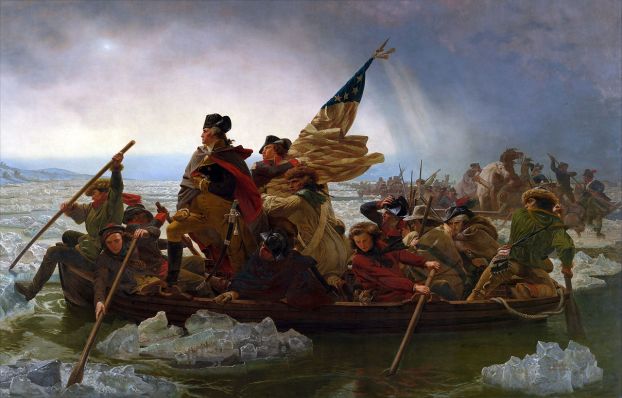
The following month, it would get worse. Due to more defeats, the rebels were forced to flee New York to Pennsylvania and reorganize. Later that year, in December, Washington would famously cross the icy Delaware River for a surprise attack in Trenton, New Jersey.
The Revolutionary War would continue for another seven years.
Thanks to Sousa’s Brain Band, ‘The Stars and Stripes Forever’ Came Quickly
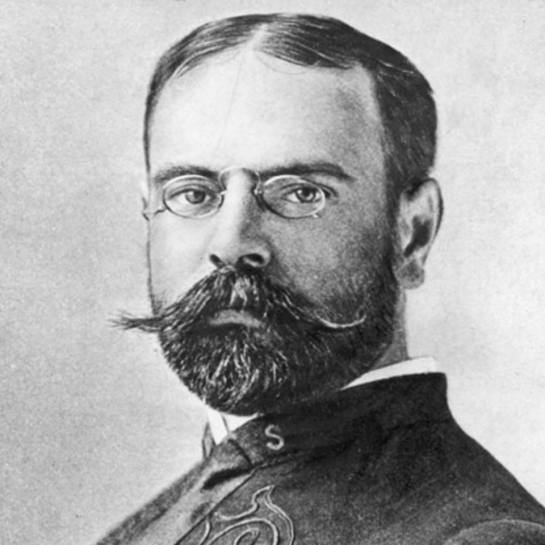
By Ken Zurski
Bandleader and composer John Philip Sousa was never one to hurry a piece of music. A tune would come to him and he would play it over and over in his mind until it was just right – or as he called it, the “brain band” would perform it in his head before a single note was ever recorded.
That’s exactly what happened in 1896, while Sousa was returning from a trip overseas.
Sousa was forced to cut the trip short after receiving news that his longtime manager had passed away. Pacing the deck of the steamer Teutonic, Sousa heard a tune in his head and the “brain band” took over.
“Day after day,” he said,” as I walked, it persisted in crashing into my very soul.”
When Sousa returned to America, he set it to paper: “It was a genuine inspiration, irresistible, complete, and definite and I could not rest until I had finished the composition.”
“The Stars and Stripes Forever” quickly became Sousa’s most popular march.

The Immortally Important Fifteen-Star and Fifteen-Stripe Flag
By Ken Zurski
In December 1794, on the opening day of the Third Congress of the United States, the first order of business concerned the country’s symbol of freedom: the American flag.
In question was whether or not it should be changed.
Senator Stephen R. Bradley had introduced legislation that called for the flag to carry fifteen stripes and fifteen stars, two of each added to the current flag, to represent the newest additions to the Republic, his home state of Vermont and Kentucky. The measure passed through the Senate without debate.

The House however was another matter. Traditionalists wanted to keep the flag as originally intended. “We may go on adding and altering at this rate for a hundred years to come,” a Massachusetts Federalist argued.
Another lawmaker named Israel Smith was also against change. “Let us have no more alterations of this sort,” he insisted, citing among other things, the expenditure. Basically, he contended, continually altering the flag would be a costly venture. “Let the flag be permanent,” Smith demanded.
In the end, a slight majority agreed the flag should represent all states, lest they be offended.
The legislation passed 50-42.

Nearly two decades later, during the War of 1812, it was the sight of that altered fifteen-star flag flying high above the battle scarred Fort McHenry that inspired a Maryland lawyer to put his emotions into words. “O, say does that star spangled banner yet wave. O’er the land of the free and the home of the brave.”
Eventually the words of Francis Scott Key, who was aboard the British ship Tonnant to negotiate the release of U.S prisoners, was set to music and “The Defence of Fort McHenry,” known today as “The Star-Spangled Banner,” was soon being performed at military inspired gatherings.
In 1931, thanks to a congressional resolution, a shortened version of the original song officially became the national anthem of the United States of America.


This Uninhabited Island is a Good Thing for the Sport of Curling

By Ken Zurski
Thanks to a small island just off of mainland Scotland in an area known as the Firth of Clyde, a sport which date backs to the early 19th century continues to prosper.
They don’t play the sport of Curling there, nor does anyone actually live there. It’s currently uninhabited by humans. But its resource, the Blue Hone Granite is used for making the stones that gives Curling its unique name, as in the curl of a spinning stone over an icy surface.
Fairy Rock
The 60 million year old island named Ailsa Craig which in Gallic means “Fairy Rock,” although other alternative interpretations include the less fanciful and more directly expressive definition of “Cliff of the English,” is the plug of an extinct volcano. Monks, castles, chapels, a prison and lighthouses are all part of its lore. In the early 15th century the Ailsa Craig Castle was owned by the monks of Crossraguel Abbey.
But lately, it’s known for two things: birds and curling stones.

The island is exclusively a bird sanctuary. Puffins and gannets use Ailsa Craig as a breeding ground. This is fairly recent development and only after an infestation of rats first introduced to the island during shipwrecks, were eradicated in the early 1990’s. Once the rats were gone, the birds came back.
Blue Hone
Since 1851, however, the company Kay’s of Scotland, named after its founder Andrew Kay, who established the first curling stone manufacturing business over a hundred years ago, has been harvesting the granite boulders from the island to use in curling stones. Only two places on earth is said to have the Blue Hone or Common Green granite which has a low absorption rate and keeps water from freezing and eroding the stone: Ailsa Craig and the Trefor Granite Quarry in Wales.

Even today, 60-70 percent of all curling stones comes from granite extracted from Alisa Craig. The company says the last harvest of granite from the Island took place in 2013 when 2,000 tons were extracted, sufficient to fill orders until at least 2020.
Recent efforts have been made to reduce the dependency of the centuries old island as the only supplier of the curling stones, but a plastic substitute and a denser granite found in Canada are relatively new developments and not yet widely accepted or used in the sport.
Not yet, at least.
The Cheese
All this is good news for a sport which has seen a popularity surge in the past decade, especially in North America.
After all, before the discovery of granite on Ailsa Craig, stones used for curling were made of whinestone, often basalt, which was cut into a circular shape called “The Cheese” and weighed 70 pounds or more.
The current stone weight is just under 50 pounds.

 UNREMEMBERED