
History
‘Is There a Santa Claus?’: History’s Most Enduring Christmas Related Editorial Was Published in September.
By Ken Zurski

As brothers growing up in Rochester, New York, William and Francis Church were raised in a strict but loving household. Their father, Pharcellus Church, was a newspaper publisher and Baptist minister. He demanded nothing but the best from his boys, who in return, each earned a college degree and joined their father in the newspaper business.
In 1862, however, at the onset of the Civil War, the two brothers followed separate paths. William resigned his post at the New York Times to become a full-time soldier while Francis continued on as a civilian war correspondent.
William earned the rank of Lieutenant Colonel, but left after a year. His superior at the time, General Silas Casey, suggested he start up a newspaper and devote it strictly to the war. William liked the idea so he mustered out and asked his brother to join him. Together they published The Army and Navy Journal and Gazette of the Regular and Volunteer Forces, a weekly filled with articles on everyday applications of the war, soldier’s viewpoints, and a critical eye.
“There is not a shadow of a doubt that Fort Sumter lies a heap of ruins,” the first sentence of the first volume read on August 29, 1863.

While the two brothers continued to edit the Journal, and eventually collaborated on a monthly literary magazine, The Galaxy, their legacies are vastly different.
William would go on to become the founder and first president of the National Rifle Association (NRA), while Francis became posthumously known for an editorial he wrote in response to a little girl’s inquisitive letter and inquiry. “I am 8 years old…,” the letter began and ended with an ages old question, “Please tell me the truth. Is there a Santa Claus?”
It was signed: Virginia O’Hanlon 115 W. 95th Street

The editorial appeared without a byline and was buried deep in New York’s The Sun on September 21, 1897.
Only after Francis’ death in 1906 was it revealed that the former war correspondent penned the famous line:
“Yes Virginia, there is a Santa Claus.”

Father Marquette Mentioned a Parrot Among Other Strange Birds in Illinois
By Ken Zurski
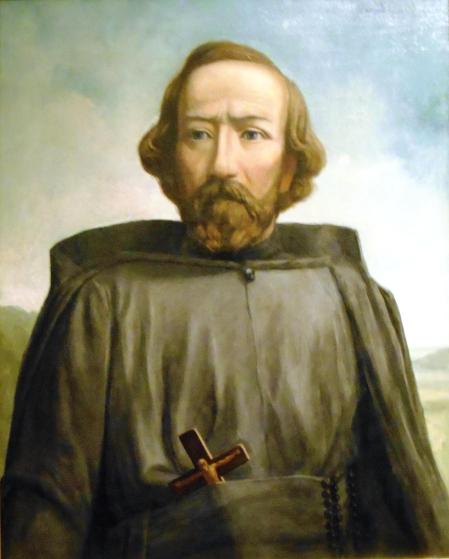
In 1674, while exploring the Illinois River for the first time, French Jesuit missionary Father Jacques Marquette wrote in his journal: “We have seen nothing like this river that we enter, as regards its fertility of soil, its prairies and woods; its cattle, elk, deer, wildcats, bustards, swans, ducks, parroquets, and even beaver.”
Certainly the reference to parroquets, or perroquets, (French for parrot) raises some eyebrows. But a species called the Carolina Parrot, now extinct, did inhabit portions of North America, as far north as the Great Lakes, as early as the 16th century.
More puzzling, however, is the mention of the bustard.
Even the Illinois State Museum in the state’s capitol of Springfield questions this unusual reference.
“What is a Bustard?” the Museum sign asks in an exhibit showcasing birds native to Illinois, then answers: “We’re not sure.”
Of course, the bustard is a real bird. In Europe and Central Asia it is more commonly known. In North America? It just doesn’t exist. But did it at one time? According to the Museum’s notes, several French explorers described bustards as being common game birds of Illinois and said they resembled “large ducks.”
Large indeed.
A Great Bustard can stand 2 to 3 feet in height and weigh up to 30 pounds making it one of the heaviest living animals able to fly. Its one distinctive feature, besides its size, is the gray whiskers that sprouts from its beak in the winter.

Father Marquette was more a man of the cloth than a scientist. His mission was to preach to the Illinois Indians or “savages” as he calls them. Along the way, however, he described the scenery and game in detail. The “bustard” comes up quite often in his journal. He even refers to hunting them, possibly eating them too. “Bustards and ducks pass continually,” he wrote.
Perhaps, as some suggest, Marquette was describing a common wild turkey. His recollections seem to imply they were airborne, which wild turkeys can do, despite the myth that they cannot fly (the “fattened” farm turkey – the one we use for Thanksgiving – does not fly).
The Illinois State Museum goes even further by speculating that the bird Marquette was referencing was not a bustard at all, but the Canada Goose which is similar in size and appearance to the Great Bustard.
But, as the Museum concedes, even that is “open to question.”.

That’s Not George Washington on the First Dollar Bill
By Ken Zurski
In the summer of 1861, after the Battle of Bull Run disproved the theory that the Civil War would end quickly, U.S. Treasury Secretary at the time Salmon P. Chase turned to the option of paper money to help pay the Union soldiers. This included the first government-issued dollar bill.
A bill which looked much different than it does today.
The man on the front of the original dollar bill was Chase himself who did the honors of appointing his own likeness to the first “greenbacks” (named for the green ink used on the back, with black ink in front).
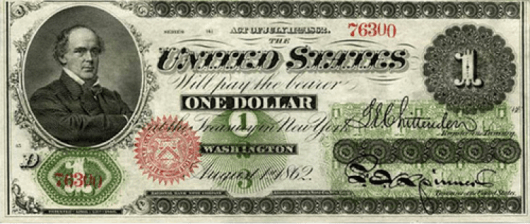
Chase was a political rival of Lincoln who became part of his cabinet, oftentimes disagreeing with the president and threatening to quit on numerous occasions until Lincoln diffused the matter – usually with a joke.
Gold and silver coins were popular, but at the onset of the Civil War, to help fund it, Congress authorized the issue of demand notes worth $5, $10 & $20. The notes could be redeemable by coin. The $1 bill soon followed.
Chase contributed to the design of the new dollar bill and having presidential aspirations himself thought his image on its face would help the cause. The fact that he ran the Treasury Department was a strong argument for inclusion.
Eventually, Chase was replaced by George Washington on the dollar bill.
But in 1928, more than 50 years after his death, Chase was honored again with his picture on the newly minted $10,000 bill. The big bills, like the $1,000 (Cleveland), $5,000 (Madison), and $10,000, were used mainly for transfers between banks. Even a $100,000 bill (Wilson), the largest single denomination ever, was printed in 1934 for this same purpose.

Although it went out of circulation, the $10,000 bill is still considered legal tender and banks would be glad to exchange it if collectors were crazy enough to pass on the market price which is ten times or more its face value.
The original $1 dollar bill, with Chase’s likeness, while not as rare, is still collectible. Mint condition bills can fetch up to $1000. Most are worth between $100 and $300.
Chase is also remembered to this day by a large bank, now a merged institution, with his name still in its title.
There is a Parachute on the Roof of a Church in France: A D-Day Survival Story
By Ken Zurski
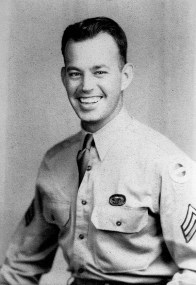
On the night of June 5, 1944, Private John Steele along with several other American soldiers of the 82nd Airborne Division parachuted into an area near Sainte Mere Eglise, a small town in the Lower Normandy region of France close to Utah Beach.
The troopers were ordered to land, secure the perimeter, and cut off the road that led to the German occupied village. But two of the battalions, including Steele’s, were dropped in the wrong location and directly over the town square.
That night in Sainte-Mere-Eglise, church bells were ringing out in alarm. A stray incendiary from anti-aircraft tracers had set a hay barn on fire. The townspeople were worried more businesses and homes would be threatened. So they formed a bucket brigade to extinguish the blaze and prevent any more flare-ups. Meanwhile, the thirty or so German soldiers in town kept firing at the sound of unseen aircraft overhead. Then in the darkness, white chutes appeared. The unfortunate American paratroopers drifting into the city were easy targets. Many were riddled with bullets before they even touched the ground.
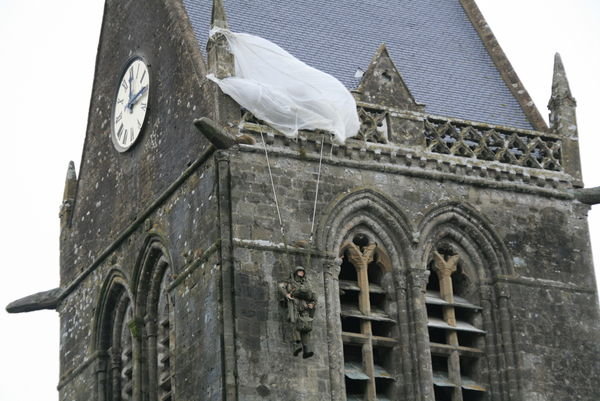
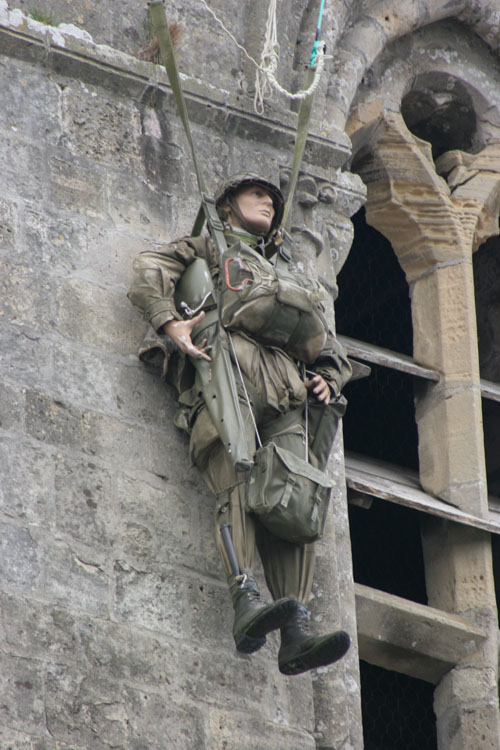
John Steele however made it. He was hit by flak, burnt his foot, and landed on a church roof. His chute caught the pinnacle of the steeple and his suspension lines stretched to full capacity. Another paratrooper named Kenneth Russell also fell on the church. He later recalled the ordeal: “While I was trying to reach my knife to get rid of the straps, another paratrooper hit the steeple and also remained suspended, not far from me. His canopy was hanging from a gargoyle of the steeple, it was my friend John Steele.” Russell was able to cut his lines, free himself, and run for cover.
Steele wasn’t so lucky. He was left dangling on the side of the church, wounded, but conscious. He watched as his buddies were picked off like ducks in a shooting gallery.
Steele’s only recourse was to wait. He hung his head and remained completely still. The Germans eventually found him and thought he was dead. They were going to leave him, but figured he might be carrying important papers. When they cut him down they found Steele alive and immediately took him prisoner. But Steele somehow manged to escape. He soon rejoined his division and helped capture the village, which became the first French town liberated by the Allied Forces after June 6, 1944, better known as D-Day.
Steele was from Metropolis, Illinois, the oldest of his troop at age 32, and the company barber too. He continued to serve in the Battle of the Bulge and the crossing of the Rhine River into Germany when the war ended. He returned home to Illinois in September of 1945. For his efforts, he was awarded the Bronze Star for valor and the Purple Heart for being wounded in combat.
A battle with throat cancer would end his life in 1969, at the age of 56.
To this day, in his honor, on the very same church where he fell, there is a life-sized effigy of Steele, his parachute snagged, and his body hanging forever from its straps.
For Roosevelt’s ‘Rough Riders,’ Nothing Beats a Good Smoke
By Ken Zurski

Colonel Theodore Roosevelt didn’t care much for smoking tobacco which is unusual since almost all the men under his command swore allegiance to it. Pipes, cigars, cigarettes or chewing tobacco, didn’t matter as long as they had it. And if they didn’t have it, well now that was a problem too.
The men in reference here are the “Rough Riders,” and thanks to a new book by American West historian Mark Lee Gardner titled Rough Riders: Teddy Roosevelt , His Cowboy Regiment, and the Immortal Charge Up San Juan Hill, a broader picture emerges of these men who in the summer of 1898 famously followed their fearless, toothy-grinned, bespectacled leader to Cuba to fight in the Spanish-American War.
One thing that stands out, besides the lack of war experience at first, was their love of a good smoke.
Gardner cites the writings of war correspondent Richard Harding Davis of the New York Herald. Davis had turned down a commissioned offer to serve, a privilege, since Roosevelt’s diverse group included career men, Ivy League graduates, and experienced horse riders, or the so-called “cowboys” from the west. Most men volunteered but it was more like a contest than an enlistment; not everyone who signed up got to go. Davis had the chance to fight, but chose to write about the war instead. This however tormented him so that during the engagements he carried a sidearm “just in case.” And when the situation presented itself, Gardner relates, “[Davis] borrowed a Krag (revolver) and joined in the final charge.”
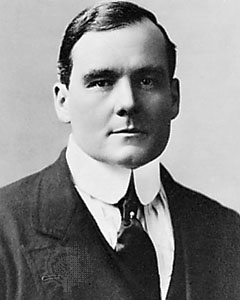
Davis’ most important job, however, was to tell the story and Roosevelt gave journalists, especially his friends, full access. Later detailing every aspect of battlefield life from a soldier’s perspective, Davis described one thing that seemed to be the biggest morale booster of all: tobacco. “With a pipe the soldier can kill hunger, he can forget that he is wet and exhausted and sick with the heat, he can steady his nerves against the roof of bullets when they pass continually overhead,” Davis wrote.
Gardner points out that there were four agonizing days when no tobacco was in the camp. Likely replacement supplies hadn’t arrived yet from the Cuban port city Siboney where American forces came ashore and supply ships were docked. By this point, the men were hopelessly addicted and each day without tobacco was another day of torture. “They got headaches, became nervous, and couldn’t sleep.” Gardner writes.

Tobacco, however, was not a ration. The men had to pay for the privilege. When a shipment arrived there was “as much excitement in the ranks as when they had charged the San Juan trenches,” Gardner notes. When it seemed like some men would have to do without, one of the Ivy Leaguer’s would step in and offer to pay for the lot, about 85 dollars total, to keep others from suffering.
Smoking helped relieve tension too. When Captain Buckey O’Neill, an experienced frontier lawman from Arizona, noticed some uneasiness in the troops, he calmly walked in front of the crouching men smoking a cigarette. Despite their admiration for such courage, O’Neill, who was hoping to settle the men’s fears by example, was tempting his own fate. “Captain, a bullet is going to hit you” the men shouted from the trenches. O’Neill took a long draw of smoke. “The Spanish bullet isn’t made that will kill me,” he boldly proclaimed. Shortly after, a sharp crack was heard. “Like the snapping of a twig,” Gardner described. It was O’Neill’s teeth breaking. A bullet had entered his mouth and traveled through his head, killing him instantly.
“He never even moaned,” a trooper noted.
Most soldiers though had the good sense to wait until the battle was over before lighting up. It was during this downtime – the time in between the bloody skirmishes – that the cravings hit the hardest.
Even Davis in a letter to his father admitted that smoking was an important diversion and one he personally endorsed. “I have to confess that I never knew how well off I was until I got to smoking Durham tobacco,” he wrote.“And I’ve only got a half bag left.”
Some soldiers were so desperate, Davis noted, that they made their own tobacco out of “grass, roots, tea and dried horse droppings.”
Davis graciously doesn’t expound on how that might have tasted.

The Mercury Dime And The Mysterious Face Debate
By Ken Zurski

When the newly designed 10-cent coin was introduced to the U.S. Mint in 1916, many assumed the figure depicted on the “head” side closely resembled Mercury, the Greek god of commerce. But sculptor Adolph Weinman insisted otherwise. He claimed it was a representation of Lady Liberty.
This confused many observers who thought the profile resembled the features of a man not a woman. In the end, Weinman’s admission didn’t matter.
The coin became known as the Mercury dime.
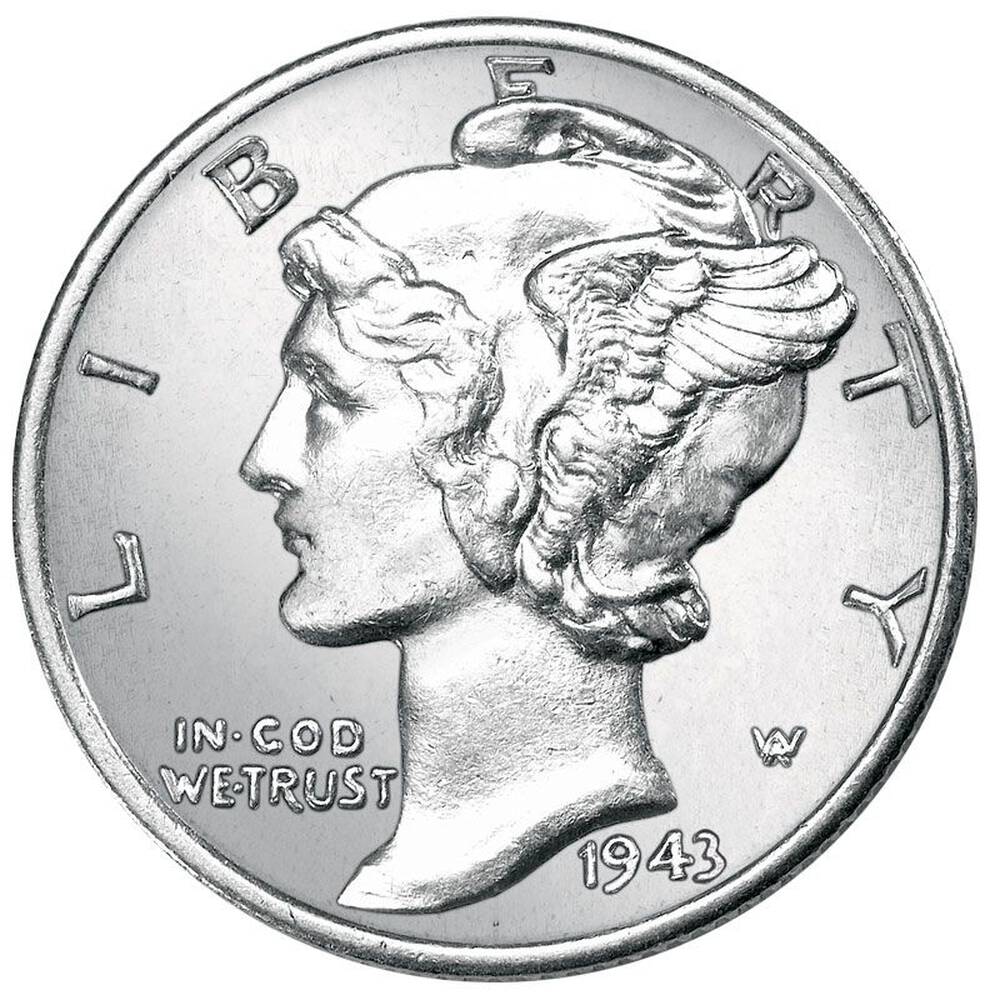
 But more confounding was Weinman’s inspiration.
If as the sculptor professed, it was a woman, not a man; then who was the model?
In 1917, the Reading (Pennsylvania) Eagle newspaper seemed to know the answer with a bold proclamation. It was Elise Viola Kachel, they reported, the wife of of American poet Wallace Stevens, who adorns the coin’s face. According to the Eagle, Kachel was asked to sit for Weinman, a family friend, and the resulting sculpture – a bust—strongly resembles the profile on the dime.

Years later, however, Weinman’s son Robert stoked the fire of debate by claiming the inspiration for his father’s work was a woman named Audrey Munson, a popular silent film star and model.
Munson’s figure had become synonymous with depictions of America’s symbol of freedom lady Columbia, among other portrayals, and usually in various stages of undress.

Neither woman claimed ownership of the dime’s face.
Kachel died in 1963. Her obituary reveals nothing. Munson never mentioned the coin. In 1919, she was embroiled in a scandalous murder case involving a crazed doctor who professed his love to her by killing his wife. Munson was unfairly blamed for the crime. She spent most of her adult life in and out of mental intuitions and passed away in 1996 at the age of 104.
The Mercury dime was discontinued in the 1940’s.
Of Starlings, Shakespeare, and that Annoying Mess on Your Car’s Windshield
By Ken Zurski
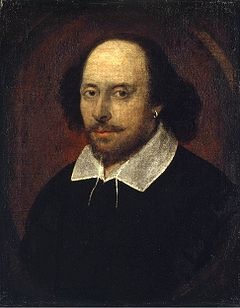
The next time you get bird poop on your car, thank William Shakespeare. Yes, that very same William Shakespeare, the famously known 16th century poet and playwright who penned King Lear and Macbeth among others. But not just Shakespeare, thank Eugene Scheiffelin too.
Or blame Scheiffelin, if you prefer.
Don’t know the name Scheiffelin?
Here’s the story:
In 1890, Eugene Scheiffelin, a member of the American Acclimation Society, a group designed to exchange other plants and animals from another part of the world to the United States, imported about 40 starlings from Europe to New York City.
While Scheiffelin’s reasoning was scientific, it was also borderline fanatic. He loved the writings of William Shakespeare. In fact, he loved Shakespeare so much that he planned to transplant all the birds mentioned in Shakespeare’s plays to America. “I’ll have a Starling [that] shall be taught to speak nothing but ‘Mortimer;” Shakespeare wrote in Henry IV.
Schefflein released about 60 starlings in New York’s Central Park and the following year released 40 more. He really had no way of knowing what effect the birds would have on the ecosystem, good or bad.
Or did he?
About thirty years earlier a man from Brooklyn named Nicolas Pike imported a group of house sparrows from England with good intentions it seemed. Soon, the birds multiplied and spread throughout North America. At first their presence was helpful. They ate caterpillars of certain moths which frequently threatened city shade trees. But their numbers became unbearably large. They were, however, considered friendly birds.
The starlings, because of their aggressive and destructive nature, would be much worse.

Like the sparrow, within a decade at least, tens of millions of starlings plagued the countryside.
Today in the Book of North American Birds, the European Starling (whose name still playfully carries its immigration status) is found in nearly all of inhabitable North America and year round, unlike the common robin, which is seasonal in many parts of the country.
“The starling is ubiquitous,” The New York Times wrote in 1990, the 100th anniversary of the starling in America, “with its purple and green iridescent plumage and its rasping, insistent call. It has distinguished itself as one of the costliest and noxious birds on our continent.”
Costly because it eats – no, hordes – seeds and fruits. Oftentimes this is done in packs of thousands that can devour whole fields in a single day.
Noxious because its droppings are linked to numerous diseases not only to animals but humans too.
Of course starlings eat insects, lots of insects, perhaps more than any other bird species in the U.S. But that doesn’t offset their flair for destruction and overall annoyance to farmers, gardeners and city dwellers. “Starlings,” wrote an ornithologist, “do nothing in moderation.” That would include pooping, of course. They eat so much that they go and go and go. And since they roost in large numbers in well populated areas, they usually go in places – and on things- we least want them too.
Schefflein died in 1906 and for a time enjoyed the pleasures of seeing Starlings in and around New York City’s Central Park, but only Central Park. This, however, meant that his plan to migrate the birds throughout the country was failing. Then in 1896, a nesting of starlings was discovered in the eaves of the Museum of Natural History, which was directly across the street from Central Park. Then in 1900, a letter to the editor of The New York Times asked, “Can you inform me what sort of bird it is which frequents this neighborhood?” The Starlings were on the loose.
Shakespeare would have been proud, Schefflein must have thought at the time.
He had no idea.
Today, there are roughly 200 million starlings in North America.
Check your car windshield. You’ll see.

Betsy Ross? For a Long Time No One Knew. Then Her Grandson Told a Story
By Ken Zurski

In 1752, in Philadelphia on New Year’s Day, Elizabeth Griscom was born to a strict Quaker family who emigrated to the United States from England in the late 17th century. A free spirit in her twenties, Elizabeth ran off and met John Ross an upholsterer’s apprentice and an Episcopalian. Her parents forbade the union outside the Quaker faith, but Elizabeth didn’t care. She married John in a ceremony that took place in a tavern and formally became Elizabeth Ross or “Betsy,” for short.
Today, Betsy Ross is certainly name we recognize.
So much so that in contemporary surveys, many people acknowledge the name Betsy Ross more than interminable historical stalwarts like Benjamin Franklin or Christopher Columbus. However, until her name became synonymous with America’s symbol of freedom, Betsy Ross was a sister, a mother, a widow (three times over), a seamstress, and by the time the rest of the country got to know her – dead for nearly 50 years.
If there was something special about her life, a slice of American folklore, perhaps, she told her family and no one else.
In 1870, however, that would change.
That year, Ross’s last surviving grandson William Canby went before the Historical Society in Philadelphia and told an amazing story about General George Washington, his grandmother and the birth of the American Flag.

According to Canby, Washington had visited Ross’s upholstery shop in Philadelphia with a sketch idea for a unified flag and asked if Betsy could recreate it. “With her usual modesty and self-reliance,” Canby related, “she did not know, but said she could try.”
Canby says among other revisions, Betsy suggested that the stars be five-pointed rather than six as Washington had proposed (Washington thought the six-pointed star would be easier to replicate). The story was as revealing as it was skeptical. No one had heard of Betsy Ross and previous stories of the first flag was apocryphal at best. There were many nonbelievers and even today historians have doubts. There are no records to support Canby’s claim, they insist, even though Canby had signed affidavits to back up his story.
At the time of Washington’s proposed visit in 1777, Ross would have been in her 20’s. Her life was typical for a young women at the time. She endured two marriages that ended tragically (her first and second husband’s death were both attributed to war.) A third marriage produced five children. She passed away in 1836 at the age of 84. There is no documentation that she publicly promoted her own role in making of the flag – or was even asked. Apparently only her family knew.
Nearly a century later, however, in the midst of the Reconstruction period, a changing nation embraced Canby’s story of his grandmother and Ross became the face of America’s first flag. The early flag became affectionately known as “The Betsy Ross Flag,” and trinkets of the thirteen stars and stripes were a big seller.
Even hardened critics, who claim many seamstresses may have played a role in the flag’s creation are willing to concede, for history’s sake at least, that one name gets credit for the five-pointed stars.
Betsy Ross.

The Fifteen Stars, Fifteen Stripes Flag

By Ken Zurski
In December of 1794, on the opening day of the Third Congress of the United States, the first order of business concerned the country’s symbol of freedom: the American flag. In question was whether or not it should be changed.
Senator Stephen R. Bradley had introduced legislation that called for the flag to carry fifteen stripes and fifteen stars, two of each added to the current flag, to represent the newest additions to the Republic, his home state of Vermont and Kentucky.
The measure passed through the Senate without debate.
The House however was another matter. Traditionalists wanted to keep the flag as originally intended. “We may go on adding and altering at this rate for a hundred years to come,” a Massachusetts Federalist argued.
Another lawmaker Israel Smith was also against change. “Let us have no more alterations of this sort,” he insisted, citing among other things, the expenditure. Basically, he contended, continually altering the flag would be a costly venture. “Let the flag be permanent,” Smith demanded.
In the end, a slight majority agreed the flag should represent all states, lest they be offended. The legislation passed 50-42.
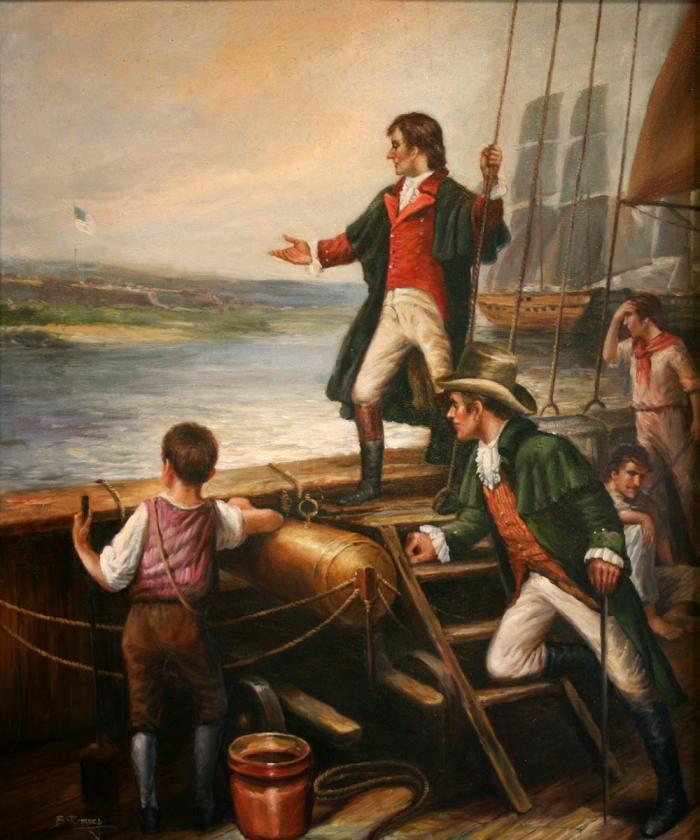
Nearly two decades later, during the War of 1812, it was the sight of the altered flag flying high above battle scarred Fort McHenry that inspired a Maryland lawyer to put his emotions into words.
Aboard the British ship Tonnant to negotiate the release of US prisoners, Francis Scott Key wrote; “O, say does that star spangled banner yet wave. O’er the land of the free and the home of the brave.”
The Island of Monks, Rats, Puffins and Curling Stones

By Ken Zurski
Thanks to a small island just off of mainland Scotland in an area known as the Firth of Clyde, a sport which date backs to the early 19th century continues to prosper. They don’t play the sport there, nor does anyone live there. It’s currently uninhabited by humans. But its resource, Blue Hone Granite is used for making the stones that by sliding and curving on a sheet of ice gives the sport its’ unique name: Curling, as in the curl of a spinning stone.
The 60-million year-old island named Ailsa Craig which in Gallic means “Fairy Rock,” is the plug of an extinct volcano. It’s also known by other less fanciful names like “Cliff of the English.” Monks, castles, chapels, a prison and lighthouses are all part of its lore. In the early 15th century the Ailsa Craig Castle was owned by the monks of Crossraguel Abbey. But lately, it’s known for two things: birds and curling stones.

The island is exclusively a bird sanctuary. Puffins and gannets use Ailsa Craig as a breeding ground. This is fairly recent development and only after an infestation of rats first introduced to the island during shipwrecks, were eradicated in the early 1990’s. Once the rats were gone, the birds came back.
Since 1851, however, the company Kay’s of Scotland, named after its founder Andrew Kay, who established the first curling stone manufacturing business over a hundred years ago, has been harvesting the granite boulders from the island to use in curling stones. Only two places on earth is said to have the Blue Hone or Common Green granite which has a low absorption rate and keeps water from freezing and eroding the stone: Ailsa Craig and the Trefor Granite Quarry in Wales.

Even today, 60-70 percent of all curling stones comes from granite extracted from Alisa Craig. The company says the last harvest of granite from the Island took place in 2013 when 2,000 tons were extracted, sufficient to fill orders until at least 2020.
Recent efforts have been made to reduce the dependency of the centuries old island as the only supplier of the curling stones, but a plastic substitute and a denser granite found in Canada are relatively new developments and not yet widely accepted or used in the sport.
Not yet, at least.
All this is good news for a sport which has seen a popularity surge in the past decade, especially in North America.
After all, before the discovery of granite on Ailsa Craig, stones used for curling were made of whinestone, often basalt, which was cut into a circular shape called “The Cheese” and weighed 70 pounds or more.
The current stone weight is just under 50 pounds.

 UNREMEMBERED