
History
Diseases and Dandelions: Among the Things to Thank Columbus for…
By Ken Zurski
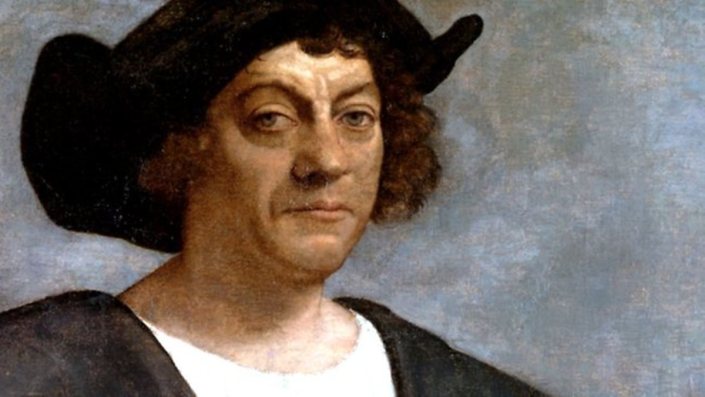
In Jill Lepore’s bold new 900-plus page tome titled “These Truths: A History of the United States,” the essayist and historian begins the incredible journey in the obvious year of 1492 and the discovery of a new land by a man named Christopher Columbus, an Italian-born Portuguese sailor, who was sent by the Spanish king and queen to sail across the Atlantic and spread Christianity, along with more financially rewarding reasons as well.
The name of this new land, Lepore points out was actually given by a German cartographer whose map of the world in four parts included a word, made up, to describe the fourth and newest part: America. But like most historians, Columbus gets credit for finding this new world, soon to be dubbed New Spain, a place where a place was not supposed to be.
Columbus found this new territory well inhabited by natives and resourceful to cultivating. Upon his return back to the homeland, he told the Spanish born Pope who in turn used only his divine powers to grant the land to Spain as if “he were the god of Genesis,” Lepore writes.

Not everyone agreed, but it didn’t matter. Columbus was already planning another trip to conquer and domesticate this New Spain. So in 1493 he led an armada of seventeen ships and 1200 men back to America. This time on board the ships were an abundance of livestock and seeds, enough to start a small farm. It would not be long before the cattle, pigs, sheep and goats multiplied. There was an abundant food supply on this fertile land and no natural predators. “They reproduced in numbers unfathomable in Europe,” reports Leprore. “Cattle population doubled every fifteen months.”
Even more productive, the pigs who were notorious foragers and reproducers quickly outnumbered the cattle. “Within a few years,” Lepore expounds, ” the eight pigs he [Columbus] brought with him had descendants numbering in the thousands.”
Columbus also brought with him seeds of “wheat, chickpeas, melons, onions, radishes, greens, grapevines, and sugar cane.” He also brought diseases, which the European people were mostly immune, but carried unseen. This would wipe out most of the native population who had never been exposed to and therefore had no defense against malaria, influenza, small pox , whopping cough and yellow fever, among others. They died by the “tens of millions,” and those left were usually rounded up and sold as slaves.
And while this conquer, pillage and plunder method by the Spaniards is fiercely debated, and is often roundly criticized, the legacy of Columbus and his men can also be found in many of the plants which dot the country’s landscape. For aboard the transport ships, hidden among the folds of “animal skins, blankets and clods of mud” came a seed, which Lepore points out were “the seeds of plants Europeans considered to be weeds.”
These wild plant seeds were inadvertently distributed in the soil and thanks to the constant moving of dirt by cattle, horses, and human digging and tilling, they spread across the ground like diseases did between the natives.
Bluegrass, daises, and ferns were among them. Thistles and nettles also stayed and thrived.
And one – the mighty dandelion – just never seems to go away.

Ask Your Local Library to Add UNREMEMBERED!
Ask your local library to get it …give the book title and the author. Available on Ingram, Baker & Taylor and Amazon http://a.co/d/iteJoll
Ken Zurski, author of The Wreck of the Columbia and Peoria Stories, provides a fascinating collection of once famous people and events that are now all but forgotten by time. Using a backdrop of schemes and discoveries, adventures and tragedies, Zurski weaves these figures and the events that shaped them into a narrative that reveals history’s many coincidences, connections, and correlations.
We tumble over Niagara Falls in a barrel, soar on the first transcontinental machine-powered flight, and founder aboard a burning steamboat. From an adventurous young woman circumnavigating the globe to a self-absorbed eccentric running for President of the United States, Unremembered brings back these lost stories and souls for a new generation to discover.

John Alcock
Nellie Bly
Isambard K. Brunel
Samuel Cunard
Nathaniel Currier
Annie Edson Taylor
Ruth Elder
William Harnden
Father Louis Hennepin
Dorothy Kilgallen
Samuel Langley
Bobby Leach
John Ledyard
Thomas Moran
Catherine O’Leary
William B. Ogden
Fanny Palmer
Sam Patch
Rembrandt Peale
Cal Rodgers
Amos Root
Janet Scudder
George Francis Train
Cornelius Vanderbilt
Arthur Whitten Brown
John Wise
Victoria Woodhull
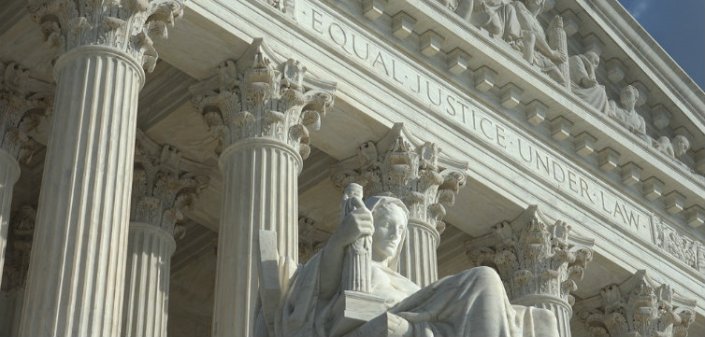
Even From Jail, James Wilson Served on the First Supreme Court
By Ken Zurski

On September 29 1789, President George Washington commissioned James Wilson as an associate judge to the first United States Supreme Court.
The Scottish born Wilson, who immigrated to Philadelphia in 1766, joined five other estimable men also appointed by Washington. Like the others, Wilson was an inspired choice with a formidable record: a founding father, signer of the Declaration of Independence and the Constitution, and a representative of Pennsylvania in the first Continental Congress.
After Washington’s nomination, Wilson was confirmed by the Senate in just two days.
“When I deliver my sentiments from this chair,” Wilson said in a lecture, “they shall be my honest sentiments: when I deliver them from the bench, they shall be nothing more.”

Because the Constitution set the early ground rules of laws, there wasn’t much for the first U.S. Supreme Court to do. In fact during Wilson’s appointment in 1789 and through most of the next decade, only nine cases were heard. Wilson kept busy in the private sector teaching and lecturing at the College of Philadelphia, as that institution’s first professor.
He also spent a couple of stints in prison.
His downfall was bad debts. Thanks to the Panic of 1796-1797, Wilson accrued heavy losses due to bad land deals and was briefly jailed in debtor’s prison, first in Burlington, New Jersey, and then again in North Carolina, where he moved to avoid more creditors.
While serving time, albeit in short stretches, Wilson continued his duties as a Supreme Court justice. This was widely accepted without contention or debate. Inaction of the court was likely the main reason why. Plus, the only established way Wilson could leave his post is by quitting, retirement, sickness or worse. Bad debts and stints in jail apparently weren’t among the criteria needed for removal.
However, less than a year after his short imprisonments, in 1798, Wilson was dead. Following a bout of malaria, Wilson suffered a stroke and never recovered. He was 55.
Of the six original Supreme Court justices, Wilson ended up being the second to serve the longest (Justice William Cushing remained on the Court until 1810) and had become the first to end his term by death.
The Unmistakable Falsetto of Tiny Tim
By Ken Zurski

Herbert Buckingham Khaury didn’t come from a musical family.
His parents, both immigrants, worked in textile factories. But even at an early age Herbert knew he could sing, especially a high falsetto. “It just seemed more natural to me,” he later explained in an interview.
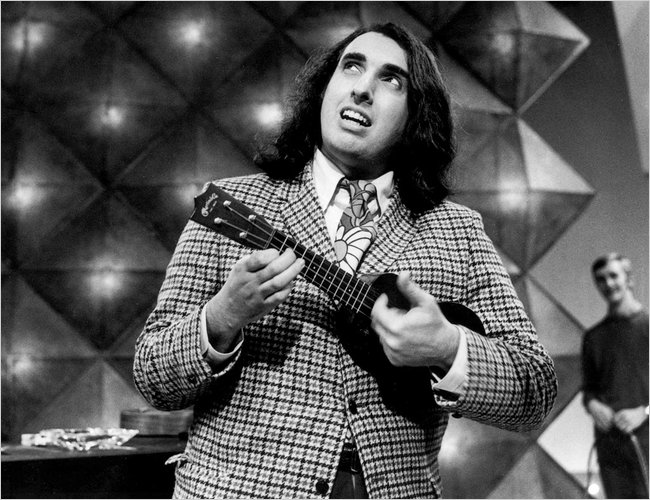
In 1962, Khaury adopted a stage name, Tiny Tim. The moniker stuck after others like Justin Foxglove did not. Tim’s first big break came on the popular TV variety show Laugh-In. Tim sang “On The Goodship Lollipop” while strumming a ukulele. The audience was stunned. It wasn’t just his singing, which was unique enough, but his appearance – long shaggy hair, a beak nose and plaid suit – that shocked.
The performance drew a mixed, mostly negative, response.
It got better.
Tim gained a following as a regular on the Tonight Show. In 1968, his only hit, “Tiptoe Through the Tulips,” a remake of a song from the 1920’s, reached #17 on the pop charts.

His popularity waned In the 70’s, but Tim continued to perform right up to his death in 1996 at the age of 64. After suffering a heart attack earlier that year, Tim refused to follow doctor’s advice to slow down. Several weeks later, while finishing a performance of “Tulips,” he collapsed on stage and never recovered
“The last thing he heard was applause.” his third wife and widow explained. “He went out happy.”

The Era of the ‘Hopped Up’ Race Horse
By Ken Zurski
In 1902, a Standardbred racer named Prince Alert became the first “hobbled” horse to pace a mile in under two-minutes. Today, thanks to advancements in breeding and training. harness horses break that mark every day. However, in Prince Alert’s time, breaking a two-minute mile was a big deal indeed.
Also being “hobbled” didn’t mean that Prince Alert was limp or disabled. It meant he wore hobbles or leather straps on its legs to help maintain a smooth gait.
Prince Alert was considered the ‘Undisputed King of Hobbled Pacers,” but wearing the straps was also a stigma. Other horses were winning big races without “hobbles,” including one of the greatest Dan Patch, who is considered even to this day as the most popular race horse of all time.

That’s because at the turn of the 20th century, harness racing was the country’s most popular sport and Dan Patch was its undisputed star.
Patch captured a nation with his rags to riches story and his uncanny ability to win, a lot, wherever he went and on any number of off-surface tracks. Where Dan Patch went, large crowds followed. Soon, his likeness appeared on everything from cereal to cigar boxes to washing machines. He was, as one writer noted, “the first celebrity endorser.” By default horses that ran against Patch also became news, like Prince Alert, who wore the hobbles, while Patch did not.
But Prince Alert’s legacy is different than Patch’s in this regard:
Prince Alert was a “hop horse.”
In today’s lexicon a “hop horse” or a horse who is “hopped up” means they were deliberately doped to win. Back then, this affirmation didn’t come with the same stigma as it does in today’s era of synthetic performance enhancers. In the early 20th century, “hopping” a horse meant something else entirely. Mainly the use of stimulants like alcohol or caffeine to boost a horse’s confidence or endurance.
In Prince Alert’s case, it wasn’t even a secret. Alert’s trainer Matt Demarest openly acknowledged giving his horse “extra strong coffee and whiskey” to beat the great Dan Patch. “If I thought the horse would be improved by champagne,” he told the Chicago Tribune,” I would see he got it.”
In the end, however, it was Dan Patch who got the last laugh. Not only did he soundly defeat horses like Prince Alert, but the irony in victory was farcical.
Even if the horses were “hopped up” on whiskey, as many apparently were, it was Dan Patch, the horse and the brand, that was featured on the bottle’s label.

Andrew Lloyd Webber Found His First ‘Superstar Jesus’ at a Deep Purple Concert.
By Ken Zurski
As rock n roll trivia goes this one is divine…
It begins when a rock singer named Ian Gillan joined an emerging progressive music group called Deep Purple. Gillan, who to this point was a journeyman vocalist for other bands, had no idea where his rock swagger might take him.
To the very top it would seem.
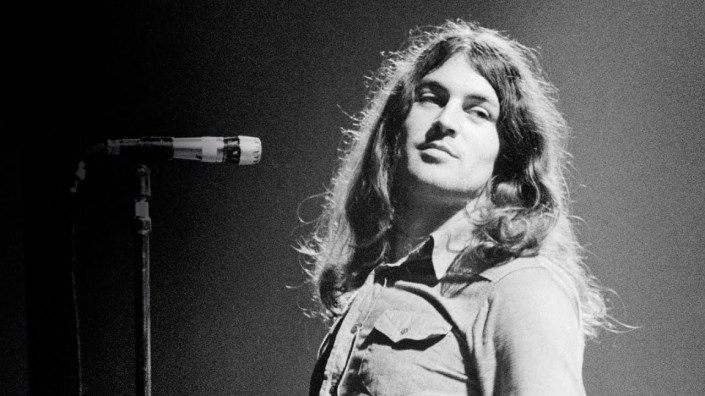
It was the summer of 1969 and Deep Purple was on the charts with the trippy hit “Hush.”
Hush, hush
I thought I heard her calling my name now
Hush, hush
She broke my heart but I love her just the same now
While the single’s success was welcoming, the band members were looking to add a harder edge to their sound and in turn find a more permanent lead singer. Gillan’s vocal range fit right in. The English-born Gillan had fronted a few groups, wrote some songs, but none failed to ignite. The Deep Purple gig was a godsend…literally.
That’s because also paying attention to the band’s progress were a gaggle of theater producers who were looking to put on a musical based on the life and crucifixion of Jesus Christ. They were searching for a singer with a strong vocal range who could handle the demands of the rock tinged, almost heavy metal like passages, in the score. If all went as planned, an album would likely be followed by a theatrical version, and possibly a movie.

The musical’s composer Andrew Lloyd Webber had previously attended a Deep Purple concert (without Gillan) and was unimpressed. Once Gillan was on board, however, Webber gave the band’s manager another call. “The moment I heard Ian’s primal scream was the moment I found my Jesus,” Webber would later remark in his 2018 memoir, Unmasked.
Gillan recorded the album under the watchful eye – and ear, in this case – of Webber and lyricist Tim Rice. Gillan’s version of “Gethsemane” was a highlight for Webber who called the singer’s vocals “extraordinary.”

As a concept album and rock opera “Jesus Christ Superstar” was a huge hit. Gillan was slated for an arena tour and ultimately considered to reprise his studio role on Broadway, but rock n roll intervened. His commitment to Deep Purple came first and in 1973 in casting for the movie version, Gillan who was top on the director’s list, refused the role due to salary demands and conflicts with the band’s touring schedule.
Jeff Fenholt eventually took on the role of Jesus for the first arena tour and Ted Neeley in the movie.
Gillan likely had no regrets about his decision. After a successful stint with the band including several radio singles like “Smoke on the Water” and “Woman from Tokyo,” Gillan left Deep Purple in 1973, later fronted Black Sabbath for spell and eventually returned to Deep Purple in the 90’s.
Gillan would never reprise the role of “Jesus.”
Benjamin Franklin and the Merits of Taking a Bath
By Ken Zurski

As America’s first diplomat in France, Benjamin Franklin thoroughly enjoyed the pleasures of taking a bath, a European luxury. “I have never remembered to have seen my grandfather in better health,” William Temple Franklin wrote to a relative. “The warm bath three times a week have made quite a young man out of him [Franklin was in his 70’s at the time].
Franklin’s desires for a bath may have been influenced more by the pretty French maids who administered it. “His pleasing gaiety makes everybody love him,” his grandson continued in the letter, “especially the ladies, who permit him always to kiss him.”
Regardless of Franklin’s reasons for taking a bath, he couldn’t help but to get clean in the process.
Franklin was certainly onto something and bathroom tubs were soon introduced in America. But it was a task just to own one. Before indoor plumbing, a large tub may have been made of sheet lead and anchored in a box the size of a coffin. Later when tubs became more portable, they were made of canvas and folded; still others were hidden away and pulled down like a Murphy Bed. They were called “bath saucers.”
However, throughout most of the 19th century, popular tub models were heavy and costly and used as much for decoration as for its other intended purpose.
It wasn’t that most people didn’t understand the merits of taking a bath, but it was a chore. Water had to be warmed and transported and would chill quickly; then when finished, it had to be dumped. Oftentimes families would use the same bath water in a pecking order. This surely forced the last in line, usually the youngest, to take a much quicker dip than the first.
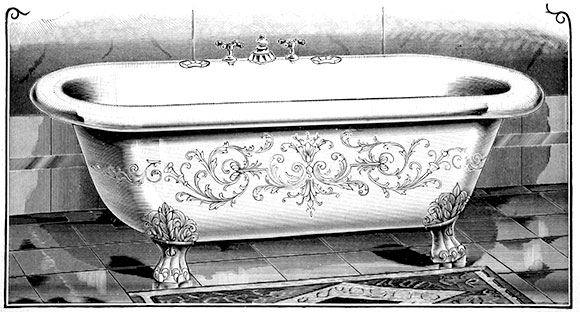
In the later half of the 19th century, as running water became more common, bathtubs became less mobile. Most were still bulky, steel cased and rimmed in cherry or oak. Fancy bronzed iron legs held the tub above the floor.
Ads from the time encouraged consumers to think of the tub as ornamental. “Why shouldn’t the bathtub be part of the architecture of the house?” the ads asked. After all, if there is going to be such a large object in the home, it might as well be aesthetically pleasing.
Getting people to actually use the tub to clean themselves? Now that was another matter.
In Franklin’s case, when a large tub of warm water wasn’t present, he liked to take what he called “air baths” instead. Franklin thought being inside and cooped up in a germ infested, walled, and shuttered space, was the reason he got colds. So to keep from getting sick, Franklin would open the windows and stand completely naked in front of it.
Ventilation was the key to prevention, he explained.
Recognize this Actress? You Might be Surprised.
By Ken Zurski

A veteran of stage and screen, Billie Burke began her Broadway and film acting career in 1906 at the age of 22.
She appeared in numerous stage and screen roles (silent films) and in 1914 married another show business impresario , Florenz “Flo” Ziegfeld Jr, of Zeigfeld Follies fame.
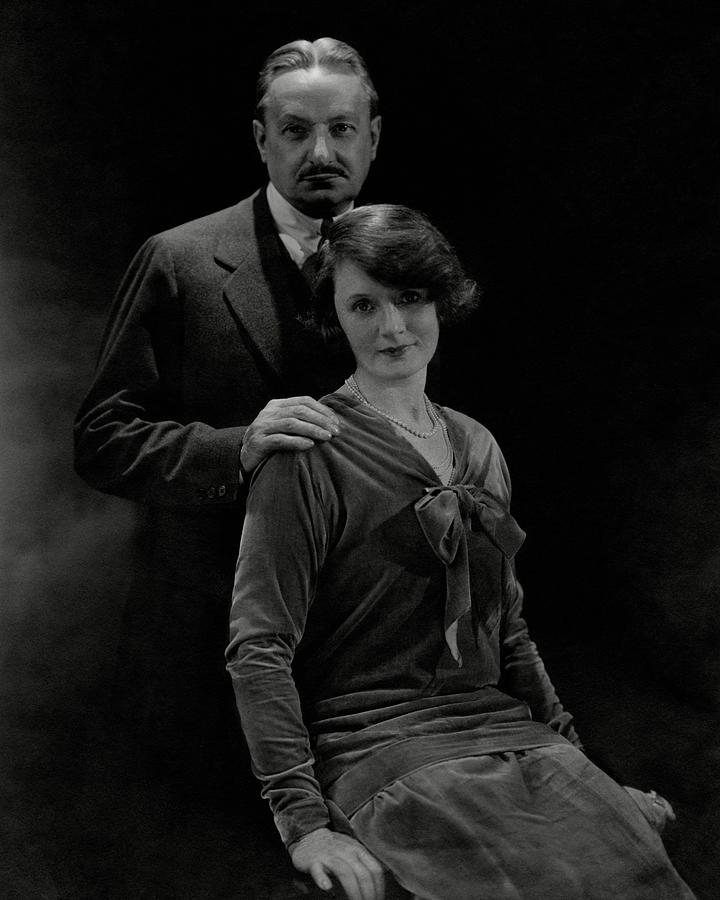
In 1921, Burke retired from performing thanks to a boon in the stock market and good investments.
However, in 1929 after the Black October crash, the money was gone.
Burke went back to work appearing with many top Hollywood heavyweights like Lionel Barrymore whom she co-starred in the most acclaimed and defining role of her career: Millicent Jordan, the “hapless, feather-brained lady with the unmistakably high voice,” in 1933’s “Dinner at Eight.”

Although it wasn’t her last appearance in the movies, in 1939, at the age of 54, Burke played a character for which she is most remembered today…
Glinda the Good Witch of the North in “The Wizard of Oz.”

UNREMEMBERED: Tales of the Nearly Famous and the Not Quite Forgotten
“This is a history book about people and events that were famous once now mostly forgotten. It’s also about how lives connect and intertwine. Using a flowing narrative of multiple themes, I chronicle these fascinating figures in ways that made them instantly popular and reveal good or bad why today they are the stories of the Unremembered” – Ken Zurski, author
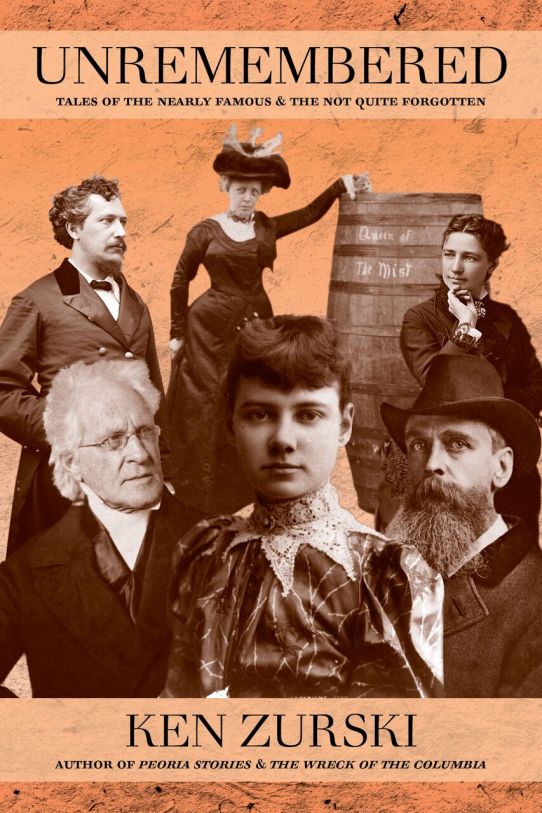
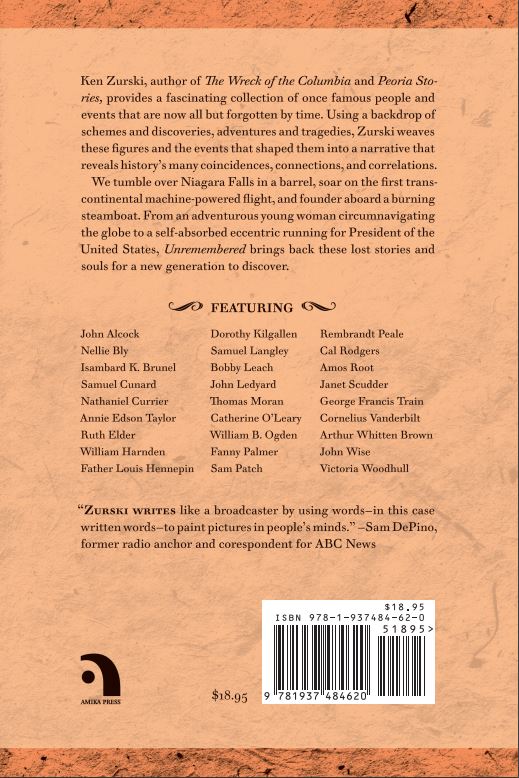
Coming August 2018 from Amika Press
The ‘March King,’ Baseball, and the Fourth of July
By Ken Zurski
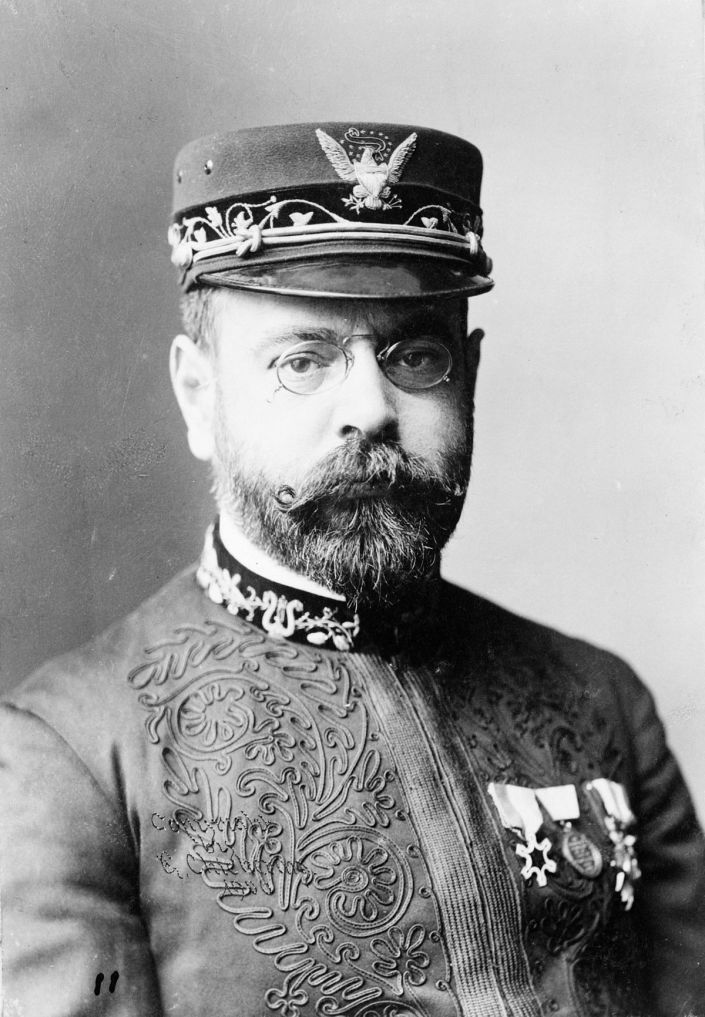
On July 4, 1900, at the newly opened World’s Fair in Paris, France, after another rousing rendition of “The Stars and Striped Forever,”conductor John Philip Sousa and several of his band members donned a baggy pair of trousers, hat and glove and went out to play an exhibition game of baseball.
Sousa. known as the “March King” for his inspiring and mostly patriotic musical marches, was in Europe for an extended concert tour, the first ever for a band its size.
But like music, Sousa also had a passion for baseball.
So he gathered up the band and formed a team.
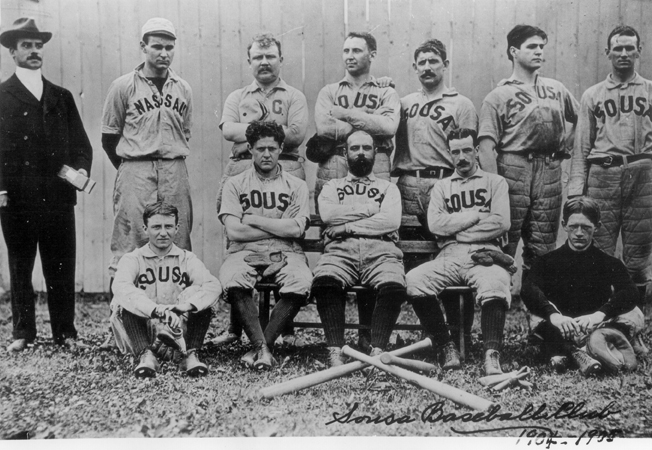
Sousa was said to be an excellent pitcher and started most games on the mound. He threw competitively until his skills waned with age. “If baseball has a drawback,” he once wrote, “it is the early time of life at which the player is forced to retire and give way to younger blood.”
Back home in America, baseball commissioner Kenesaw Mountain Landis took advantage of Sousa’s love for baseball and asked him to compose a march for the 50th anniversary of the National League. In 1925, Sousa delivered with the composition called “The National Game.” He appropriately dedicated the piece to the sport.
However, despite the connection to Sousa, even today the song is not well known or as widely played as other tunes associated with baseball, like “Take Me Out to the Ballgame.”
In fact, sadly Sousa’s baseball march is mostly forgotten.
But it was not a song, but a day, July 4, 1900, that Sousa remembers the most.
That day in Paris, Sousa and the band’s team played “a group of nines” against the American Guards.
“What could have been more appropriate for two American organizations in a foreign land to do on the glorious Fourth?” Sousa proudly proclaimed.
 UNREMEMBERED