
American history
All Hail the Mechanical Pencil and its Lasting Legacy

By Ken Zurski
In 1822 the first patent for a lead pencil that needed no sharpening was granted to two British men, Sampson Mordan and Isaac Hawkins. A silversmith by trade, Mordan eventually bought out his partner and manufactured the new pencils which were made of silver and used a mechanism that continuously propelled the lead forward with each use. When the lead ran out, it was easily replaced.

While Mordan may have marketed and sold the product as his own, the idea for a mechanical pencil was not a new one. In fact, its roots date back to the late 18th century when a refillable-type pencil was used by sailors on the HMS Pandora, a Royal Navy ship that sank on the outer Great Barrier Reef and whose artifacts, including the predated writing utensil, were found in its wreckage.
Mordan’s design notwithstanding, between 1822 and 1874, nearly 160 patents for mechanical pencils were submitted that included the first spring and twist feeds.
Then in 1915, a 21-year old factory worker from Japan named Hayakawa Tokuji designed a more practical housing made of metal and called it the “Ever-Ready Sharp.”
Simultaneously in America, Charles Keeran, an Illinois businessman and inventor, created his own ratcheted-based pencil he similarly called Eversharp.

Keeran claimed individuality and test marketed his product in department stores before submitting a patent. The pencil was so popular that Keeran had trouble keeping up with orders. So to help with production, he partnered with the Wahl Machine company out of Chicago. It was not a good fit. Keeran lost most of his stock holdings in a bad deal and was eventually forced out even though his pencils were making millions annually in sales.
“Built for hard work. Put it on your working force. With no wasteful whittling, no loss of time, it is positive economy,” the ads for the Wahl Eversharp touted. “It’s made with the precision of a wrench.”

Around the same time, in Japan, Tokuji’s factory was leveled by an earthquake.
Tokuji lost nearly everything in the disaster including some members of his family. So to start anew and settle debts he sold the business, began making radios instead, and founded a company that turned into one of the largest manufacturers of electronic equipment in the world.
He named it Sharp after the pencils.

The Men Behind the Central American Fruit War and the Birth of the ‘Banana Republic’
By Ken Zurski
 In Douglas Preston’s book The Lost City of the Monkey God, the true tale of a modern day exploration to find an ancient city deep in the Honduran rainforest, the author presents a compelling history of the troubled Central American republic right down to its most exotic, and at one time, most corrupt export.
Bananas.
Of course, narcotics and drug smuggling would soon take over as Honduras’ most nefarious trade and it’s why today many foreigners are warned not to travel there. Preston and his team took the risk anyway. There was a mysterious and lost city to find and poisonous snakes, diseased mosquitoes and dangerous drug cartels were all part of the adventure.
Preston’s fast paced and informative book is the reward. It’s a fun read. But as the author points out, there was a precursor to the problems in Honduras which began in the late 19th century and was just as heated, and in retrospect, just as cutthroat as the drug trade today.
And it starts with two American fruit sellers.

In 1885, a man named Andrew Preston (a distant cousin of the author), was a Boston entrepreneur who co-founded the Boston Fruit Company. His plan was simple: revolutionize the banana market by using fast steamships to move the perishable fruit quickly back to the U.S. before they spoiled. Until then bananas were rarely transported to the Eastern seaboard because sailing ships could not move them fast enough. Preston’s speedy steamers did the trick. Bananas soon became one of the most popular delicacies in America.
Preston bought 40 acres of plantation land in Honduras, and the Boston Fruit company became the larger United Fruit Company. “United Fruit and the other fruit companies that soon followed became infamous for their political and tax machinations, engineered crops, bribery and exploitation of workers,” the author Preston writes in his book.
But that’s not all. Another American named Samuel Zemurray would enter the fray. Zemurray was a Russian immigrant who worked as pushcart peddler in Alabama. As a teenager, Zemurray traveled to Boston and watched as Preston’s banana ships arrived. He noticed crews throwing out large batches of bananas that were beginning to ripen. So Zemurray gathered them up at no cost of his own, threw them on a railroad car, and announced to grocers along the line that he had bananas to sell far less than the shipper’s price. He quickly bankrolled over 100,000 dollars, bought five thousand acres of banana groves in Honduras and opened up his own fruit shipping business named the Cuyamel Fruit Company. For a time, everything was going swimmingly for Zemurray in Honduras. Then politics got in the way.
Honduras and its people were struggling economically and the government sought financial help. The British banks loaned the republic millions of dollars that they soon found out could not be paid back. The Brits threatened military action to collect it, but the President of the Untied States at the time, William Howard Taft, would hear none of it. He ordered his Secretary of State, Philander Knox, to recruit financier J.P Morgan and buy up the loan at fifteen cents on the dollar. Morgan struck a deal with the Honduran government to occupy its customs offices and collect all the tax receipts to pay off the debt.
Zemurray was hit hard. The crafty exporter known to locals as “Sam the Banana Man” had worked out a favorable tax-free deal with Honduran officials and Morgan’s “penny a pound” tax would surely put him out of business. But Zemurray would not go without a fight. He went directly to D.C. and straight to Knox’s office to protest. Knox nearly kicked him out the door. Pay up and do what’s right for your country, Knox implied. When an angry Zemurray left, Knox put a secret security tail on him just in case he tried to do something foolish.
Zemurray was done dealing with his own government. Instead, he went to the deposed former president of Honduras, Manuel Bonilla, who was flat broke and living in New Orleans. Apparently dodging Knox’s security detail, Zemauury met Bonilla and convinced him to lead a path back to power, led by support from Hondurans who thought Morgan’s tax plan would threaten their sovereignty. It worked. Under pressure from the Honduran people, the current president resigned and Bonilla was reelected president. He immediately awarded Zemurray with a plum 25-year tax free concession, a $500,000 loan and nearly 25,000 prime acres of coastline land. The American got his tax break back and all the credit for the coup. As Preston writes: ” He had outmaneuvered Knox, successfully defied the US government, poked J.P Morgan in the eye, and ended up a much wealthier man.”
According to Preston, this would be that start of a long and contentious relationship involving banana companies in America and the government of Honduras. Soon the country would earn the nickname “Banana Republic, a term first introduced by writer, O’ Henry in 1904, in his fictional novel Cabbages and Kings, describing an imaginary country, Anchuria, as a “small, maritime banana republic,” meaning a country reliant on one crop, usually in a dominate or corrupt way. Today, the term is cavalierly used and represents countries with more politically shrewd intentions than just selling fruit, but the point is made.
In the book, before author Preston and his team sets out to find the “Lost City of the Monkey God,” (hence the title), he wraps up Andrew Preston and Samuel Zemurray’s story.

Faced with a price war on bananas, Andrew Preston’s United Fruit, eventually bought out Zemurray’s Cuyamel Fruit Company paying him $31 million in U.S. dollars. Trouble followed. Preston died in 1924 and the Great Depression hit. The stock declined and the company went into disarray. Zemuarry saw a chance to get back in. He convinced enough United shareholders to vote by proxy and put him in charge. He fired all of Preston’s board members, gained control of the struggling company and brought it back to respectability. Later, he gave up the business, and using his own fortune funded numerous humanitarian causes in Honduras – all for the better.
But as Preston points out, as colorful as the history of Zemurray and others in this saga was, and long before the drug runners came nearly century later, “the fruit companies left a dark colonist legacy that has hung like a miasma over Honduras ever since.”
And its due in part to America’s insatiable appetite for bananas and the men who sold them.

When Soap Was Taxed, Bathing Was Optional, and Dying Was Too Expensive

By Ken Zurski
Beginning in 1712 and continuing for nearly 150 years, the British monarchy used soap to raise revenue, specifically by taxing the luxury item. See, at the time, using soap to clean up was considered a vain gesture and available only to the very wealthy. The tax, of course, was on the production of soap and not the participation. But because of the high levy’s imposed, most of the soap makers left the country hoping to find more acceptance and less taxes in the new American colonies.
Cleanliness was not the issue, although it never really was. Soap itself had been around for ages and used for a variety of reasons not necessarily associated with good hygiene. The Gauls, for example, dating back to the 5th Century B.C., made a variation of soap from goat’s tallow and beech ashes. They used it to shiny up their hair, like a pomade.
Even before soap was introduced, rather ingenious ways of cleaning oneself emerged. The Hittites in the 16th century washed their hands with plant ashes dissolved in water. And the Greeks and Romans, who never used soap, would soak in hot baths then beat their bodies with twigs or use an instrument called a strigil, basically a scrapper with a blade, that would scrape away sweat and dirt of the body, similar to what a razor does with hair stubble.
So when actual soap was introduced in the late Middle Ages it had always been considered exclusively for the privileged. Therefore, later when it was mass produced, the British imposed hefty taxes on it as did many other luxury items, like wallpaper, windows and playing cards.
Thank goodness in centuries to follow some common sense emerged.
Or did it.
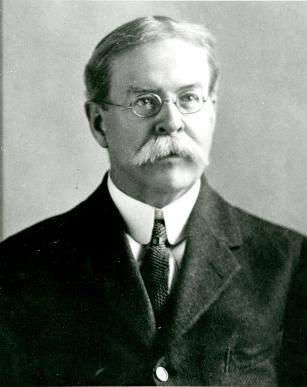
In 1902, psychologist and chemist, William Thomas Sedgwick released a book titled Principles of Sanitary Science and Public Heath which was a compilation of lectures he gave as a professor of biological sciences at MIT.
In it, Sedgwick extolled the virtues of good personal hygiene to keep infectious diseases away. “The absence of dirt,” he urged with conviction, “is not merely an aesthetic adornment.”
Basically, he was telling everyone to take a bath.
It wasn’t that most people didn’t understand the merits of taking a bath, but it was a chore. Water had to be warmed and transported and would chill quickly. Oftentimes families would use the same water in a pecking order that surely forced the last in line to take a much quicker one than the first. When the baths were over the water had to be lugged outside and dumped.
In the later half of the 19th century, as running water became more widespread, bathtubs became less mobile. Most were still bulky, steel cased and rimmed in cherry or oak. Fancy bronzed iron legs held the tub above the floor.

Ads from the time encouraged consumers to think of the tub as something other than just a cleaning vessel. “Why shouldn’t the bathtub be part of the architecture of the house?” the ads asked. After all, if there is going to be such a large object in the home, it might as well be aesthetically pleasing.
Getting people to actually use it, however, that was another matter.
Sedgwick had medical reasons to back up his claims. As an epidemiologist, he studied diseases caused by poor drinking water and inferior sanitation practices. Good scientific research, he implied, should be all the proof needed. But attitudes and decades old habits needed to be amended too. “It follows as a matter of principle,” Sedgwick wrote, “that personal cleanliness is more important than public cleanliness.” He had a point. Largely populated cities were dirty messes, full of billowing black smoke from factories, coal dust, and discarded garbage and waste. Affixing blame for such conditions was more popular than actually doing something about it. Sedgwick focused on self-awareness to make his point. “A clean body is more important than a clean street,” he stressed.”Sanitation alone cannot hope to effect these changes. They must come from scientific hygiene carefully applied throughout long generations.”
People, it seemed, had to literally be frightened into washing up.
Something Sedgwick understood, but fought to change.
“Cleanness,” he wrote in his book, ”was an acquired taste.”
By this time, soap was being widely used, relatively inexpensive, and no longer taxed in Great Britain. William Ewart Gladstone, the Prime Minister at the time, finally put an end to the soap tax in 1853, nearly a century and a half after it was imposed. In doing so, however, he faced a substantial revenue loss. So to make up for this financial scourge he introduced death duties, basically a tax on the widow of a dead spouse. “This woman by the death of her husband became absolutely penniless,” announced the Common Cause, citing a recurring example.
With that, Gladstone might have argued that using soap might actually help your cause.

(Sources: How Did It Begin? The Origins of Our Curious Customs and Superstitions by Dr. R. & L. Brasch; various internet sites)
Abraham Lincoln’s Eldest Son Has a Sea Named After Him

By Ken Zurski
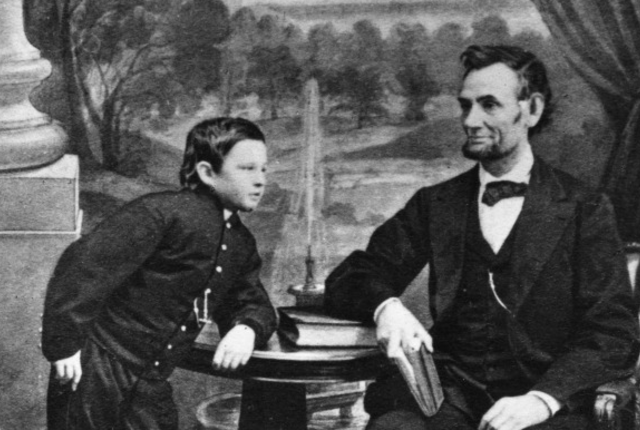
Robert Todd Lincoln, President Abraham Lincoln’s first son, outlived his father by 26 years. He also lived 19 years more than his mother, who died at the age of 63. As for his three younger brothers, tragically, they all died young, including the Lincoln’s third son, Willie, who succumbed to illness in the White House at the age of 11. Robert was a teenager at the time of Willie’s death. And yet, despite being the only Lincoln child to live to an old age, Robert’s adult life is understandably overshadowed by the legacy of his father.
But Robert Todd Lincoln lived a fascinating life of nearly 83 years. A life filled with military service, politics, great wealth and something he and not his famous father can claim: a sea named after him.
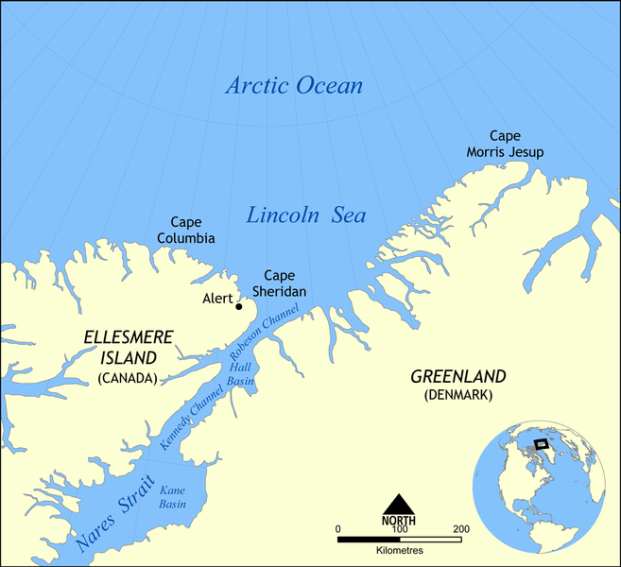
The 25-thousand square miles of the the Lincoln Sea encompasses a location between the Arctic Ocean and the channel of the Nares Strait between the northernmost Qikiqtaaluk region of Canada and Greenland. Scientists today will point out its geographical and oceanic importance, like most seas, but not much more.

It’s desolate, extreme, and doesn’t bear resemblance to a conventional sea at all. It’s almost completely covered with ice. Due to its year-round ice cover, not many have seen the Lincoln Sea up close, or make a point to visit. The nearest town in Nunavut Canada is so remote it is almost always uninhabited and appropriately named Alert, just in case someone may stumble upon it.
When most people find out there is a sea named Lincoln their immediate instinct is to conclude that it is in honor of the 16th president.
But it’s not.
Here’s why.
In 1881, Robert Todd Lincoln was President James Garfield’s Secretary of War when explorer and fellow soldier Lieutenant Adolphus Greely took a polar expedition financed by the government to collect astronomical and meteorological data in the high Canadian Arctic. A noted astronomer named Edward Israel was part of Greely’s crew. Secretary Lincoln reluctantly approved the risky venture.
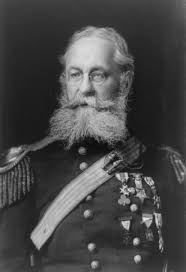
The Lady Franklin Bay Expedition, as it was called, was mostly smooth sailing at first followed by a harrowing and deadly outcome. After discovering many uncharted miles along the northwest coast of Greenland including a new mountain range they named Conger Range, Lt. Greely and the crew of the Proteus were forced to abandon several relief sites due to lack of supplies. They retreated to Cape Sabine where they hunkered down for the winter with limited food rations.
Months later, in July of 1884, nearly three years after the expedition began, a rescue ship Bear finally reached the encamped crew. It was a sobering sight. In all, 19 of the 25-man crew, including Israel had perished in the harsh conditions.
Greely survived.

Even within his own department, Lincoln was criticized for not dispatching a second relief ship (the first one failed to make it through the ice). He rebuked the claims and defended his own actions by basing the decision on information provided to him by others. “Hazarding more lives,” as he put it, was not an option. Greely also blamed Secretary Lincoln for his crew’s fate.
But that was all. Most people understood how dangerous the mission was and Lincoln outlasted the backlash. He issued a court-martial for an outspoken War Department official named William Hazen, and gave Greely a pass, although the Lieutenant’s comments irritated him.
The naming of the Lincoln Sea was a bonus for the Secretary, of course. Although it’s easy to understand why Greely – if in fact he personally named the sea after his military boss – was motivated to do so, especially as the expedition was going well, his actions after the disastrous mission would suggest otherwise. No record exists as to whether Lincoln was flattered by the attribution.
The naming itself is odd. Since President Abraham Lincoln had hundreds of cities, institutions and streets named after him, including the town of Lincoln in Illinois, which was named for Lincoln, the lawyer, before he even became president, you would think the sea distinction would be more identifiable. Perhaps the Robert T. Lincoln Sea would have been more appropriate. But that’s not the case. It’s the Lincoln Sea, plain and simple, on maps and atlases and in literature. So the confusion with the President is understandable.
Robert Todd Lincoln continued to serve as Secretary of War after Garfield’s assassination and through successor Chester Arthur’s presidential term. Under Benjamin Harrison, he served a short stint as U.S minster to the United Kingdom and eventually left public service. In 1893, Lincoln invested in the popular Pullman rail cars, made a fortune, and lived comfortably for the remaining years of his life. He died on July 26, 1926, just six days shy of his 83rd birthday.
And whether he liked it or not, the ice-covered and relatively unknown Lincoln Sea, is a part of Robert Todd Lincoln’s legacy.
Not his father’s.
Canned Heat’s Unique Christmas Single with The Chipmunks
By Ken Zurski
In 1968, the LA based boogie/blues band Canned Heat released a Christmas single, The Chipmunk Song, which paired the band with their Liberty Records label mates, the animated – literally – and very fictional group of singing rodents called the Chipmunks.
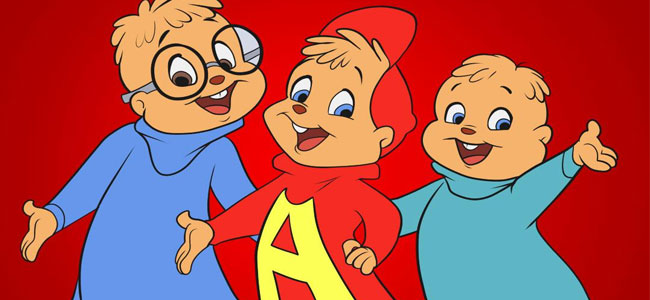
Canned Heat’s version of “The Chipmunk Song (Christmas Don’t Be Late)” wasn’t exactly the same as the Chipmunks’ similarly titled chart-topper in 1958. It was a bluesy number containing humorous dialogue between Canned Heat singer Bob Hite and the voices of the Chipmunks: Simon, Theodore and Alvin, who were all named after record executives at Liberty.
The song was released the year before Canned Heat was asked to appear at a massive music festival in southeastern New York where the band covered Sam Cooke’s “A Change is Gonna Come” and performed their harmonica infused hit “On The Road Again” as an encore.
“On the Road Again” became the unofficial theme of the 1970 documentary movie “Woodstock.”

The Chipmunk Song’s first appearance on a Canned Heat album was in 2005. It was added as a bonus track to the reissue of the band’s second album “Boogie with Canned Heat.” By that time the Chipmunks had received iconic pop culture status and their 1958 version of The Christmas Song (Christmas Don’t Be Late) was already a holiday season staple:
Christmas, Christmas time is near
Time for toys and time for cheer
We’ve been good, but we can’t last
Hurry Christmas, hurry fast
Canned Heat’s version of the song would appear again on the group’s “Christmas Album” released in 2007. The album would feature the Chipmunks cover, along with a few originals and other holiday staples like Jingle Bells and Santa Claus is Coming to Town.
Typical of the boozy, drug-filled lifestyle of the 60’s & 70’s, Canned Heat would go through various lineup changes and tragic circumstances throughout the years. In 1981 after a show at the Palomino Club in Hollywood, lead singer Bob Hite died from an apparent heroin overdose.
In 2000, the band’s producer and drummer Fito de la Parra wrote a revealing tell-all book titled Living the Blues: Canned Heat’s Story of Music, Drugs, Death, Sex and Survival. In it, Parra covers a lot of heavy themes, including the death of Hite, but nothing about the Chipmunks or the song.
However, a biographer on Canned Heat’s official website calls the song an “incongruous move” in the band’s history.
Decide for yourself:
(Source: www.cannedheatmusic.com)
‘Is There a Santa Claus?’: History’s Most Enduring Christmas Related Editorial Was Published in September.
By Ken Zurski

As brothers growing up in Rochester, New York, William and Francis Church were raised in a strict but loving household. Their father, Pharcellus Church, was a newspaper publisher and Baptist minister. He demanded nothing but the best from his boys, who in return, each earned a college degree and joined their father in the newspaper business.
In 1862, however, at the onset of the Civil War, the two brothers followed separate paths. William resigned his post at the New York Times to become a full-time soldier while Francis continued on as a civilian war correspondent.
William earned the rank of Lieutenant Colonel, but left after a year. His superior at the time, General Silas Casey, suggested he start up a newspaper and devote it strictly to the war. William liked the idea so he mustered out and asked his brother to join him. Together they published The Army and Navy Journal and Gazette of the Regular and Volunteer Forces, a weekly filled with articles on everyday applications of the war, soldier’s viewpoints, and a critical eye.
“There is not a shadow of a doubt that Fort Sumter lies a heap of ruins,” the first sentence of the first volume read on August 29, 1863.

While the two brothers continued to edit the Journal, and eventually collaborated on a monthly literary magazine, The Galaxy, their legacies are vastly different.
William would go on to become the founder and first president of the National Rifle Association (NRA), while Francis became posthumously known for an editorial he wrote in response to a little girl’s inquisitive letter and inquiry. “I am 8 years old…,” the letter began and ended with an ages old question, “Please tell me the truth. Is there a Santa Claus?”
It was signed: Virginia O’Hanlon 115 W. 95th Street

The editorial appeared without a byline and was buried deep in New York’s The Sun on September 21, 1897.
Only after Francis’ death in 1906 was it revealed that the former war correspondent penned the famous line:
“Yes Virginia, there is a Santa Claus.”

Father Marquette Mentioned a Parrot Among Other Strange Birds in Illinois
By Ken Zurski
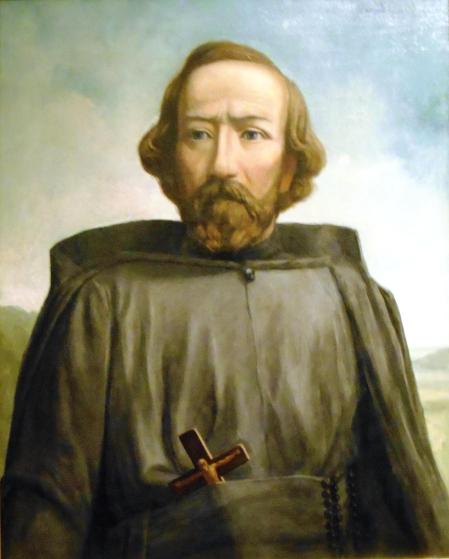
In 1674, while exploring the Illinois River for the first time, French Jesuit missionary Father Jacques Marquette wrote in his journal: “We have seen nothing like this river that we enter, as regards its fertility of soil, its prairies and woods; its cattle, elk, deer, wildcats, bustards, swans, ducks, parroquets, and even beaver.”
Certainly the reference to parroquets, or perroquets, (French for parrot) raises some eyebrows. But a species called the Carolina Parrot, now extinct, did inhabit portions of North America, as far north as the Great Lakes, as early as the 16th century.
More puzzling, however, is the mention of the bustard.
Even the Illinois State Museum in the state’s capitol of Springfield questions this unusual reference.
“What is a Bustard?” the Museum sign asks in an exhibit showcasing birds native to Illinois, then answers: “We’re not sure.”
Of course, the bustard is a real bird. In Europe and Central Asia it is more commonly known. In North America? It just doesn’t exist. But did it at one time? According to the Museum’s notes, several French explorers described bustards as being common game birds of Illinois and said they resembled “large ducks.”
Large indeed.
A Great Bustard can stand 2 to 3 feet in height and weigh up to 30 pounds making it one of the heaviest living animals able to fly. Its one distinctive feature, besides its size, is the gray whiskers that sprouts from its beak in the winter.

Father Marquette was more a man of the cloth than a scientist. His mission was to preach to the Illinois Indians or “savages” as he calls them. Along the way, however, he described the scenery and game in detail. The “bustard” comes up quite often in his journal. He even refers to hunting them, possibly eating them too. “Bustards and ducks pass continually,” he wrote.
Perhaps, as some suggest, Marquette was describing a common wild turkey. His recollections seem to imply they were airborne, which wild turkeys can do, despite the myth that they cannot fly (the “fattened” farm turkey – the one we use for Thanksgiving – does not fly).
The Illinois State Museum goes even further by speculating that the bird Marquette was referencing was not a bustard at all, but the Canada Goose which is similar in size and appearance to the Great Bustard.
But, as the Museum concedes, even that is “open to question.”.

For Roosevelt’s ‘Rough Riders,’ Nothing Beats a Good Smoke
By Ken Zurski

Colonel Theodore Roosevelt didn’t care much for smoking tobacco which is unusual since almost all the men under his command swore allegiance to it. Pipes, cigars, cigarettes or chewing tobacco, didn’t matter as long as they had it. And if they didn’t have it, well now that was a problem too.
The men in reference here are the “Rough Riders,” and thanks to a new book by American West historian Mark Lee Gardner titled Rough Riders: Teddy Roosevelt , His Cowboy Regiment, and the Immortal Charge Up San Juan Hill, a broader picture emerges of these men who in the summer of 1898 famously followed their fearless, toothy-grinned, bespectacled leader to Cuba to fight in the Spanish-American War.
One thing that stands out, besides the lack of war experience at first, was their love of a good smoke.
Gardner cites the writings of war correspondent Richard Harding Davis of the New York Herald. Davis had turned down a commissioned offer to serve, a privilege, since Roosevelt’s diverse group included career men, Ivy League graduates, and experienced horse riders, or the so-called “cowboys” from the west. Most men volunteered but it was more like a contest than an enlistment; not everyone who signed up got to go. Davis had the chance to fight, but chose to write about the war instead. This however tormented him so that during the engagements he carried a sidearm “just in case.” And when the situation presented itself, Gardner relates, “[Davis] borrowed a Krag (revolver) and joined in the final charge.”
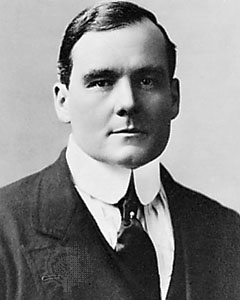
Davis’ most important job, however, was to tell the story and Roosevelt gave journalists, especially his friends, full access. Later detailing every aspect of battlefield life from a soldier’s perspective, Davis described one thing that seemed to be the biggest morale booster of all: tobacco. “With a pipe the soldier can kill hunger, he can forget that he is wet and exhausted and sick with the heat, he can steady his nerves against the roof of bullets when they pass continually overhead,” Davis wrote.
Gardner points out that there were four agonizing days when no tobacco was in the camp. Likely replacement supplies hadn’t arrived yet from the Cuban port city Siboney where American forces came ashore and supply ships were docked. By this point, the men were hopelessly addicted and each day without tobacco was another day of torture. “They got headaches, became nervous, and couldn’t sleep.” Gardner writes.

Tobacco, however, was not a ration. The men had to pay for the privilege. When a shipment arrived there was “as much excitement in the ranks as when they had charged the San Juan trenches,” Gardner notes. When it seemed like some men would have to do without, one of the Ivy Leaguer’s would step in and offer to pay for the lot, about 85 dollars total, to keep others from suffering.
Smoking helped relieve tension too. When Captain Buckey O’Neill, an experienced frontier lawman from Arizona, noticed some uneasiness in the troops, he calmly walked in front of the crouching men smoking a cigarette. Despite their admiration for such courage, O’Neill, who was hoping to settle the men’s fears by example, was tempting his own fate. “Captain, a bullet is going to hit you” the men shouted from the trenches. O’Neill took a long draw of smoke. “The Spanish bullet isn’t made that will kill me,” he boldly proclaimed. Shortly after, a sharp crack was heard. “Like the snapping of a twig,” Gardner described. It was O’Neill’s teeth breaking. A bullet had entered his mouth and traveled through his head, killing him instantly.
“He never even moaned,” a trooper noted.
Most soldiers though had the good sense to wait until the battle was over before lighting up. It was during this downtime – the time in between the bloody skirmishes – that the cravings hit the hardest.
Even Davis in a letter to his father admitted that smoking was an important diversion and one he personally endorsed. “I have to confess that I never knew how well off I was until I got to smoking Durham tobacco,” he wrote.“And I’ve only got a half bag left.”
Some soldiers were so desperate, Davis noted, that they made their own tobacco out of “grass, roots, tea and dried horse droppings.”
Davis graciously doesn’t expound on how that might have tasted.

Betsy Ross? For a Long Time No One Knew. Then Her Grandson Told a Story
By Ken Zurski

In 1752, in Philadelphia on New Year’s Day, Elizabeth Griscom was born to a strict Quaker family who emigrated to the United States from England in the late 17th century. A free spirit in her twenties, Elizabeth ran off and met John Ross an upholsterer’s apprentice and an Episcopalian. Her parents forbade the union outside the Quaker faith, but Elizabeth didn’t care. She married John in a ceremony that took place in a tavern and formally became Elizabeth Ross or “Betsy,” for short.
Today, Betsy Ross is certainly name we recognize.
So much so that in contemporary surveys, many people acknowledge the name Betsy Ross more than interminable historical stalwarts like Benjamin Franklin or Christopher Columbus. However, until her name became synonymous with America’s symbol of freedom, Betsy Ross was a sister, a mother, a widow (three times over), a seamstress, and by the time the rest of the country got to know her – dead for nearly 50 years.
If there was something special about her life, a slice of American folklore, perhaps, she told her family and no one else.
In 1870, however, that would change.
That year, Ross’s last surviving grandson William Canby went before the Historical Society in Philadelphia and told an amazing story about General George Washington, his grandmother and the birth of the American Flag.

According to Canby, Washington had visited Ross’s upholstery shop in Philadelphia with a sketch idea for a unified flag and asked if Betsy could recreate it. “With her usual modesty and self-reliance,” Canby related, “she did not know, but said she could try.”
Canby says among other revisions, Betsy suggested that the stars be five-pointed rather than six as Washington had proposed (Washington thought the six-pointed star would be easier to replicate). The story was as revealing as it was skeptical. No one had heard of Betsy Ross and previous stories of the first flag was apocryphal at best. There were many nonbelievers and even today historians have doubts. There are no records to support Canby’s claim, they insist, even though Canby had signed affidavits to back up his story.
At the time of Washington’s proposed visit in 1777, Ross would have been in her 20’s. Her life was typical for a young women at the time. She endured two marriages that ended tragically (her first and second husband’s death were both attributed to war.) A third marriage produced five children. She passed away in 1836 at the age of 84. There is no documentation that she publicly promoted her own role in making of the flag – or was even asked. Apparently only her family knew.
Nearly a century later, however, in the midst of the Reconstruction period, a changing nation embraced Canby’s story of his grandmother and Ross became the face of America’s first flag. The early flag became affectionately known as “The Betsy Ross Flag,” and trinkets of the thirteen stars and stripes were a big seller.
Even hardened critics, who claim many seamstresses may have played a role in the flag’s creation are willing to concede, for history’s sake at least, that one name gets credit for the five-pointed stars.
Betsy Ross.

Elbridge Gerry, the Blue Bottle Fly, and the Shaping of the Constitution

By Ken Zurski
Massachusetts statesman Elbridge Gerry was of the cantankerous and crafty sort. He typically came late to engagements and was usually the first to tell the host that he had finally arrived. This is the mark he made on the Constitutional Convention in May of 1787 at Independence Hall in Philadelphia during the drafting of the nation’s first constitution.
Actually he made no physical mark on the Constitution, refusing to sign the document and disagreeing with most of the other 40-plus delegates on how much power to give the government in relation to its people. Gerry had signed the Declaration of Independence and Articles of Confederation, but the Constitution was different. There were too many variables and not enough unity, he argued. “If we do not come to some agreement among ourselves. “Gerry maintained, “some foreign sword will probably do it for us.”
In September, after the final draft of the Constitution was reached, Gerry along with two others, Edmund Randolph and George Mason, all agreed the document needed to protect the rights of people of whom whose basic freedoms should be added. Freedoms similar to the one Mason, the governor of Virginia, had drafted in his home state.
Therefore, they argued, it was incomplete.

Mason urged the framers, now drafters, to stay on as long as needed to finish the task. Gerry seconded the motion. The answer from all the other delegates, however, was a resounding, “No.”
Whether or not any of the other participants agreed such rights were necessary wasn’t the point. Most had been away from their wives and families for months and were ready to leave. In addition, they were weakened by the heat and humidity and disgusted by the cramped sleeping quarters of two to four men per room which during a severe infestation of the blue bottle fly kept the windows shut and the smells in.
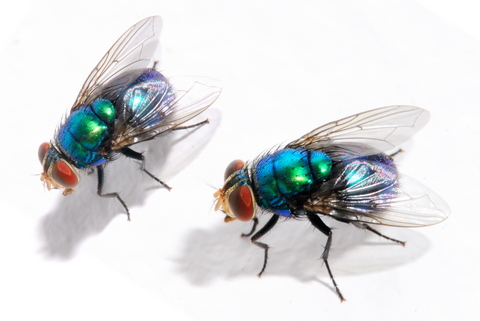
Frankly, they were just plain sick of fly’s, the heat, and each other.
Many nearly walked out a month before in August, but trudged on to complete the task. But staying longer? That was not an option for those who actually signed the document. They went home.
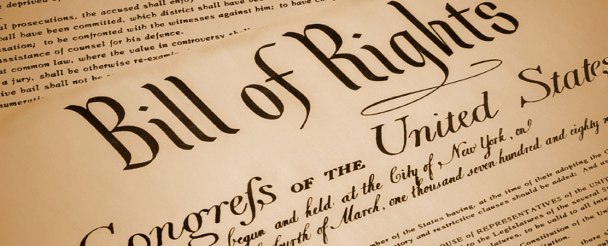
Several years later, James Madison’s proposal of twelve amendments was approved by Congress.
It was appropriately titled the Bill of Rights.
 UNREMEMBERED