
The True Spirit of Christmas in A Charlie Brown Christmas

By Ken Zurski
When “A Charlie Brown Christmas” was produced for television in 1965, Peanuts creator Charles Schulz had one specific, but important directive: That the program be about something.
Namely, he insisted, it be about the true spirit of Christmas. Otherwise, he said, “Why bother?
Of course, as we know now, Schulz had his way. Mostly lighthearted and inspirational, “A Charlie Brown Christmas” is punctuated by its infectious original music, a catchy song, and the now iconic symbol of recognition and hopefulness: a seemingly lifeless little tree.
The highlight of the special , however, is a moving scene in which the Linus character, blanket in hand, stands on a spotlighted stage and explains the true meaning of Christmas. It includes a biblical passage from the Book of Luke.
Specifically, Luke 2: 8-14.
Linus recites:
And there were in the same country shepherds abiding in the field, keeping watch over their flock by night. And, lo, the angel of the Lord came upon them, and the glory of the Lord shone round about them: and they were sore afraid. And the angel said unto them, Fear not: for, behold, I bring you good tidings of great joy, which shall be to all people. For unto you is born this day in the city of David a Savior, which is Christ the Lord. And this [shall be] a sign unto you; Ye shall find the babe wrapped in swaddling clothes, lying in a manger. And suddenly there was with the angel a multitude of the heavenly host praising God, and saying, Glory to God in the highest, and on earth peace, good will toward men.
When he is finished with that last line, Linus turns and address someone directly: “That’s what Christmas is all about, Charlie Brown.”
Linus’s words, like the special itself, has been charming audiences ever since.

Charming, however, was not the word CBS executives used when they first viewed the completed special. They hated it -– or just didn’t get it. The pacing was off, they thought, and the music was different: classical in parts, jazzy in others.
They considered scraping it altogether, but were committed to the time slot. Plus, soft drink giant Coca-Cola was sponsoring the program. “This is probably going to be the last [Peanuts special],” one executive chirped. “But we got it scheduled for next week, so we’ve got to air it.”
The producers of the special were deflated by the network’s initial reaction. “We thought we’d ruined Charlie Brown,” one exclaimed. Until then, the only controversy among the writers was whether or not to include the use of an actual biblical verse in an animated special. Behind the scenes, executives thought it might alienate viewers. Schulz again insisted. “If we don’t do it,” he said “who will.” Coca-Cola gave their blessing too. Today the scene is still considered, as one producer described it, as “the most magical two minutes in all of TV animation.”
Linus’s speech is also credited to the child actor who provided the voice. Before the special, Peanuts characters had only been heard in a Ford Commercial. The producers wanted them all to be voiced by children. Christopher Shea was only 8 years old at the time. He had the most innocent sounded voice and was tapped for the Linus character. His measured, straightforward reading is considered legendary. “It’s one of the most amazing moments ever in animation,” raved Peter Robbins, the original voice for Charlie Brown.
Even though CBS thought it would only run for a year and be forgotten, once it was in the public consciousness, attitudes changed. Instantly, people began talking about it. The next year, the special won a Peabody award and an Emmy for Outstanding Christmas Programming.
A lasting tribute to Charles Schulz original vision that it be about something – – something with a message.

‘The Greatest Gift’ is a Story You Know Well
By Ken Zurski
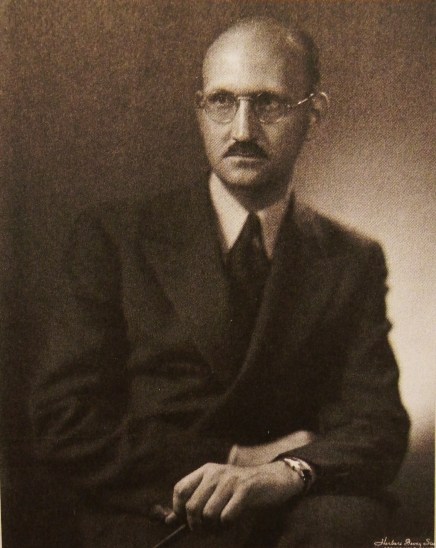
In November 1939 Philip Van Doren Stern, an American author, editor and Civil War historian wrote an original story titled “The Greatest Gift,” a heartwarming Christmas tale about a man named George Pratt who gets a dying wish granted by a guardian angel that literally changes his life.
Stern’s story begins at an iron bridge as a despondent George leans over the rail:
“I wouldn’t do that if I were you,” a quiet voice beside him
said.George turned resentfully to a little man he had never seen
before. He was stout, well past middle age, and his round
cheeks were pink in the winter air as though they had just been
shaved. “Wouldn’t do what?” George asked sullenly.
“What you were thinking of doing.”
“How do you know what I was thinking?”
“Oh, we make it our business to know a lot of things,” the
stranger said easily.
Stern desperately tried to get his little story published, but it never sold. So in 1943, he made it into a Christmas card book and mailed 200 copies to family and friends.

The card book and story somehow caught the attention of RKO Pictures producer David Hempstead who showed it to actor Cary Grant’s agent. In April 1944, RKO bought the rights but failed to create a satisfactory script. Grant went on to make “The Bishop’s Wife.”
However, another acclaimed Hollywood heavyweight, Frank Capra, who already had three Best Directing Oscars to his name, liked the idea. RKO was happy to unload the rights. “The story itself is slight, in the sense, it’s short,” Capri said referring to Stern’s book. “But not slight in content.”
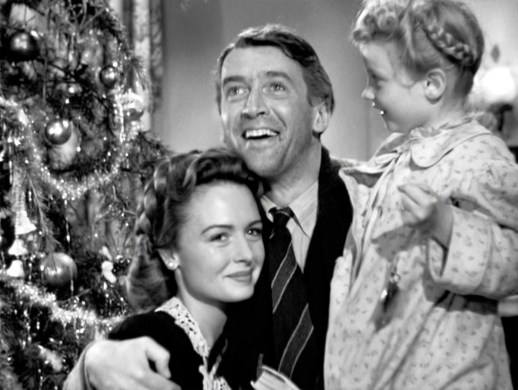
Capra bought it and brought in a slew of writers to polish the story. They hired another a well-known actor James Stewart to play the main character renamed George Bailey and in December of 1946, “It’s a Wonderful Life” was released in theaters.
General MacArthur and the Defining Days After Pearl Harbor
By Ken Zurski
In the book The General vs the President, author H.W. Brands examines the often tenuous but respectful relationship between General Douglas MacArthur and President Harry Truman.
Besides their differing personalities, in the public eye, the two men drew widely opposite impressions. Truman had unexpectedly assumed the presidency amidst doubts about his leadership and foreign policy experience while MacArthur was the beloved general of the Allied forces in the Pacific.

After World War II ended and when North Korea threatened South Korea, both men had vastly different views on how America should proceed.
Truman gave MacArthur leverage, but China was drawn into the conflict and the two world powers were nearly brought to the brink of a nuclear war. Truman relieved the popular general of his duties. “With deep regret I have concluded that General of the Army Douglas MacArthur is unable to give his wholehearted support to the policies of the United States Government and of the United Nations in matters pertaining to his official duties,” Truman announced at a press conference. That explosive missive is the basis of Brand’s book.
But Truman, as important as he was to ending the war, was just a senator from Missouri when President Franklin Roosevelt crossed ways with MacArthur.
That relationship nearly reached the boiling point in 1941, shortly after Japan attacked Pear Harbor.
It’s worth a closer look.
MacArthur who is in the Philippines at the time Pearl Harbor was attacked feared the American bases on the island would be next. He was right. The next day, December 8, Japan hit hard. MacArthur asked Roosevelt to immediately strike back. Force Russia to attack Japan, he pressed, before Japan can do more damage in the Philippines. Roosevelt ignored MacArthur’s plea and set his sights on Germany instead.
MacArthur rebutted. He supported a plan by Philippine President Manuel Quezon to broker a peace deal with Japan. It was the only way, MacArthur agreed, to avoid a “disastrous debacle.”
In retrospect, Brands assumes, MacArthur was abandoning the Philippines. But there were lives at stake. A defiant Roosevelt dismissed the peace deal. “American forces will continue to fly our flag in the Philippines,” the president commanded, “so long as there remains any possibility of resistance.”
Back home, MacArthur was being criticized for poor decision making.
Brands points out the there was a nine-hour window after the first dispatches were received that Japanese bombers were in the air. There was nothing anyone could do about the battleships in the Harbor; but in the Philippines, in hindsight, why didn’t MacArthur order the planes moved out of the way?
MacArthur blamed his subordinates and miscommunication. Nevertheless, half of MacArthur’s forces were decimated in the attack and the Philippine’s line of defense was greatly diminished.
It would get worse. The conquest of the Philippines by Japan is still considered one of the worst military defeats in U.S. history.
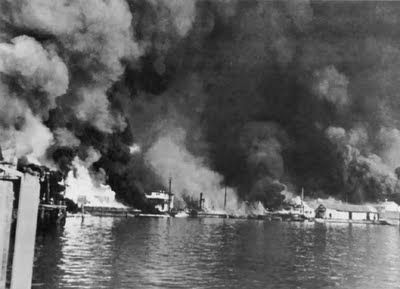
MacArthur endured attacks from Japan forces by hunkering down on the Bataan peninsula and Corregidor Island. “Help is on the way,” MacArthur told the men. “Thousands of troops and hundreds of planes are being dispatched” he continued, hoping to boost morale.
None of it was even being considered.
The only order coming from Roosevelt was getting his four-star general out of the islands before all hell broke loose. MacArthur had no recourse. It was an order, not a choice. He took the next plane out and flew to Australia where he was to organize the counter offensive against Japan and pave the way to his own interminable place in American history. Roosevelt would later praise his departure, but MacArthur felt like he was abandoning his post.
Before boarding he told the troops, “I shall return.”
When MacArthur did return three years later he was hailed as a hero. “Though not by American soldiers he left behind [in the Philippines],” Brands writes in the book.

Winston Churchill, The Boers War and the Invasion of the ‘Body Snatchers’

By Ken Zurski
In the book Hero of the Empire, author Candice Millard explores the military service of a young Winston Churchill and the future Prime Minister of England’s exploits in the Boers War, a devastating conflict against the fiercely independent South African Republic of Transvall, or Boers, that’s as much a part of British history as the two subsequent World Wars.

In 1899, Churchill was in his twenties and officially not a soldier, but a correspondent for the Morning Post. However, he bravely and willingly fought alongside his fellow countrymen. As Millard captures vividly in her book, when a British armored train was ambushed, Churchill fought back, was captured, imprisoned, managed to escape, and traversed hundreds of miles of enemy territory to freedom. He then returned and resumed his duties in the war. Millard’s expert narrative paints the young Churchill as a man of great strength, determination and steadfast loyalty.
The same attributes can also be applied to another famous figure in history who did not fight like Churchill, but bravely dodged the bullets of the Boers to do a thankless and daring task. His contribution is touched on briefly in the book, but is worth noting here as an example of a man whose legacy of peace and non-violence includes the brutal reality of warfare.
In stark contrast to Churchill’s call to arms, this figure refused to pick up a weapon or engage in hand to hand combat. His Hindu faith prevented that, but his desire for justice could not be suppressed. He was an Indian-born lawyer in a country under the flag of the British Empire who went to South Africa to defend his people from cruelty imposed by the Boers. When war broke out, he wanted to contribute, along with other persecuted Hindu followers.
But how?
So he asked the British government if he could put together a team of men to perform the incessant task of removing bodies, dead or wounded, from the heat of battle. The government approved the request, but made it clear that the men were under no obligation or safeguards from the British Army. The decision to risk their own lives in order to save others was theirs and theirs alone.

“Body snatchers,” was the term used by British troops to describe the men who retrieved “not just bodies from the battlefield, they hoped, but young men from the jaws of death,” Millard writes. The “body snatchers” wore wide brim hats and simple loose fitting khaki uniforms and were distinguished by “a white band with a red cross on it wrapped around their left arms.”
Their efforts were lauded by superiors and observers alike. “Anywhere among the shell fire, you could see them kneeling and performing little quick operations that required deftness and steadiness of hand,” wrote John Black Atkins a reporter for the Manchester Guardian.
By now you may discern that the person who assembled this unusual band of brave men is important to history. Millard doesn’t hold anyone in suspense.
The man was Mohandas Karamchand Gandhi whose place in history as the influential Indian civil rights leader was just beginning to emerge.
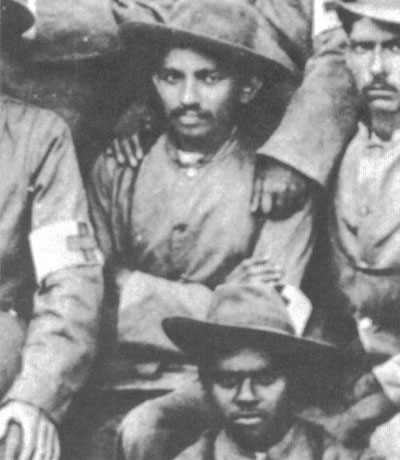
When war broke out, Gandhi, who was 31 at the time, wanted to disprove stereotypes that Hindus were unfit for battlefield service.
“Although his convictions would not allow him to fight,” Millard writes, “he had gathered together more than a thousand men to form a corps of stretcher bearers.”
Later in his autobiography, Gandhi would recall his non-violent role in the Boers War.
“Our humble work was at the moment much praised, and the Indians’ prestige was enhanced,” he wrote.
“We had no hesitation.”

(Sources: Hero of the Empire by Candace Millard; The Story of My Life by M.K. Gandhi)
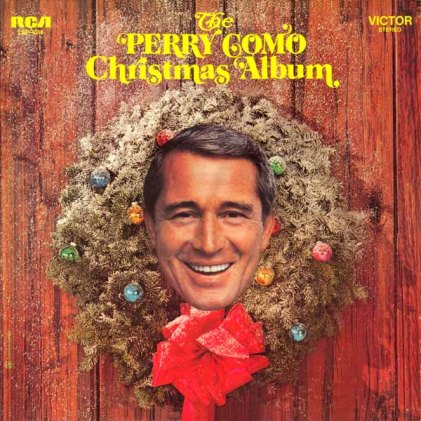
The Legacy of Perry Como: Christmas Crooner and Family-Friendly Performer
By Ken Zurski
Thanks to his long-standing annual holiday television special and beloved Christmas album released in 1968, Perry Como may be the most popular Christmas performer of all time.
That said he may have been the most misunderstood as well.
Como was a one of the “good guys” whose relaxed and laid-back demeanor came across as “lazy” to some, a misguided assessment, since Como was known to be a consummate professional who practiced his craft incessantly.
“No performer in our memory rehearses his music with more careful dedication than Como.” a music critic once enthused.

Como also made sure each concert met his own personal and strict moral standards.
In November 1970, Como hosted a concert in Las Vegas, a comeback of sorts for the Christmas crooner, who hadn’t played a Vegas night club for over three decades. For his grand return, Como was paid a whopping $125-thousand a week. Even Perry was surprised by the remuneration. “It’s more money than my father ever made in a lifetime,” he remarked.
But since it was Vegas and befitting the town’s perceived association with mobsters and legalized prostitution, Como’s reputation as a straight-laced performer was questioned.
Como quelled any concerns, however, when he chose a safe, clean and relatively unknown English comic named Billy Baxter to warm up the audience before the show. Advisers suggested he pick an act more familiar to Vegas audiences, but Como said no.
A typical “Vegas comedian,” as he put it, was simply too dirty.

Keeping up the family friendly atmosphere accentuated in his TV specials, Como would lovingly introduce his wife Roselle during the “live” shows. Roselle, who was usually standing backstage and acknowledged the appreciative crowds, was just as adamant as her husband that his clean-cut image went untarnished. After one performance, Roselle received a fan’s note that pleased her immensely. “Not one smutty part, not even a hint,” the note read describing Como’s act in Vegas. “You should be very proud.”
Como’s cool temperament was such a recognizable and enduring characteristic that many wondered how much of it was real. Does he ever get upset? was one curious inquiry. “Perry has a temper,” his orchestra leader Mitchell Ayers answered. “He loses his temper at normal things. When were’ driving, for instance, and somebody cuts him off he really lets the offender have it.” However, Ayers added, “Como is the most charming gentleman I’ve ever met.”
Como’s popular Christmas television specials ran for 46 consecutive years ending in 1994, seven years before his death in 2001 at the age of 88.

(Source: Spartanburg Herald-Journal Nov 21 1970)
There Is An Artist Behind The Iconic ‘Partridge Family’ Bus
By Ken Zurski
Painter Piet Mondrian, born in 1872, was an important leader in the development of modern abstract art and a major exponent of the Dutch abstract art movement known as De Stijl (“The Style”).

Mondrian used the simplest combinations of straight lines, right angles, primary colors, and black, white, and gray in his paintings.
According to one art historian: “The resulting works possess an extreme formal purity that embodies the artist’s spiritual belief in a harmonious cosmos.”

Mondrian who died in 1944 probably would never have imagined that his well-known artistic style would be the inspiration for a popular 1970’s television show called “The Partridge Family.”
Mondrian’s apparent contribution to the show was the exterior paint job of a school bus used by the fictional – but conventional – family of traveling musicians and singers. Mondrian’s style was on full display, seemingly based on one of his paintings.
The bus became the family’s trademark.
From Yahoo Answers: “Although the exterior paint job was arguably based on Mondrian’s Composizione 1921, it was never explained in the show why this middle class family from Southern California chose Dutch proto-modernism exterior paint, rather than the traditional school bus yellow.”

“The Partridge Family” ran on ABC television from September 25, 1970, until it ended on March 23, 1974. It would find an appreciate and loyal audience in syndication for years. Apparently the bus wasn’t so fortunate. As the story goes, after the show ended, the bus was sold several times until it was found abandoned in a parking lot at Lucy’s Tacos In East Los Angeles.
It was reportedly junked in 1987.
(Some text reprinted from Britannica.com and other internet sources)
Ken Zurski’s book “Unremembered: Tales of the Nearly Famous and the Not Quite Forgotten is available now http://a.co/d/hemqBno

The Split Thanksgiving Year: How FDR Altered The Holiday for Retail Recovery
By Ken Zurski

In September of 1939, Franklin Delano Roosevelt issued a presidential proclamation to move Thanksgiving one week earlier, to November 23, the fourth Thursday of the month, rather than the traditional last Thursday of the month, where it had been observed since the Civil War.
That year, the last Thursday of November fell on the 30th, the fifth week and final day of the month. That was considered a late start to the shopping season. The Retail Dry Goods Association, a group that represented merchants who were already reeling from the Great Depression, went to Commerce Secretary Harry Hopkins who went to Roosevelt.
Help the retailers, Hopkins pleaded.
Roosevelt listened. He was trying to fix the economy not break it.
Thanksgiving would be celebrated one week earlier, he announced.

Apparently, the move was within his presidential powers since no precedent on the date was set. Thanksgiving, the day, was not federally mandated and the actual date had been moved before. Many states, however, balked at Roosevelt’s plan. Schools were scheduled off on the original Thanksgiving date and a host of other events like football games, both at the local and college level, would have to be cancelled or moved.
One irate coach threatened to vote “Republican” if Roosevelt interfered with his team’s game. Others at the government level were similarly upset. “Merchants or no merchants, I see no reason for changing it,” chirped an official from the opposing state of Massachusetts.
In contrast, Illinois Governor Henry Horner echoed the sentiments of those who may not have agreed with the president’s switch, but dutifully followed orders.
“I shall issue a formal proclamation fixing the date of Thanksgiving hoping there will be uniformity in the observance of that important day,” he declared, steadfastly in the president’s corner.

Horner was a Democrat and across the country opinions about the change were similarly split down party line: 22 states were for it; 23 against and 3 went with both dates.
In jest, Atlantic City Mayor Thomas Taggart, a Republican, dubbed the early date, “Franksgiving.” Others called it “Roosevelt’s Thanksgiving” or “Roosevelt’s hangover Thanksgiving Day.” More politically, some dubbed it “Democratic Thanksgiving Day” and the following Thursday as “Republican Day.” One observer noted, “This country is so divided it can’t even agree on a day of Thanksgiving.”
In some Midwestern states, especially among farmers, the controversy was irrelevant thanks to a bountiful harvest. “This year the crops certainly justified Thanksgiving, even justified two,” reported the Omaha-World Herald.
Roosevelt made the change official for the succeeding two years ’40 & ’41, since Thursday would fall late in the calendar both times. Then in 1941 The Wall Street Journal released data that showed no change in holiday retail sales when Thanksgiving fell earlier in the month. Roosevelt acknowledged the apparent miscalculation.
However, due to the uproar, later that year, Congress approved a joint resolution making Thanksgiving a federal holiday to be held on the fourth Thursday of the month, regardless of how many weeks were in November.
On December 26, 1941, Roosevelt signed it into law.
Roosevelt vs. Supreme Court: A Battle for Power

By Ken Zurski
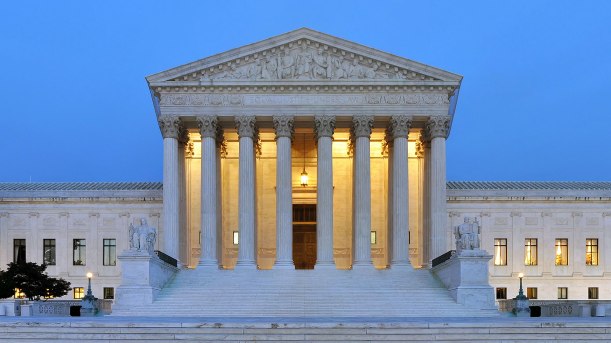
On February 5, 1937, President Franklin Delano Roosevelt announced his intention to expand the Supreme Court to as many as 15 justices. The move was clearly a political one. Roosevelt was trying to “pack” the court and in turn make the nation’s highest court a completely liberal entity. Republicans cried foul.
Roosevelt didn’t care what his opponents thought. He embraced the criticism and mostly ignored it. Although politically it was still a hot button issue, his New Deal policies had earned public acceptance, even praise. The high court, however, was another matter. They had previously struck down several key pieces of his legislation on the grounds that the laws delegated an unconstitutional amount of authority in government, specifically the executive branch, but especially the office of the president.
Roosevelt won the 1936 election in a landslide and was feeling a bit emboldened. If he could pack the court, he could win a majority every time. By constitutional law, Roosevelt couldn’t force any justice out, but he could offer an incentive to leave. So the president proposed legislation which in essence asked current Supreme Court justices to retire at age 70 with full pay or be appointed an “assistant” with full voting rights, effectively adding a new justice each time.

This initiative would directly affect 75-year-old Chief Justice, Charles Evan Hughes, a Republican from New York and a former nominee for president in 1916 who narrowly lost to incumbent Woodrow Wilson. Hughes resigned his post as a Supreme Court Justice to run for president, then served as Secretary of State under the Harding administration. In 1930, he was nominated by Herbert Hoover to return to the high court as Chief Justice. Hughes had sworn in Roosevelt twice. Now he was being asked by the president to give up his post or, under Roosevelt’s plan, give the president the power to appoint another justice.

In May of 1937, however, Roosevelt realized his “court packing” idea was wholly unnecessary. In an unexpected role of reversal, two justices, including Hughes, jumped over to the liberal side of the argument and by a narrow majority upheld as constitutional the National Labor Relations Act and the Social Security Act, two of the administration’s coveted policies. Roosevelt never brought up the issue of court size again.
But his power move didn’t sit well with the press.
Newspaper editorials criticized him for it and the public’s favor he had enjoyed after two big electoral victories was waning. He was a lame duck president finishing out his second term. Then Germany invaded Poland. Roosevelt’s steady leadership was lauded in a world at war.
In 1940, he ran for an unprecedented third term and won easily.
The following year, Japan attacked Pearl Harbor.
The Man Who Gave ‘Google’ Its Name
By Ken Zurski
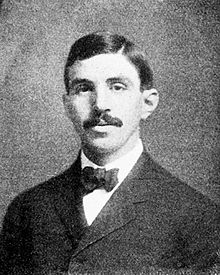
In the early half of the 20th century, shortly after World War I ended, mathematician Edward Kasner, a professor at Columbia University, devised the concept of showing the common features of whole numbers, no matter how large. As an example, he came up with the number one followed by a hundred zeros.
Writing out such a large number was ridiculous of course, and at the time formal names didn’t exist for numbers larger than a trillion.
But he needed a name.
So he asked his nine-year-old nephew Milton to intervene. During a causal stroll in New Jersey’s Palisades Woods, Edward wondered if Milton could come up with one. “Googol” was the boy’s answer. So Milton’s silly sounding recommendation became “Googolplex,” or one followed by a googol zeros. Kasner began using the name in his classes.
Flash forward more than 70 years in 1995 when two Stanford University students Larry Page and Sergey Brin began collaborating on a search engine they originally called BackRub. The project began to attract investors and bandwidth grew. But they needed a new name, something catchier, something they could easily register online.
Google was chosen as the common spelling of Googol which, thanks to Kasner, was as close to an infinite number as possible.
“We picked the name “Google” because our goal is to make huge quantities of information available to everyone,” Page later recalled.

When they presented the name however, math traditionalists balked. “You idiots, you spelled it [Googol] wrong!” one chastised. But Google.com was available and Googol.com was not. Besides, Page said, “It sounds cool and [still] has only six letters.”
According to an official statement Google’s corporate website (yes, there is one): “The name “Google” reflects Larry and Sergey’s mission to organize a seemingly infinite amount of information on the web.”
Simple enough. But what about young Milton? How did the word “Googol” pop into his head? Speculation runs rampant here. A great niece of Dr. Kasner, Denise Sirotta, claims her father Edwin, Milton’s younger brother, should get some credit since he claimed the siblings came up with the name together. “He was asked for a word with a sound that had lots of O’s in it,” she said.
Another observation seems to make more sense especially in the imaginative mind of a toddler. Caroline Birenbaum, another great-niece of Dr. Kasner’s, speculates the word was inspired by a comic-strip character named Barney Google, who debuted in 1919. She says Dr. Kasner, liked cartoons.
“He may have tweaked the spelling to avoid any trademark issues,” she claims.

Barney Google was an American comic strip created by Billy DeBeck, that originally appeared on the sports pages. Google had big “banjo” eyes, a mustache, a large bulbous nose, and wore a tuxedo-type suit. He was an “avid sportsman and N’er do well” involved with some of the more contentious contests like poker, prize fights and horse racing. Google’s bow-legged horse “Spark Plug” was introduced in 1922, and nicknamed “Sparky.” The horse was a nag who rarely raced, but when he did it became a big media event. Millions of readers bought in.
A popular song was introduced, a foxtrot, titled “Barney Google and Spark Plug”
Barney Google—with the goo, goo, googly eyes,
Barney Google—bet his horse would win the prize;
When the horses ran that day,
Spark Plug ran the other way!
Barney Google—with the goo-goo-googly eyes!
In 1934, another character named Snuffy Smith joined the fray and Barney Google and Spark Plug were phased out.
So Google, the word itself, was in the public consciousnesses long before the giant search engine came along. Still, Kasner had no idea that it would become so popular in the next century.
So where did his inspiration for the seemingly infinite number come from?
Kasner, who never married, cited a description of unrequited love. In a divorce case, he explained, a woman called the commitment she had for her husband as “a million billion billion times and eight times around the world.” Kaisner was struck by the expansive description. “It was the largest number ever conceived of,” he said. So he set out to immortalize it.
And his little nephew inspired a name.
Googolplex!

Charles Howard Hinton, the ‘Other Dimension,’ and the Birth of the Jungle Gym
By Ken Zurski
Mathematician Charles Howard Hinton was both equally fascinated and frustrated by the concept of the fourth dimension, also known as the “other dimension,” or the one dimension of time and space that no one had been able to verify or explain. Albert Einstein tried. He deduced in his Theory of Special Relativity that the fourth dimension is “time” and that “time is inseparable from space.” Since then science fiction writers have used the space-time continuum to great dramatic effect in their stories.
But in 1884, while Einstein was still a toddler, it was Hinton who wrote the definitive article on the subject. In “What is the Fourth Dimension?” Hinton explained that the theory behind a fourth dimension was firmly established, but there was no physical evidence to support it. That was the dilemma, he inferred: “If we think of a man as existing in four dimensions, it is hard to prevent ourselves from conceiving him prolonged in an already known dimension.” Hinton used a four-cornered room, or cube, for example, to explain how one can only reach three dimensions. “Space as we know it, is subject to limitation,” he conceded.
However, to teach his children math skills, Hinton built a three-dimensional bamboo dome with evenly spaced geometric shapes. His son, Sebastian, remembers climbing and hanging from the dome while his father called out intersections for the children to identify.
“X2, Y4, Z3, Go!” Hinton would command.
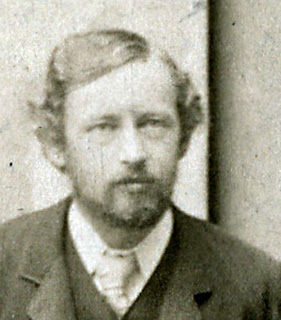
Hinton died unexpectedly in 1907 from a cerebral hemorrhage and while he is mostly remembered for his work on the fourth dimension, in stark contrast, he is also credited with introducing the first pitching machine – more like a gun – called the “mechanical pitcher,” and designed for the Princeton University baseball team. The machine used gunpowder to fire the ball.
But the geometric dome he created for his children also had a lasting effect. Especially on his youngest son Sebastian.
Here’s why:
Sebastian ended up marrying a teacher, Carmelita Chase, who grew up in Omaha, Nebraska and moved to Chicago in 1912 to become Jane Adams’ secretary at Hull House. That’s when she met Sebastian, a patent lawyer in town.
Carmelita was pretty, smart, and multi-talented. In college, she excelled in tennis (among other sports), acted in plays and sang in the choir. “She has distinguished herself in athletics as well her studies,” the Chicago Daily Tribune described in announcing the couple’s engagement in 1916. She and Sebastian would eventually have three children.
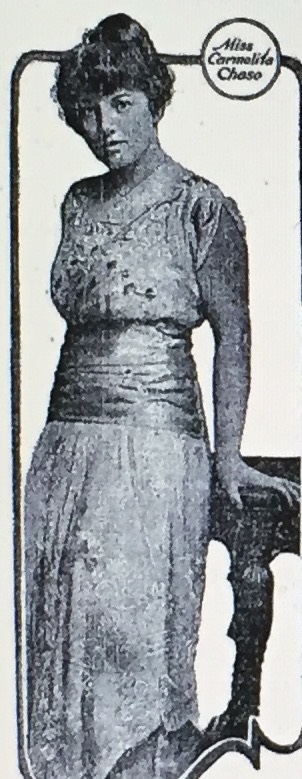
Shortly after getting married, however, Carmelita put most of her time and efforts into her work. She opened a kindergarten and nursery school at her Chicago apartment which was directly across from a park.
“Frustrated by her own ‘dreary’ school experience, she was determined to create learning environments for her school children and others that would be joyfully experimental,” author Susan Ware wrote about Carmelita in Notable American Women.
The type of teaching she endorsed already had a name: progressive education. For Carmelita, this included incorporating more outdoor activities like hiking, camping, farming and the care of animals to daily activities. “She would come into a room and it would be an explosion,” a former student recalled in the book Founding Mothers and Others, “But it was a happy occasion. She could sweep people up and carry them to Mars.”
In 1920, while watching his wife’s school children playing outside their Winnetka, Illinois home, Sebastian had a revelation. Why not build something they could climb on?
He envisioned a three-dimensional structure similar to his father’s geometric dome, but for play rather than instruction. He reportedly jotted down the idea on a napkin and perfected the plan for a patent submission. Then he built it.
Hinton called it a Jungle Gym.
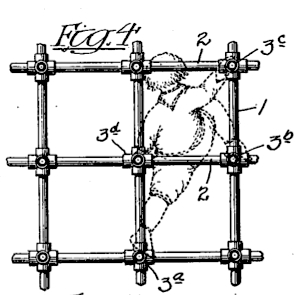
At the time of its conception, however, the Jungle Gym was never heralded as the important contribution to the children’s playground as it is today. In fact, Hinton’s only recorded words about his invention are attributed to his detailed patent filings: “Children seem to like to climb through the structure and swing their head downward by the knees, calling back and forth to each other. A trick which can only be explained of course by a monkey’s instinct.” While the name Jungle Gym never officially changed, many people began seeing the correlation with the primate’s distinctive behavior and started calling it “monkey bars” instead. The moniker stuck.
Unfortunately, Sebastian Hinton is a figure lost to time. Although he married a socialite in Carmelita, Hinton preferred to stay out of the spotlight. Tragically, just a few years after creating the Jungle Gym, he committed suicide in a clinic after reportedly being treated for depression.
Caremilta chose not to publicly disclose her husband’s illness and cause of death (he hung himself). She packed up the family and moved east. Today, she is best remembered for founding Putney School, an independent progress education institution in Vermont that is still in existence today.
Hinton’s original Jungle Gym is permanently on display in the backyard of the Winnetka Historical Society Museum.

 UNREMEMBERED