
The Lyrical Genius of Dr. Seuss in Song
By Ken Zurski
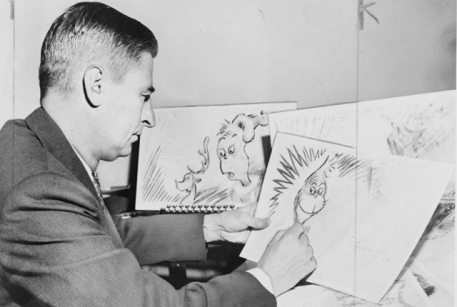
Theodor Seuss Geisel, better known as Dr. Seuss, wrote dozens of children’s books that still today reach best seller’s lists and thrill a new generation of fans each and every year. His work, however, as a songwriter is not as celebrated. But when reminded, the songs penned by Seuss are just as enduring and whimsical as his books.
Of course, Seuss did not write the music, only the words, so his credit is in the lyrics. He wrote the tunes mostly for television specials and all with Seuss’s clever wordplay and sing-song rhyme pattern. For instance, in The Cat in the Hat, a television short released in 1970, and based on his first children’s book, Geisel wrote several original songs including the bouncy, “The Moss Covered Three-Headed Family Gradunza”
There’s a gradunza-snitcher in the house. Things will never be the same without it. How dear to my heart was that beautiful gradunza. That my old feline father bequeathed to me. That old family gradunza, The old, three-handled family gradunza, The old, moss-covered, three-handled family gradunza. That hung on the family tree. I’ve been burgled–thwertled by a fish.The old, moss-covered, three-handled family gradunza
The catchy “Cat, Hat:”
Cat, hat, in French, chat, chapeau. In Spanish, el gato in a sombrero. He’s a cat in a hat, he’s a chat in a chapeau.
He also is a gato in a sombrero.
Ole, Ole, Ole, Ole-o.
And the playfully teasing, “Calculatus Eliminatus:”
When you mislaid a certain something, keep your cool and don’t get hot. Calculatus Eliminatus is the best friend that you’ve got. Calculatus Eliminatus always helps an awful lot. The way to find a missing something is to find out where it’s not.
 One song in particular, “I’m a Punk,” introduced such ridiculously pleasing locutions as crontunculous, gropulous, poobler, and schnunk.
While everyone understands the meaning of punk, being a “schnunk” needed some explanation. But when the Cat sings, “nobody, likes me, not one tiny hunk,” everyone gets the idea.
Seuss’s writing style is often credited to a Life magazine article in 1956 that criticized children’s reading levels, specifically “primers” or textbooks with simplified words and phrases, like “Dick and Jane.” Geisel was asked to write a story using a vocabulary list of just over 200 words. He picked the first two words that rhymed, cat and hat, and went from there. It certainly wasn’t like any story in a textbook, that’s for sure, and critics praised “The Cat in the Hat” for its originality.
Several years later when Seuss wrote the lyrics for songs in his television specials, he seemed to relish the opportunity to ratchet up the silliness even more. Seuss’s words just seemed to work with music, oftentimes using traditional melodies, sometimes with an original score. The man credited with composing or arranging most of the music for Seuss is Dean Elliott, a Midwesterner from Wisconsin, who conducted orchestras for the Tom and Jerry shorts before hooking up with Seuss. Later he worked with Bugs Bunny creator Chuck Jones.
 Seuss’s most popular song is one we hear every year around the holidays. In it, an unmissable deep voice groans about a Grinch who has a “heart full of unwashed socks” and a “soul full of gunk.”
Written in 1966 for the TV special “How the Grinch Stole Christmas,” Seuss enlisted a voice actor named Thurl Ravenscroft to sing the lead on the song even though Boris Karloff was the voice of the Grinch in the special.
Karloff reportedly could not sing and Ravenscroft was hired . But Ravencroft’s name was never listed among the credits and Karloff mistakenly got most of the acclaim. Seuss was reportedly furious and apologized for the oversight. Ravenscroft was also the voice of Kellogg’s Tony the Tiger (“They’re Great!”).
“You’re a Mean One, Mr. Grinch,” is an unconventional Christmastime staple. The song never mentions Christmas, but rather teases with crafty metaphors, comparisons and contradictions all designed to point out what an awful crank the Grinch – now a symbol of holiday grumpiness – can be.
You’re a mean one Mr. Grinch
You really are a heel.
You’re as cuddly as a cactus,
And as charming as an eel,
Mr. Grinch!
The song is instantly recognizable, charming and vintage Dr. Seuss. The songwriter.

As Christmas Crooners Go, Perry Como Was As ‘Pure As The Driven Snow’

By Ken Zurski
Perry Como may be the most popular Christmas performer of all time. Thanks to his long-standing annual holiday television specials and beloved Christmas album released in 1968, Como’s face and voice became synonymous with the sounds of the season.
Today, however, in a more crowded market for Christmas music and numerous more versions of favorite holiday classics (and new ones too) from more contemporary artists in all genres, Como’s versions might get lost in the mix.
But it’s still in there.
That said, as a performer, he may have been misunderstood as well.
Como was considered one of the “good guys” whose relaxed and laid-back demeanor came across as “lazy” to some, a misguided assessment, since Como was known to be a consummate professional who practiced and rehearsed incessantly.
“No performer in our memory rehearses his music with more careful dedication than Como.” a music critic once enthused.

Como also made sure each concert met his own personal and strict moral standards.
In November 1970, Como hosted a concert in Las Vegas, a comeback of sorts for the Christmas crooner, who hadn’t played a Vegas night club for over three decades. For his grand return, Como was paid a whopping $125-thousand a week, admittedly a large sum for a Vegas act at the time. Even Perry was surprised. “It’s more money than my father ever made in a lifetime,” he remarked.
But since it was Vegas and befitting the desert town’s reputation of gambling and prostituition, Como’s reputation as a straight-laced performer was questioned.
Como quelled any concerns, however, when he chose a safe, clean and relatively unknown English comic named Billy Baxter to warm up the audience before the show. Advisers suggested he pick an act more familiar to Vegas audiences, but Como said no.
A typical “Vegas comedian,” as he put it, was simply too dirty.
Keeping up the family friendly atmosphere accentuated in his TV specials, Como would lovingly introduced his wife Roselle during the “live” shows. Roselle, who was usually backstage and acknowledged the appreciative crowds, was just as adamant as her husband that his clean-cut image went untarnished. After one performance, Roselle received a fan’s note that pleased her immensely. “Not one smutty part, not even a hint,” the note read describing Como’s act in Vegas. “You should be very proud.”
Como’s cool temperament and sleepy manner was such a recognizable and enduring characteristic that many had to ask if it was real or just an act. Does he ever get upset? was one curious inquiry. “Perry has a temper,” his orchestra leader Mitchell Ayers answered. “He loses his temper at normal things. When were’ driving, for instance, and somebody cuts him off he really lets the offender have it.” However, Ayers added, “Como is the most charming gentleman I’ve ever met.”
Como’s popular Christmas television specials ran for three decades ending in 1994, seven years before his death from symptoms of Alzheimer’s in 2001. He was 88.

(Source: Spartanburg Herald-Journal Nov 21 1970)
Franksgiving
 By Ken Zurski
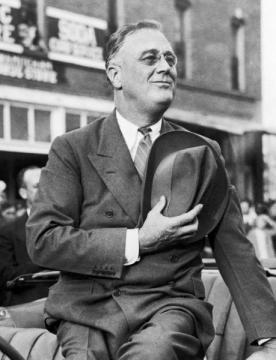
In September of 1939, Franklin Delano Roosevelt issued a presidential proclamation to move Thanksgiving one week earlier, to November 23, the fourth Thursday of the month, rather than the traditional last Thursday of the month, where it had been observed since the Civil War.
Roosevelt was being pressured by the Retail Dry Goods Association who already reeling from the Great Depression sensed a disaster in holiday sales since Thursday of that year fell on the 30th, the fifth week and final day of November, and late for the start of the shopping season. The business owners went to Commerce Secretary Harry Hopkins who went to Roosevelt. Help out the retailers, Hopkins pleaded. Roosevelt listened. He was trying to save the economy not break it. Thanksgiving would be celebrated one week earlier, he announced.
Apparently, the move was within his presidential powers to suggest since no precedent was set. Thanksgiving, the day, was not federally mandated and the actual date had been moved before. Many states, however, balked at Roosevelt’s plan. Schools were off on Thanksgiving and a host of other events like football games, both at the local and college level, would have to be cancelled or moved. One irate coach threatened to vote “Republican” if Roosevelt interfered with his team’s schedule. Others at the government level were similarly upset. “Merchants or no merchants, I see no reason for changing it,” chirped an official from the opposing state of Massachusetts.
In contrast, Illinois Governor Henry Horner echoed the sentiments of those who may not have agreed with the switch, but dutifully followed orders. “I shall issue a formal proclamation fixing the date of Thanksgiving hoping there will be uniformity in the observance of that important day,” he declared, steadfastly in the president’s corner.
Horner was a Democrat and across the country opinions about the change were similarly split down party lines: 22 states were for it; 23 against and 3 went with both dates.
In jest, Atlantic City Mayor Thomas Taggart, a Republican, dubbed the early date, “Franksgiving.”
Roosevelt made the change official for the succeeding two years, since Thursday would fall late in the calendar both times. But in 1941 The Wall Street Journal released data that showed no change in retail sales in the shopping seasons that Thanksgiving fell earlier. Roosevelt admitted he was wrong, but in hindsight, on the right track. Thanks to the uproar, later that year, Congress approved a joint resolution making Thanksgiving a federal holiday to be held on the fourth Thursday of the month, regardless of how many weeks were in November.
Roosevelt signed it into law.

Baseball’s ‘Eating Champion’ Story is a Little Hard to Swallow, But…
 By Ken Zurski
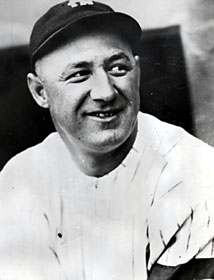
Frank “Ping” Bodie, an Italian-American major league baseball player, once said that he could out eat anyone especially when it came to his favorite dish, pasta. So on April 3 1919, in Florida during a spring training break, Bodie and an ostrich (yes, an ostrich) went head-to-head in an all out, no holds barred, eating contest.
Or did they? That’s left for history to decide.
But it makes for a great story.
As a ballplayer and an outfielder, Bodie was a serviceable player, but a bit of an instigator. He was always up for a good argument and couldn’t help talking up his own merits. ”I could whale the old apple and smack the old onion,” he said about his batting prowess. While playing for a lowly Philadelphia A’s ball club, Bodie claimed there were only two things in the city worth seeing, himself, of course, and the Liberty Bell.
I can “hemstitch the spheroid,” he boasted, apparently talking about the ball.
Despite being a a bit of a braggart, the player’s loved Bodie’s positive attitude. But his expressive candor clashed with managers and he was traded to several teams before ending up with the New York Yankees where his road mate was the irrepressible Babe Ruth. When a reporter asked Bodie what it was like to room with baseball’s larger-than-life boozer, Bodie had the perfect answer. “I room with his suitcase,” he said.
Bodie was born Francesco Stephano (anglicized to Frank Stephen) Pezzello, but most people knew him by his more baseball player sounding nickname, Ping. He claimed “Ping” was from a cousin although many wished to believe it was after the sound of the ball hitting his bat. Bodie was the name of a bustling California silver mining town that his father and uncle lived for a time.
Bodie’s reputation as a big-time eater preceded him.
While in Jacksonville, Florida for spring training, the co-owner of the Yankees, Col T.L “Cap” Huston, heard about an ostrich at the local zoo named Percy who had an insatiable appetite. Huston told Bodie and the challenge was on. Whether it actually happened as reported however is up for debate. The accounts are so wildly embellished that the truth is muddled.
But who was questioning?
Fearing backlash from animal lovers (even those who loved ostrich’s, it seemed), the match was held at a secret location. Bodie reportedly won the contest, but only after Percy, who barely finished an eleventh plate, staggered off and died. Ostrich’s eat a lot, but Percy’s untimely demise was attributed to inadvertently swallowing the timekeeper’s watch. He expired with “sides swelled and bloodshot eyes.” one writer related.
For anyone who believed that, the rest of the story was easy to digest. Bodie finished a twelfth plate of pasta and claimed the self-appointed title of “spaghetti eating champion of the world.”.
The next day, Bodie was in the newspaper for serving up a double play ball in the eighth inning and helping rival Brooklyn Dodgers secure a “slaughter” of the Yankees, 11-2.
There was no mention of the dead bird.

The ‘American Girl’ is Missing

By Ken Zurski
In the fall of 1927, Ruth Elder, a dental assistant from Lakeland, Florida, attempted to become the first woman to complete a transatlantic flight from New York to Paris. “When [Charles] Lindbergh reached Paris (in May),” the 23-year-old Elder said announcing her intentions, “I made up my mind that I would be the first woman to make the trip.”
But unlike Lindy, who was an experienced pilot, Elder admitted having little acquaintance with airplanes. She was however an aspiring model and actress and if the flight helped her career, she exclaimed, so be it.
As expected, Elder’s daring-do was met with skepticism, even ridicule. “Men in the summer should strive to equal Lindbergh. Women should stay at home,” The Irish News snidely advised. Even Lindbergh, himself, without naming names, warned against dangerous missions without purpose.
Despite this, Elder had no reservations. “I was determined to go as a co-pilot, not a passenger,” she vowed. In Florida, she took lessons from an instructor named George Haldeman. Then on Tuesday, October 11, 1927, Elder and Haldeman took off from New York’s Roosevelt Field in a specially built Stinson ‘Detroiter’ monoplane named American Girl.
Unlike Lindbergh, who became internationally famous after his successful flight, Elder’s popularity began the moment she announced her plan. Pretty with an infectious smile and a personality to match , Elder’s story and picture plastered the papers. Brightly colored scarfs she wore in her hair were mimicked by young girls who called them “Ruth Ribbons.”
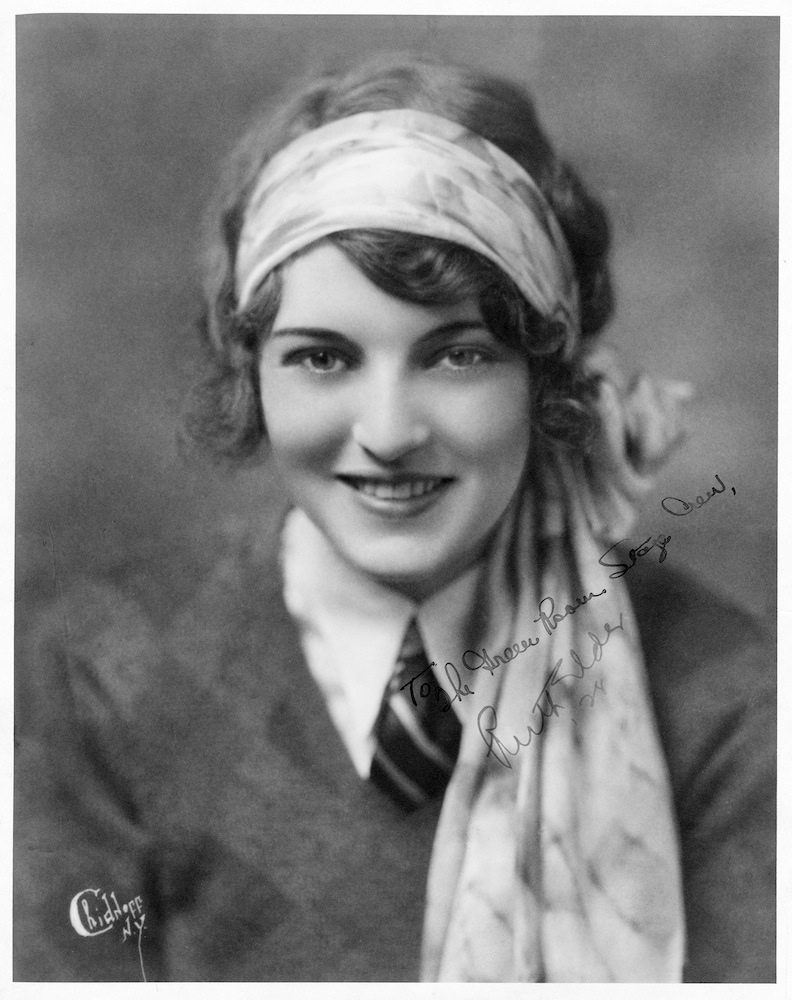
To a hungry press she was also a willing participant. The instant hero Lindbergh was a challenge: shy, a bit aloof, and often irritated by all the attention. Elder relished it. She just hadn’t accomplished anything yet. On that October day at Roosevelt Field, the press was there to watch her give it a go.
“Well here goes nothing, that may turn up something,” Elder thought to herself as the “American Girl’s” wheels lifted from the ground.

Thirty six hours later, with over 2,000 miles logged and just a few hours short of Paris, the flight was over.
Caught in a sleet storm and taking on ice, the two pilots ditched the reserve fuel to lighten the load. But when an oil pipe busted, there was no other choice. The ocean would be their landing strip.
Around the same time, in Paris, at the Le Bouget airport, a smattering of press and a few well-wishers gathered for the welcoming party. Elder’s plane was late and her fate, sent by dispatches around the world, was unknown. “Last seen 500 out at sea,” the stories read.
The American Girl was missing.

In the Atlantic, however, Captain Goos of the Dutch tanker Barendrecht noticed a plane in distress: “She came rapidly up to us and flying over the ship threw down two messages.” One ended up on the deck. “How far are we from land and which way?” was the inscription. It was signed: Ruth Elder.
Several minutes later, the plane landed in the water next to the ship.
Soon enough the press got a telegram: “We are safe,” it read. 
George Washington’s Emotional Farewell to His Troops
By Ken Zurski
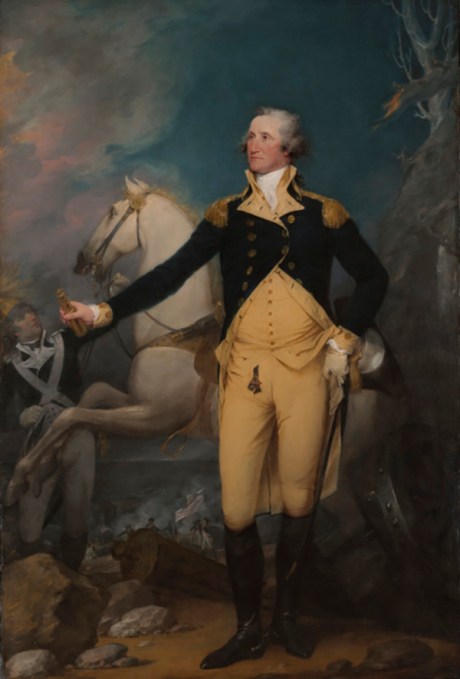
In December of 1783, in a New York tavern, General George Washington said goodbye to the men he commanded and prepared for a private life at his home in Mount Vernon.
“I most devoutly wish that your latter days may be as prosperous and happy as your former ones have been glorious and honorable,” he said raising a glass.
He wept as he said these words: “With a heart full of love and gratitude, I now take leave of you.”

Washington’s outwardly show of emotion was a mix of affection and regret. The Continental Army, the men who fought to free new America from British rule, were irascible. They felt disrespected by a Congress that refused back pay requests and promised pensions.
Greed was the reason for the refusal, lawmakers told them. Instead of fighting for love of God and country, they explained, many felt the needed to profit off it. So the promised bounty, which was in addition to the $6 a month received during service, was rescinded.
But while freedom was an attribute worth fighting for, the men had families and mouths to feed as well. They demanded more compensation for their efforts. When Congress shut them out, the officers went to their general for help. But Washington had no power or influence over Congress. “I’m only a servant of the people,” he told them.
In return, the men chided Washington and other general officers by cancelling a dinner in their honor. Even King George II ridiculed America’s predicament. “If he does that,” the King sarcastically remarked, referring to Washington and the compensation,” he will be the greatest man in the world.”
But Washington was right. He had only a voice in the matter, not a vote. So in saying farewell to military life and his loyal men, the General’s sentiments were commendable and deeply personal.
He was “suffused in tears,” one of his officers described, as he embraced each and every man.

Private Snafu
 Private Snafu
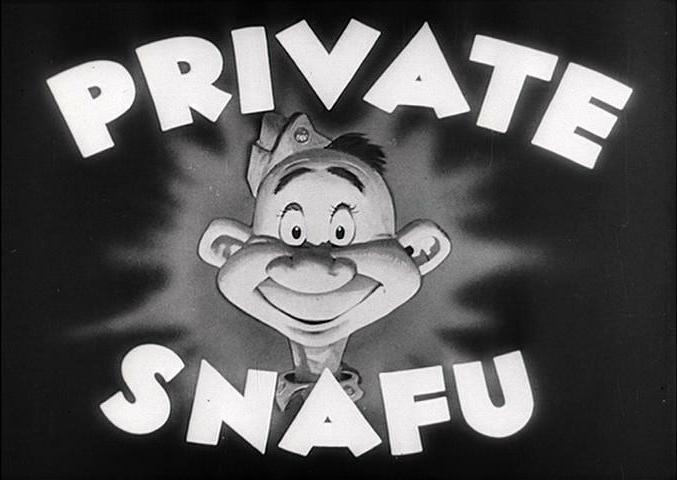
Beginning In 1943, Army recruits in World War II were introduced to a rubbery faced cartoon character named Private Snafu, a simpleton with a knack for trouble, that one writer described as “a model of everything, that, a model soldier isn’t.”
The cartoon was the mastermind of movie director Frank Capra, head of the first Motion Picture Unit of the U.S. Armed Forces, which produced highly stylized propaganda and training films that starred Hollywood actors like Clark Gable and Ronald Reagan.
But by far the most popular attraction, especially among the rank-n-file, was the bumbling Snafu.
Designed to teach proper etiquette in the Army, Snafu turned the tables on military protocol by humorously showing each enlisted man what not to do as a soldier.
Capra, who rejected Walt Disney for the contract (Disney reportedly wanted merchandise rights), chose Warner Brothers to make the films and “Bugs Bunny” animator Chuck Jones to produce it.
The shorts, all about 10 minutes in length, were exclusively the Army’s and not subject to standard motion picture codes. So Jones and his writers, including Theodore Geisel, better known as Dr. Seuss, were limitless in content, although they kept it mostly educational and entertaining at first.
In Spies, for example, Snafu forgets to take his Malaria medication and gets it – literally – in the end by a pesky mosquito. But that’s only part of the lesson. Snafu, who talks in rhymes, is on a pay phone: “Hello Mom, I’ve got a secret, I can only drop a tip. Don’t breathe a word to no one, but I’m going on a trip.” Eavesdroppers nearby, possibly spies, repeat the last line and soon an unsuspecting Snafu is blabbering his secret to anyone within earshot. Most of the shorts end with Snafu being killed by his own stupidity.
Later as the war neared an end, the shorts got edgier and Snafu smarter. Even the content became racier, with scantily clad or naked girls with body parts cleverly, but barely, disguised. About the only restraint remained in the explanation of the acronym, an unofficial military term: Something Normal All — Fouled Up, the announcer would say; a wink and a nod, of course, to its more popular interpretation.
The Mechanical Pencil

The Mechanical Pencil
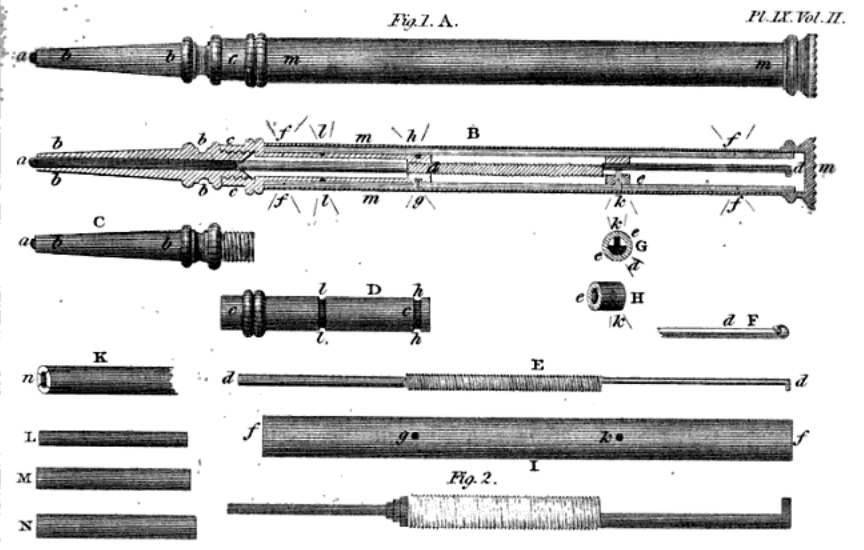
In 1822, the first patent for a lead pencil that needed no sharpening was granted to two British men, Sampson Mordan and Isaac Hawkins.
A silversmith by trade, Mordan eventually bought out his partner and manufactured the new pencils which were made of silver and used a mechanism that continuously propelled the lead forward. When the lead ran out, it was easily replaced.
While Mordan may have marketed and sold the product as his own, the idea for a mechanical pencil was not a new one. In fact, its roots date back to the late 18th century where a refillable-type pencil was used by sailors on the HMS Pandora, a Royal Navy ship that sank on the outer Great Barrier Reef and whose artifacts including the predated writing utensil was found in its wreckage.
Mordan’s design notwithstanding, between 1822 and 1874, nearly 160 patents for mechanical pencils were submitted, which included the first spring and twist feeds.
Then In 1915, a 21-year old factory worker from Japan named Hayakawa Tokuji designed a more practical housing made of metal and called it the “Ever-Ready Sharp.”
Simultaneously in America, Charles Keeran, an Illinois businessman and inventor, created his own ratchet-based pencil that he similarly called “Eversharp” and was often mistaken for Tokuji’s design. Keeran claimed individuality and test marketed his product in department stores before submitting a patent. The pencil was so popular that Keeran had trouble keeping up with orders. To help with production, he partnered with the Wahl Adding Machine Company of Chicago.
It was not a good fit.
Keeran lost most of his stock holdings in a bad deal and was eventually forced out even though his pencils were making millions annually in sales.
Around the same time, in Japan, Tokuji’s factory was leveled by an earthquake. He lost nearly everything including some members of his family. So to start anew and settle debts he sold the business, began making radios instead and founded Sharp, named for the pencil, which still today is one of the largest electronics manufacturers in the world.
The Book Wheel
Image Posted on Updated on
 The Book Wheel
By Ken Zurski
Agostino Ramelli was a military engineer, which meant he wore the armored suit and carried the sword, but used his brain rather than brawn on the battlefield.
This came in handy during the 16th century French Wars of Religion when the Italian born Ramelli went to France, took up arms with the Catholic League, and was captured by the Protestants (Huguenots). While incarcerated, Ramelli not only found a way to break out, but in as well. When he escaped – or was exchanged – Ramelli returned and breached the fortification by mining under a bastion.
From that point on, he called himself “Capitano” and dedicated his life to figuring things out.
In 1588, he released a book titled, Various and Ingenious Machines of Capitano Ramelli. The expertly illustrated book was a compilation of 195 machines that made laborious tasks more practical. Many of the machines lifted things in crafty ways, like water, or solid objects, like doors off their hinges. One machine milled flour using rollers rather than stones.
Then there was the Book Wheel.
“This is a beautiful and ingenious machine, very useful and convenient,” Ramelli wrote. By convenient, he meant for those suffering from gout, a painful joint disease which made walking or standing difficult. A noble gesture, for sure, but the wheel itself was six-feet in diameter. So its doubtful Ramelli designed it strictly for the disabled. Nevertheless, its usefulness is left up to the user to decide. The operator remains seated while the books, eight in all, each come to the front by turning the wheel.
Ramelli was especially proud of the gearing system that kept the books constantly level to the ground. He built an intricate gear for each slot and prominently featured a diagram in his book.
The impressive technology was similar to that used in an astronomical clock.
It was also wholly unnecessary.
A simple swivel pivot and gravity could do the trick just as engineer George Ferris would prove many centuries later in a similar design that carried people rather than books.
Speculation is Ramelli knew this, but as a mathematician, and a bit of a swank, couldn’t help himself.


 UNREMEMBERED