
Year: 2015
When Christmas Interrupted the War
By Ken Zurski
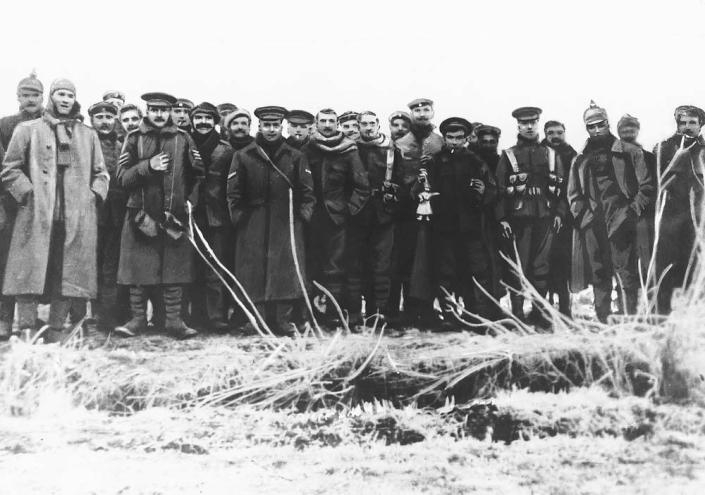
At the first light of dawn on Christmas Day, 1914, only five months after the outbreak of war in Europe, a group of weary German soldiers emerged from their trenches and approached the Allied forces across an area between them known as no-man’s-land.
“Merry Christmas,” the Germans called out in their enemies native tongue.
At first, the Allied soldiers feared it was a trick, but seeing the Germans unarmed they climbed out of their trenches and shook hands with the enemy soldiers.
“I think I have seen today one of the most extraordinary sights that anyone has ever seen,” British Captain A.D. Chater later wrote to his mother. “We were just going to fire on them when we saw they had no rifles, so one of our men went to meet them and in about two minutes the ground between the two lines of trenches was swarming with men and officers of both sides, shaking hands and wishing each other a happy Christmas.”
The men exchanged presents of cigarettes and rations and sang carols. “First the Germans would sing one of their carols and then we would sing one of ours,” recalled another British soldier named Stephen Lovell. “When we started up “O Come, All Ye Faithful,” the Germans immediately joined in singing the same hymn to the Latin words Adeste Fideles. And I thought, well, this is a most extraordinary thing — two nations singing the same carol in the middle of a war.” There was even a documented case of soldiers from opposing sides playing a good-natured game of soccer.
Captain Chater quickly realized his adversaries held the same concerns and thoughts as his comrades. “From what I gathered most of them would be glad to get home again as we should,” he wrote. “We exchanged cigarettes and autographs, and some more people took photos.”

On the German side, sentiments were similar. “What I had still believed to be madness several hours ago I could see now with my own eyes,” recounted German soldier Josef Wenzl. “One Englishman, who was joined soon by another, came towards us until he was more than halfway towards our trenches — by which point some of our people had already approached them. And so Bavarians and English, until then the greatest of enemies, shook hands, talked and exchanged items.”
Some soldiers used this short-lived ceasefire for a more somber task: the retrieval of the bodies of fellow combatants who had fallen within the no-man’s land between the lines.
But the fighting would continue once the brief respite ended. Each man knew it. They faced a court martial or worse if they refused.
“This extraordinary truce has been quite impromptu,” Chater’s letter continued. “There was no previous arrangement and of course it had been decided that there was not to be any cessation of hostilities.” Chater jokingly suggested the goodwill may continue after a week. “We are, at any rate having another truce on New Year’s Day, as the Germans want to see how the photos come out!”
Elsewhere the war raged on. Even on that day of December 25 1914, a reported 149 British troops were killed by enemy fire.
On one battlefield however, there was a “Christmas truce,” as it is often called.
A single star stood still in the sky directly above,” Wenzl recalled about that day, “and was interpreted by many as a special sign.”
(Some text reprinted from History.com “Christmas Truce of 1914”)

Two Minutes
 By Ken Zurski
When “A Charlie Brown Christmas” was produced for television in 1965, Peanuts creator Charles Schulz asked for one thing in particular. That the special be about something. Namely, he insisted, it be about the true spirit of Christmas.
Otherwise, he said, “Why bother?
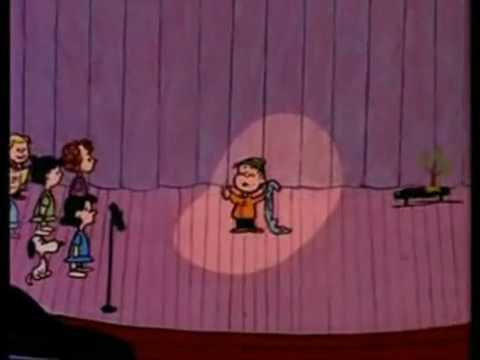
Of course, the spirit of the holiday is exactly what the special is about. Mostly lighthearted and inspirational, it’s highlighted by a moving scene in which the Linus character, blanket in hand, stands on a spotlighted stage and explains the true meaning of Christmas. It includes a biblical passage from the Book of Luke.
His words, like the special itself, has been charming audiences ever since.
 Charming, however, was not the word CBS executives used when they first viewed the completed special. They hated it -– or just didn’t get it. The pacing was off, they thought, and the music was different, classical in parts, jazzy in others. “This is probably going to be the last [Peanuts special],” one executive chirped. “But we got it scheduled for next week, so we’ve got to air it.”
The producers were deflated. “We thought we’d ruined Charlie Brown,”one exclaimed.
Until then, the only controversy was whether or not to include the use of a biblical verse in an animated special. Schulz again insisted. “If we don’t do it,” he said “who will.” Coca-Cola, the soft drink giant that sponsored the special, gave their blessing.
Linus’s big scene has reached iconic status now, both in popular culture and religious circles.
“For unto you is born this day in the city of David a Savior, which is Christ the Lord,” Linus recites. “And this shall be a sign unto you; Ye shall find the babe wrapped in swaddling clothes, lying in a manger. And suddenly there was with the angel a multitude of the heavenly host, praising God, and saying: ‘Glory to God in the highest, and on Earth, peace and goodwill towards men.
“That’s what Christmas is all about, Charlie Brown.”
Linus’s effective speech is also credited to the child actor who provided the voice. Before the special, Peanuts characters had only been heard in a Ford Commercial. The producer’s wanted them all to be voiced by children. Christopher Shea was only 8 years old at the time. He had the most innocent sounded voice and was tapped for the Linus character. His measured, straightforward reading is considered legendary. “It’s one of the most amazing moments ever in animation, “raved Peter Robbins, the original voice for Charlie Brown. Robbin’s voice was picked for Charlie Brown because it sounded “blah.”
Even though CBS thought it would only run for a year and be forgotten, once it was in the public consciousness, attitudes changed. Instantly, people began talking about it. The next year, the special won a Peabody award and an Emmy for Outstanding Christmas Programming. A lasting tribute to Charles Schulz original vision that it be about something – something with a message.
One scene in particular is still considered, as a producer described it later, as “the most magical two minutes in all of TV animation.”
How a Picture Print of a Steamboat Wreck Ties Into Christmas
By Ken Zurski
On the evening of January 13, 1840, a paddlewheel steamship named the Lexington was halfway through its voyage along the Atlantic coast, a short commuter jaunt between New York City and Stonington, Connecticut, when it caught fire and quickly burned. The fire started in the mast but spread to a large load of cotton bales, which caused a raging inferno that engulfed the entire ship. Many frightened passengers were forced to jump into the frigid water.
By the time a rescue ship, the sloop Merchant, arrived around noon the next day, only a handful of people were found clinging to floating bales or other debris. Nearly all of the 143 on board perished. Only four were found alive, among them three crew members including the ship’s pilot who told rescuers he huddled with others at the bow before it was overcome by fire. He found a bale and was able to sit out of the icy water until help arrived. Only one passenger survived.
The news was devastating to loved ones back in New York where most of the dead resided. The big city newspapers relayed the story in their usual graphic and expressive detail and imagination soared with the shocking details. At the time newspapers were just words on paper with no illustrations. Thanks to the Lexington disaster however that was about to change.
 A man named Nathaniel Currier was making lithographs of mostly business products like architectural plans and music manuscripts. Lithography, a process of printing using limestone, grease and water was not new, it had been invented nearly 30 years before Currier, an accomplished lithographer, perfected the craft in Boston and opened a New York shop of his own. But small printing jobs were not profitable and Currier needed to branch out. So he did portrait prints and memorials of the dead and finally made some money. In 1835, he had another idea. He produced a print depicting a true-life disaster. The print needed no more explanation other than the long title that accompanied the scene: Ruins of the Planter’s Hotel, New Orleans, which fell at two O’clock on the Morning of the 15th of May 1835, burying 50 persons, 40 of whom Escaped with their Lives. A picture that showed the news of the day, and produced at a rapid speed too, was striking indeed. It was a huge seller.
In 1840, Currier made another disaster print. It too had a long and detailed title: Awful Configuration of the Steamboat Lexington in the Long Island Sound on Monday Evening, January 13. 1840, by which melancholy occurrence over One Hundred Persons Perished. Based on an eyewitness description. the scene was as just as detailed as the newspaper’s words. The wounded steamship is seen burning in the background while a smattering of passengers struggle to stay above the choppy water. Some are on floating debris, others not. One man in a top hat and tails is seen reaching out to save another woman. Tragically, both are doomed.
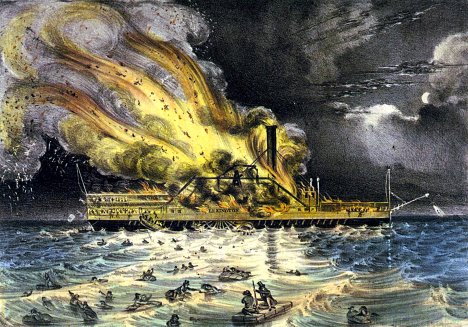
Currier sold a bunch of the Lexington prints and was soon contacted by the editor of the New York Sun who wanted to put the depiction in the paper. An engraving of another steamboat wreck Home appeared in a competing a New York paper and the Sun was eager to do the same. Currier agreed and the Lexington print was boldly featured in a special edition.
But that’s not why Currier is remembered today.
 Experiencing a windfall from the Lexington sales, in 1852, Currier hired James Merritt Ives to be his bookkeeper. Just looking at the two men, the pairing was a physical mismatch. Currier was tall and thin while Ives was short and stout. But the two gelled together. Ives was an artist and quickly streamlined the business with his own and others artistic abilities. In turn, he built up a sizable and profitable inventory. Ives soon became a valuable and dependent part of the team and he and Currier bonded as co-workers and friends. Their eventual partnership In 1857, began the company we know today as Currier and Ives.
Through the years Currier and Ives issued and sold colored and uncolored prints of every variety, included portraits, city and rural landscapes, trains and ships of note, famous race horses, and historical pictorials like milestones of the Civil War.
Currier and Ives left behind a lifetime of memories and thanks to a a print of the Lexington wreck, forever changed an industry. But their most lasting prints are featured during the holiday season. The folksy scenes of snow and sleigh rides evoke a spirit that is immortalized every year on Christmas cards.
The song Sleigh Ride compares the Currier and Ives prints to other Christmas traditions like chestnuts popping and “pumpkin pie” as having “a happy feeling nothing in the world can buy.”
…It’ll nearly be like a picture print
By Currier and Ives
These wonderful things are the things
We remember all through our lives!
For Currier, however, it all started with a disaster.

Why “Jingle Bells” Is Such An Odd Christmas Song
By Ken Zurski
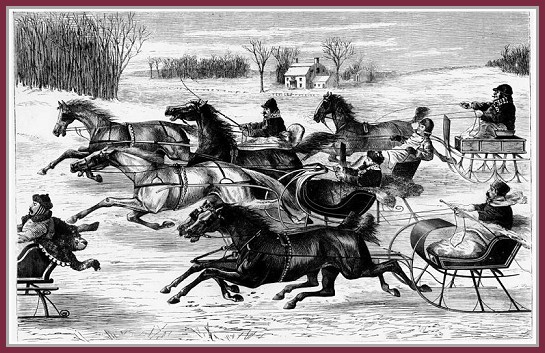
Besides the wintry scene, snow and sleigh, there isn’t much Christmas spirit in the song “Jingle Bells.” In fact the word Christmas, Santa or anything else holiday related isn’t included in the song at all. It’s about sleigh riding, more or less. More specifically, it’s about sleigh racing. After all, “dashing through the snow” didn’t mean taking a leisurely ride through the countryside. Oh and the bells, the “jingle bells,” they were there for a specific reason too.
Like many traditional Christmas songs, “Jingle Bells” has a strange and fascinating history. Even the first arrangement, which was less upbeat, is different than the one we hear today. Still it has a somewhat festive tone. So much so that early on, it is said, “Jingle Bells” was a used as a party song, featured in drinking establishments, and sung by drunkards who would clink their glasses like bells when the word was mentioned.
 This is not too difficult to imagine, since the song was written in the 1850’s, presumably inside a tavern. James Lord Pierpoint, a New Englander is credited with authoring “Jingle Bells.” Some suggest he wrote it in honor of the Thanksgiving feast rather than Christmas, which is unlikely on both counts. After all, how many carols were being written specifically about Thanksgiving?
Roger Lee Hall, a New England based music preservationist, does not refute or confirm the Thanksgiving theory only reiterates that Pierpoint may have written the song around or for Thanksgiving, but certainly not about it (although some may argue the song is about traveling). But like the lack of any Christmas themes, the song does not invoke the spirit of food or sharing – only a time and place. So at least the snow fits, especially in the upper east. In this case, Medford, Massachusetts.
It’s also been reported to have been written for the Sunday Choir since Pierpoint was the son of a minister. But as others point out, the song may have been too “racy” for a church, even though by today’s standards it hardly warrants such distinction.
Obviously we don’t hear the “racy” stuff in the modern version of “Jingle Bells,” since many of the original lyrics and several verses are eliminated completely. Only the first and familiar verse of the song is heard and usually repeated several times:
Dashing through the snow
In a one-horse open sleigh
O’er the fields we go
Laughing all the way
Bells on bobtail ring
Making spirits bright
What fun it is to ride and sing
A sleighing song tonight!
In one unfamiliar verse, the rider and his guest, a woman friend named “Fanny Bright,” get upended, or “up sot” (meaning capsized) by a skittish horse:
The horse was lean and lank
Misfortune seemed his lot
He got into a drifted bank
And then we got upsot.
In another verse, a similar mishap is ridiculed by a passerby:
A gent was riding by
In a one-horse open sleigh,
He laughed as there I sprawling lie,
But quickly drove away.
The chorus is then sung similar to what we know it today:
Jingle bells, jingle bells,
Jingle all the way;
Oh! what joy it is to ride
In a one-horse open sleigh.
(The word Joy was eventually replaced by “fun” in later versions.)
The last verse references the races:
Just get a bobtailed bay
Two forty as his speed
Hitch him to an open sleigh
And crack! you’ll take the lead.
Jingle Bells was originally released as “One Horse Open Sleigh” and later changed to “Jingle Bells, or One Horse Open Sleigh.” It was copyrighted in 1859 and first recorded on an Edison Cylinder in 1898. Popular orchestra leaders like Benny Goodman and Glenn Miller did big band renditions of the song in the 1930’s and 40’s and crooner Bing Crosby would record it in 1943. Crosby’s bouncy version with the Andrew Sisters is still considered a traditional favorite.
Today, “Jingle Bells” evokes laughter and joy and is often associated with Santa’s reindeer, so the term has certainly transcended its original purpose. Sleighs made no sound as they glided over the snow and bells were used as a stern warning. Hear jingly bells coming? Get the heck out of the way.
Or else.
Oh, what fun!
‘The Christmas Legend’ and the Introduction of Mrs. Claus
By Ken Zurski
“The Christmas Legend” is a short story written in the mid-nineteenth century by a Philadelphia missionary named James Rees. It tells the tale of a destitute American family that receives an unexpected visit from a couple of strangers on Christmas Eve. The constructive narrative sets up a deep exploration of family, loss and forgiveness; a classic Christmas formula. But the story itself is not widely known. In fact it would likely be completely forgotten had it not been for one word- “wife.” Today, it is cited as being the first time Santa Claus was associated with a spouse. It literately introduced the character we know now as Mrs. Claus.
Published in 1849, “The Christmas Legend” was part of a collection of 29 short stories written by Rees and compiled under the title, “Mysteries of City Life, or Stray Leaves from the World’s Book.” Each story is cleverly presented to represent the dissimilarity of many leaf types. For example, the maple leaf, Rees writes, is “golden and rich” and presents a sunnier disposition, while another like the gum tree leaf has a “bloody hue” and “stands fit emblem of the tragic muse.” He likens authors after the “forest trees” which “send forth their leaves unto the world.”
“And by what emblem shall we appear amongst those clustering trees,” Rees explains. “Let us see – Ah! The Ash Tree leaves are like ours, humble and plain to see, but hiding the silver underneath.”
In “The Christmas Legend,” Rees uses the spirit of the holiday to emphasis this point.
Here is the abbreviated story…
A family of four, mother and father, daughter and son, are sitting near the fireplace on Christmas Eve. The two children, especially the daughter, wonders if she should hang the stockings for Kris Kringle to come. But her mother raises doubt. There are more important things in life than earthly possessions, she states. “Poverty keeps from the humble door all the bright things of the earth, except virtue, truth and religion, these are more of heaven and earth, and are the poor man’s friend in time of adversity.”
“I thought that Santa Claus or Kris Kringle loved all those who are good, and haven’t I been good?” the daughter asks confused.
The mother tells her to leave the stocking up. “Customs at least should be observed, and perhaps the young heart may not be disappointed.”
The father is more introspective. He anguishes over a lost family member, the eldest child, another daughter who apparently ran away with a “dissipated” man seven years before and hasn’t been seen or heard from since.
Then there is a knock on the door.
Two strangers appear out of the night, an elderly couple carrying a bundle with “all their worldly wealth,” Rees writes. They ask how far away they are from the city and the father tells them it is “two miles.”
“Two miles?” the stranger says sadly, “we will not be able to reach it tonight. My dear wife is nearly tired out. We have traveled far today.”
The father invites them in and offers his best bed for them to rest. The strangers inquire if this is their whole family. “No. No,” the father says, “we had one other – a daughter.”
“Dead; Alas we all must die,” the old woman responds.
“Dead to us, but not to the world,” the man answers. “But let us speak of her no more. Here is some bread and cheese, it is all poverty has to offer, and to it you are heartily welcome.”
There is a silent pause, then the sound of cheerful merriment, music and laughter, is heard through the open windows and door. It’s their rich landlord, the father explains, mocking the poor. The old man interjects. “Ah, sir, human nature is a mystery, this is one of the enigmas, and can only be explained when the secrets of the hearts be known.”
The next morning, Christmas Day, the family awakes to find their small room filled with presents: books and games and toys. “O Father, Kris Kringle has been here,” the little girl says excitedly. “I am so happy.”
Here Rees as the narrator sets up the last part or moral of the story. “There are moments when the doors of memory and the bright sunshine of hope make the future all clear,” he writes. “Sorrow is not eternal; it has its changes, its stops; its antidote; they came in the moment of trial and – Presto! The whole scene of life is venerated in the pleasing colors of fancy.”
And that’s when something totally unexpected occurs. The old couple reappears to the family not as as they came, but as a vibrant young couple. The children recoil from fright, but the parents are curious. “How is this?” the father asks. “Why these disguises?”
“Hush, sir,” the once old man says laughing. “This is Christmas morn and we now appear to you not as Santa Claus and his wife, but as we are, the mere actors of this pleasing farce.”
The couple recognizes the old woman’s new face. It’s their long lost daughter. The girl hugs her mother, but the father is more skeptical, angry and weary of atonement. He lashes out at the girl as she approaches him. “Stand back!”, he shouts, then chastises the man who stands with her as a “paramour.” She begs him to reconsider. “No Father he is my kind and affectionate husband.”
“Ah, husband,” the father replies. He reaches for his daughter. They embrace.
Rees goes on to explain the girl ran away because she was “young and foolish” but loved the man who was forbidden from her home. They left America for England where her new husband became heir to a large estate. She sent letters home, but they were never received. Now she had returned back to her family on Christmas Day. A gift of love and hope. “Can you forgive me?” she asks.
“Say no more, all is forgotten. All is forgiven,” the father tells her.
Even though it is thinly defined, the mention of Santa Claus’s wife in “The Christmas Legend” is widely considered the first ever to appear in print. Two years later in 1851, the name Mrs. Santa Claus would be mentioned again in a story published in the Yale Literary Magazine. History tells the rest.
Today Mrs. Claus is considered a kindly old woman who helps her husband tend to his colds, stitches his clothes, and feeds his “round belly.”
“There are many interesting facts both historic and fabulous connected with the ceremonies, customs and superstitions of this day [Christmas], which if collected together today would make a curious and interesting book.” Rees explains in the introduction to his tale.
Apparently, he added to that.

.
How Twiggy’s Christmas Turn Got Upstaged by a Rock Star

By Ken Zurski
In September of 1977, British model and actress Twiggy appeared with Bing Crosby at the taping of the popular singer’s annual Christmas special. That year, the family holiday staple was being filmed overseas because the 74-year-old Crosby happened to be in Great Britain at the time for a concert tour. Crosby recruited several British entertainers as guests on the special titled “Christmas in England.” Twiggy was one.
Considered the “face of the 60’s” with a rail thin figure, short hair and strikingly large eyes, the teenage Twiggy was arguably the most recognized model in the world. In 1977, and at the age of 27, Twiggy was a still a multi-talented performer who picked up two Golden Globes for her work in The Boy Friend, a movie based on a musical set in the 1920’s about a theater group in England whose stage manager Polly (played by Twiggy) gets her big break when the leading lady literally “breaks a leg.”
In the Christmas special, Twiggy and Crosby sing a tender version of “Have Yourself a Merry Little Christmas.” Twiggy is refined, relaxed and clearly star struck. Crosby takes the lead on the song but the two trade verses and sing portions of the chorus together. Twiggy also appears in a sketch with Crosby and British actor Ron Moody, best known for his role as Fagin in the movie Oliver.

When the show was broadcast later that year, viewers watched with a heavy heart. Only a month after filming, in October, Crosby died from an apparent heart attack. The posthumously aired British-themed Christmas special would be his last.
In retrospect, Twiggy’s duet with Crosby is a sweet rendition of a holiday standard, done with class and professionalism, a trademark of Crosby with any singer. Twiggy held her own. But it’s forgotten today. However, another well-known British star – and an even more unlikely choice than Twiggy – would make a mark on the show that would last for years to come.
Glam rocker David Bowie initially turned down the request to be a guest because he didn’t like the song choice: “The Little Drummer Boy.” He eventually agreed to appear after Crosby’s musical arrangers wrote a new part of the song for him to sing, titled “Peace on Earth,” which he liked.
Peace on Earth, can it be
Years from now, perhaps we’ll see
See the day of glory
See the day, when men of good will
Live in peace, live in peace again
The two voices soared together. “Ah, that’s a pretty thing, isn’t it?” Crosby said after they finished the song.
Today, their version is considered a holiday classic.

The Lyrical Genius of Dr. Seuss in Song
By Ken Zurski

Theodor Seuss Geisel, better known as Dr. Seuss, wrote dozens of children’s books that still today reach best seller’s lists and thrill a new generation of fans each and every year. His work, however, as a songwriter is not as celebrated. But when reminded, the songs penned by Seuss are just as enduring and whimsical as his books.
Of course, Seuss did not write the music, only the words, so his credit is in the lyrics. He wrote the tunes mostly for television specials and all with Seuss’s clever wordplay and sing-song rhyme pattern. For instance, in The Cat in the Hat, a television short released in 1970, and based on his first children’s book, Geisel wrote several original songs including the bouncy, “The Moss Covered Three-Headed Family Gradunza”
There’s a gradunza-snitcher in the house. Things will never be the same without it. How dear to my heart was that beautiful gradunza. That my old feline father bequeathed to me. That old family gradunza, The old, three-handled family gradunza, The old, moss-covered, three-handled family gradunza. That hung on the family tree. I’ve been burgled–thwertled by a fish.The old, moss-covered, three-handled family gradunza
The catchy “Cat, Hat:”
Cat, hat, in French, chat, chapeau. In Spanish, el gato in a sombrero. He’s a cat in a hat, he’s a chat in a chapeau.
He also is a gato in a sombrero.
Ole, Ole, Ole, Ole-o.
And the playfully teasing, “Calculatus Eliminatus:”
When you mislaid a certain something, keep your cool and don’t get hot. Calculatus Eliminatus is the best friend that you’ve got. Calculatus Eliminatus always helps an awful lot. The way to find a missing something is to find out where it’s not.
 One song in particular, “I’m a Punk,” introduced such ridiculously pleasing locutions as crontunculous, gropulous, poobler, and schnunk.
While everyone understands the meaning of punk, being a “schnunk” needed some explanation. But when the Cat sings, “nobody, likes me, not one tiny hunk,” everyone gets the idea.
Seuss’s writing style is often credited to a Life magazine article in 1956 that criticized children’s reading levels, specifically “primers” or textbooks with simplified words and phrases, like “Dick and Jane.” Geisel was asked to write a story using a vocabulary list of just over 200 words. He picked the first two words that rhymed, cat and hat, and went from there. It certainly wasn’t like any story in a textbook, that’s for sure, and critics praised “The Cat in the Hat” for its originality.
Several years later when Seuss wrote the lyrics for songs in his television specials, he seemed to relish the opportunity to ratchet up the silliness even more. Seuss’s words just seemed to work with music, oftentimes using traditional melodies, sometimes with an original score. The man credited with composing or arranging most of the music for Seuss is Dean Elliott, a Midwesterner from Wisconsin, who conducted orchestras for the Tom and Jerry shorts before hooking up with Seuss. Later he worked with Bugs Bunny creator Chuck Jones.
 Seuss’s most popular song is one we hear every year around the holidays. In it, an unmissable deep voice groans about a Grinch who has a “heart full of unwashed socks” and a “soul full of gunk.”
Written in 1966 for the TV special “How the Grinch Stole Christmas,” Seuss enlisted a voice actor named Thurl Ravenscroft to sing the lead on the song even though Boris Karloff was the voice of the Grinch in the special.
Karloff reportedly could not sing and Ravenscroft was hired . But Ravencroft’s name was never listed among the credits and Karloff mistakenly got most of the acclaim. Seuss was reportedly furious and apologized for the oversight. Ravenscroft was also the voice of Kellogg’s Tony the Tiger (“They’re Great!”).
“You’re a Mean One, Mr. Grinch,” is an unconventional Christmastime staple. The song never mentions Christmas, but rather teases with crafty metaphors, comparisons and contradictions all designed to point out what an awful crank the Grinch – now a symbol of holiday grumpiness – can be.
You’re a mean one Mr. Grinch
You really are a heel.
You’re as cuddly as a cactus,
And as charming as an eel,
Mr. Grinch!
The song is instantly recognizable, charming and vintage Dr. Seuss. The songwriter.

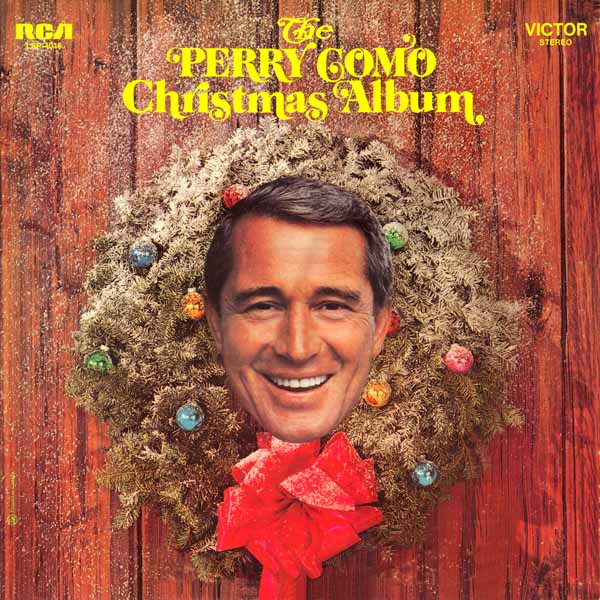
As Christmas Crooners Go, Perry Como Was As ‘Pure As The Driven Snow’
By Ken Zurski
Perry Como may be the most popular Christmas performer of all time. Thanks to his long-standing annual holiday television specials and beloved Christmas album released in 1968, Como’s face and voice became synonymous with the sounds of the season.
Today, however, in a more crowded market for Christmas music and numerous more versions of favorite holiday classics (and new ones too) from more contemporary artists in all genres, Como’s versions might get lost in the mix.
But it’s still in there.
That said, as a performer, he may have been misunderstood as well.
Como was considered one of the “good guys” whose relaxed and laid-back demeanor came across as “lazy” to some, a misguided assessment, since Como was known to be a consummate professional who practiced and rehearsed incessantly.
“No performer in our memory rehearses his music with more careful dedication than Como.” a music critic once enthused.

Como also made sure each concert met his own personal and strict moral standards.
In November 1970, Como hosted a concert in Las Vegas, a comeback of sorts for the Christmas crooner, who hadn’t played a Vegas night club for over three decades. For his grand return, Como was paid a whopping $125-thousand a week, admittedly a large sum for a Vegas act at the time. Even Perry was surprised. “It’s more money than my father ever made in a lifetime,” he remarked.
But since it was Vegas and befitting the desert town’s reputation of gambling and prostituition, Como’s reputation as a straight-laced performer was questioned.
Como quelled any concerns, however, when he chose a safe, clean and relatively unknown English comic named Billy Baxter to warm up the audience before the show. Advisers suggested he pick an act more familiar to Vegas audiences, but Como said no.
A typical “Vegas comedian,” as he put it, was simply too dirty.
Keeping up the family friendly atmosphere accentuated in his TV specials, Como would lovingly introduced his wife Roselle during the “live” shows. Roselle, who was usually backstage and acknowledged the appreciative crowds, was just as adamant as her husband that his clean-cut image went untarnished. After one performance, Roselle received a fan’s note that pleased her immensely. “Not one smutty part, not even a hint,” the note read describing Como’s act in Vegas. “You should be very proud.”
Como’s cool temperament and sleepy manner was such a recognizable and enduring characteristic that many had to ask if it was real or just an act. Does he ever get upset? was one curious inquiry. “Perry has a temper,” his orchestra leader Mitchell Ayers answered. “He loses his temper at normal things. When were’ driving, for instance, and somebody cuts him off he really lets the offender have it.” However, Ayers added, “Como is the most charming gentleman I’ve ever met.”
Como’s popular Christmas television specials ran for three decades ending in 1994, seven years before his death from symptoms of Alzheimer’s in 2001. He was 88.

(Source: Spartanburg Herald-Journal Nov 21 1970)
Franksgiving
 By Ken Zurski
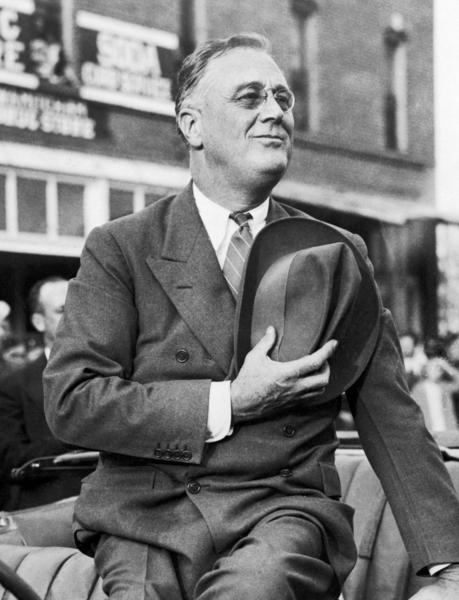
In September of 1939, Franklin Delano Roosevelt issued a presidential proclamation to move Thanksgiving one week earlier, to November 23, the fourth Thursday of the month, rather than the traditional last Thursday of the month, where it had been observed since the Civil War.
Roosevelt was being pressured by the Retail Dry Goods Association who already reeling from the Great Depression sensed a disaster in holiday sales since Thursday of that year fell on the 30th, the fifth week and final day of November, and late for the start of the shopping season. The business owners went to Commerce Secretary Harry Hopkins who went to Roosevelt. Help out the retailers, Hopkins pleaded. Roosevelt listened. He was trying to save the economy not break it. Thanksgiving would be celebrated one week earlier, he announced.
Apparently, the move was within his presidential powers to suggest since no precedent was set. Thanksgiving, the day, was not federally mandated and the actual date had been moved before. Many states, however, balked at Roosevelt’s plan. Schools were off on Thanksgiving and a host of other events like football games, both at the local and college level, would have to be cancelled or moved. One irate coach threatened to vote “Republican” if Roosevelt interfered with his team’s schedule. Others at the government level were similarly upset. “Merchants or no merchants, I see no reason for changing it,” chirped an official from the opposing state of Massachusetts.
In contrast, Illinois Governor Henry Horner echoed the sentiments of those who may not have agreed with the switch, but dutifully followed orders. “I shall issue a formal proclamation fixing the date of Thanksgiving hoping there will be uniformity in the observance of that important day,” he declared, steadfastly in the president’s corner.
Horner was a Democrat and across the country opinions about the change were similarly split down party lines: 22 states were for it; 23 against and 3 went with both dates.
In jest, Atlantic City Mayor Thomas Taggart, a Republican, dubbed the early date, “Franksgiving.”
Roosevelt made the change official for the succeeding two years, since Thursday would fall late in the calendar both times. But in 1941 The Wall Street Journal released data that showed no change in retail sales in the shopping seasons that Thanksgiving fell earlier. Roosevelt admitted he was wrong, but in hindsight, on the right track. Thanks to the uproar, later that year, Congress approved a joint resolution making Thanksgiving a federal holiday to be held on the fourth Thursday of the month, regardless of how many weeks were in November.
Roosevelt signed it into law.
Baseball’s ‘Eating Champion’ Story is a Little Hard to Swallow, But…
 By Ken Zurski
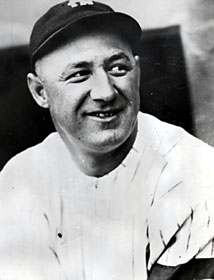
Frank “Ping” Bodie, an Italian-American major league baseball player, once said that he could out eat anyone especially when it came to his favorite dish, pasta. So on April 3 1919, in Florida during a spring training break, Bodie and an ostrich (yes, an ostrich) went head-to-head in an all out, no holds barred, eating contest.
Or did they? That’s left for history to decide.
But it makes for a great story.
As a ballplayer and an outfielder, Bodie was a serviceable player, but a bit of an instigator. He was always up for a good argument and couldn’t help talking up his own merits. ”I could whale the old apple and smack the old onion,” he said about his batting prowess. While playing for a lowly Philadelphia A’s ball club, Bodie claimed there were only two things in the city worth seeing, himself, of course, and the Liberty Bell.
I can “hemstitch the spheroid,” he boasted, apparently talking about the ball.
Despite being a a bit of a braggart, the player’s loved Bodie’s positive attitude. But his expressive candor clashed with managers and he was traded to several teams before ending up with the New York Yankees where his road mate was the irrepressible Babe Ruth. When a reporter asked Bodie what it was like to room with baseball’s larger-than-life boozer, Bodie had the perfect answer. “I room with his suitcase,” he said.
Bodie was born Francesco Stephano (anglicized to Frank Stephen) Pezzello, but most people knew him by his more baseball player sounding nickname, Ping. He claimed “Ping” was from a cousin although many wished to believe it was after the sound of the ball hitting his bat. Bodie was the name of a bustling California silver mining town that his father and uncle lived for a time.
Bodie’s reputation as a big-time eater preceded him.
While in Jacksonville, Florida for spring training, the co-owner of the Yankees, Col T.L “Cap” Huston, heard about an ostrich at the local zoo named Percy who had an insatiable appetite. Huston told Bodie and the challenge was on. Whether it actually happened as reported however is up for debate. The accounts are so wildly embellished that the truth is muddled.
But who was questioning?
Fearing backlash from animal lovers (even those who loved ostrich’s, it seemed), the match was held at a secret location. Bodie reportedly won the contest, but only after Percy, who barely finished an eleventh plate, staggered off and died. Ostrich’s eat a lot, but Percy’s untimely demise was attributed to inadvertently swallowing the timekeeper’s watch. He expired with “sides swelled and bloodshot eyes.” one writer related.
For anyone who believed that, the rest of the story was easy to digest. Bodie finished a twelfth plate of pasta and claimed the self-appointed title of “spaghetti eating champion of the world.”.
The next day, Bodie was in the newspaper for serving up a double play ball in the eighth inning and helping rival Brooklyn Dodgers secure a “slaughter” of the Yankees, 11-2.
There was no mention of the dead bird.

 UNREMEMBERED